India’s ceramic industry is one of the country’s oldest manufacturing sectors, with a history that stretches back thousands of years. Today, India is among the world’s leading producers of ceramic tiles, sanitaryware, tableware, industrial ceramics, refractories, and technical ceramic products. Manufacturing clusters such as Morbi have transformed India into a significant exporter serving markets across Europe, the Middle East, Africa, North America, and Southeast Asia. As global trade becomes increasingly digital, India has an opportunity to strengthen ceramic exports through a comprehensive digital trade infrastructure.
International buyers now expect more than competitive prices. They demand transparency, consistent quality, fast documentation, reliable logistics, and complete traceability throughout the supply chain. Traditional paper based export processes often slow transactions and create uncertainty. A national digital trade platform can simplify these processes while making Indian ceramic manufacturers more competitive.
Every export consignment can receive a secure digital identity. Information relating to raw materials, manufacturing batches, quality inspections, packaging, certification, customs documentation, shipping schedules, and final delivery can be securely recorded within a unified digital ecosystem. Buyers gain confidence because every stage of production can be verified through authenticated digital records.
Quality assurance is particularly important in ceramic exports. Products must meet strict standards for dimensions, strength, water absorption, durability, chemical resistance, and surface finish. Accredited testing laboratories can upload digital certificates directly to the trade platform, allowing overseas buyers to verify compliance instantly. This reduces documentation delays while strengthening India’s reputation for quality manufacturing.
Artificial intelligence can improve export planning by studying global construction activity, housing demand, infrastructure investment, freight costs, and consumer purchasing trends. Exporters can identify fast growing international markets, anticipate changes in customer preferences, and optimize production according to future demand instead of relying solely on historical sales data.
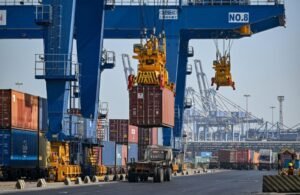
Digital logistics integration further improves competitiveness. Ceramic products require careful handling because of their weight and fragility. Manufacturers, transport companies, warehouses, ports, customs authorities, shipping lines, and overseas distributors can coordinate through a common platform that provides continuous shipment visibility. Real time tracking reduces uncertainty while improving delivery reliability.
Small and medium sized manufacturers benefit significantly from digital marketplaces. Many companies produce high quality ceramic products but have limited international marketing capabilities. A government supported digital export platform would allow verified manufacturers to showcase product catalogs, factory certifications, production capacity, and technical specifications directly to global buyers. This expands export opportunities without requiring large overseas marketing investments.
Trade finance also becomes more efficient through digital integration. Exporters frequently require working capital, export insurance, foreign exchange services, and shipment financing. Banks connected to the platform can verify export documentation electronically, reducing paperwork while accelerating loan approvals and payment processing. Faster financial services improve liquidity for manufacturers throughout the production cycle.
Environmental sustainability is becoming increasingly important in global ceramic markets. Buyers now evaluate manufacturers based on energy efficiency, emissions, recycling practices, and responsible resource management. Digital reporting systems allow exporters to present verified sustainability data alongside their products. Manufacturers that demonstrate responsible production practices gain stronger access to environmentally conscious markets.
Customs modernization represents another major advantage. Export documentation often involves multiple government agencies and repeated submissions of similar information. Digital integration enables exporters to submit verified information once while authorized agencies securely access the required records. Automated verification reduces administrative delays and improves export efficiency.
The platform should also provide market intelligence. Exporters can receive notifications regarding tariff changes, product regulations, construction trends, technical standards, and new trade opportunities across international markets. Such information enables businesses to adapt more quickly to changing global conditions.
Cybersecurity remains essential because export platforms handle commercial contracts, financial transactions, engineering specifications, and customer information. Strong encryption, secure digital identities, continuous monitoring, and resilient infrastructure protect both Indian exporters and international buyers from cyber threats.
India’s ceramic industry combines centuries of craftsmanship with modern industrial manufacturing. However, future export growth will depend increasingly on digital capabilities as well as production excellence. International buyers seek suppliers who can provide transparency, efficiency, compliance, and dependable digital services throughout the trading process.
A national digital trade infrastructure for ceramic exports would connect manufacturers, certification agencies, customs authorities, logistics providers, financial institutions, insurers, and global buyers through a unified ecosystem. By combining advanced digital trade systems with one of India’s oldest manufacturing industries, the country can strengthen its position in international markets while creating new opportunities for sustainable export growth.