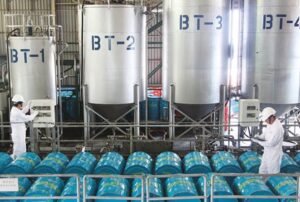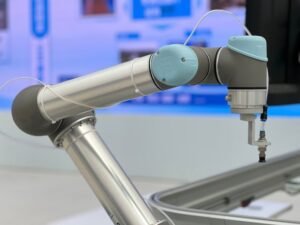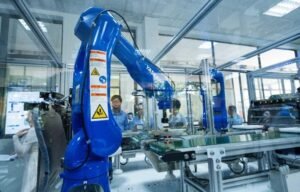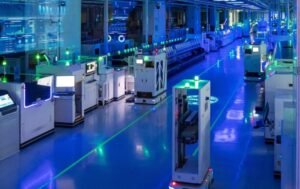
Modern factories should evolve beyond automation into self-diagnosing, self-reconfiguring, and partially self-repairing industrial ecosystems. Industry 4.0 is usually associated with robotics, artificial intelligence, connected sensors, digital twins, and predictive maintenance. A more radical opportunity lies in integrating these technologies so that factories can identify emerging failures, reorganize production, and coordinate repairs before minor disruptions become expensive breakdowns.
The idea is to move from factories that merely report problems to factories that actively coordinate their own recovery.
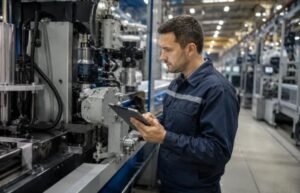
Imagine a manufacturing plant where sensors continuously monitor vibration, temperature, electrical loads, lubricant quality, and production accuracy. Artificial intelligence analyses these signals to identify unusual patterns. When a machine begins showing signs of failure, the system estimates the likely fault, checks spare-part availability, schedules maintenance, and adjusts production across other machines. Human engineers remain responsible for approving critical interventions, but the factory can complete much of the diagnostic and coordination work automatically.
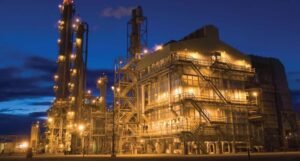
This approach could be particularly valuable in industries where equipment failure causes substantial financial losses. Steel plants, automobile factories, chemical facilities, semiconductor production lines, and power-intensive industrial operations depend on reliable machinery. Even a short interruption can disrupt supply chains and delay customer deliveries. Intelligent recovery systems could reduce these disruptions while improving the utilization of existing equipment.
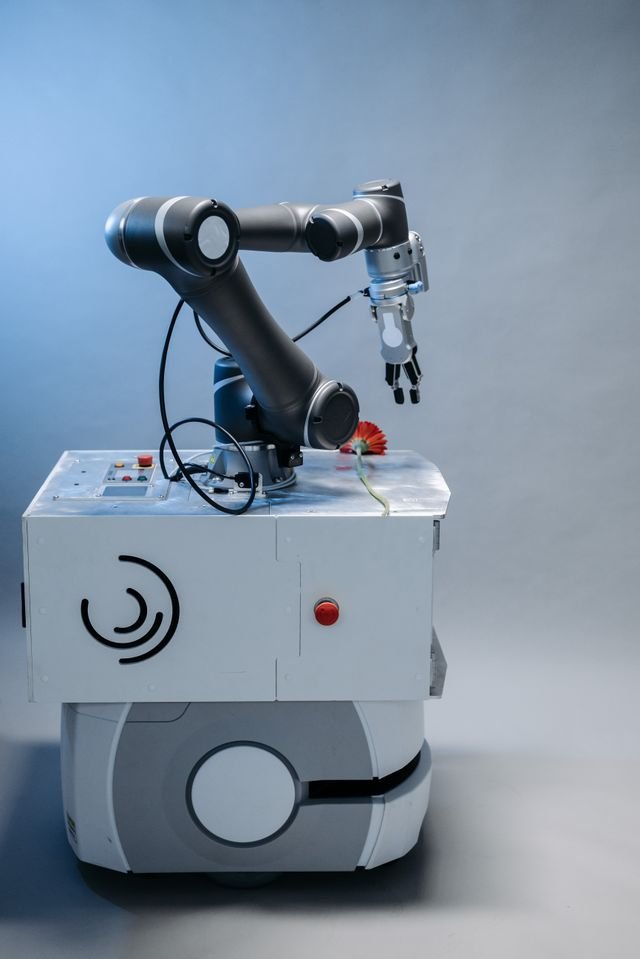
The next frontier is modular manufacturing. Instead of designing production lines around fixed sequences of machines, factories could use interchangeable modules that are reconfigured according to changing demand. If one production unit fails, compatible modules could take over selected operations. If demand shifts from one product to another, software could coordinate the rearrangement of equipment, robotic routes, and production schedules.
Such flexibility would make manufacturing more responsive to uncertain markets. Smaller factories could manufacture a wider range of products without investing in entirely separate production lines.
Digital twins could provide the computational foundation for this transformation. A digital twin is a virtual representation of a physical machine, production line, or industrial facility. By combining operational data with engineering models, manufacturers can simulate alternative production arrangements, estimate the consequences of equipment failure, and test recovery strategies before implementing them in the real factory.
However, digital twins should not become expensive visual dashboards with little operational value. Their usefulness depends on accurate data, reliable engineering models, and integration with actual maintenance and production decisions.
A further opportunity is the development of industrial AI agents that coordinate different functions within a factory. One agent could monitor maintenance requirements, another could manage inventory, and another could optimize energy consumption. A supervisory system could reconcile their recommendations against production targets, safety requirements, and financial constraints. These systems should operate within clearly defined permissions, with human authorization required for hazardous or irreversible actions.
The economic implications could be significant. Manufacturers would not necessarily need to replace every machine with expensive new equipment. Retrofitting existing machinery with appropriate sensors, industrial controllers, and secure connectivity could introduce many Industry 4.0 capabilities at lower cost. This is especially important for small and medium-sized manufacturers that cannot afford comprehensive factory reconstruction.
India could develop a distinctive industrial strategy around this opportunity. Rather than concentrating exclusively on importing advanced automation systems, the country could support domestic companies that build retrofit kits, predictive-maintenance software, machine-monitoring platforms, and modular robotic systems. Engineering colleges and industrial training institutes could operate test facilities where these technologies are evaluated under realistic manufacturing conditions.
Publicly supported industrial laboratories could allow smaller manufacturers to experiment with automation without committing substantial capital before proving its value. Shared testing infrastructure would also help domestic technology developers validate products across different machines and industrial environments.
The strategy should include common technical interfaces so equipment from different manufacturers can exchange information reliably. Without interoperability, factories risk becoming dependent on proprietary systems that prevent them from combining technologies or changing suppliers. Open interfaces, documented data formats, and portable machine-control architectures would improve competition and reduce integration costs.
Cybersecurity must remain central to this transformation. A compromised industrial network can cause physical damage, interrupt production, or expose commercially sensitive information. Critical machine controls should therefore be isolated appropriately, remote access should be tightly managed, and safety mechanisms should remain effective even when AI systems or external networks fail.
There are also limits to the concept. Not every machine can repair itself, and automated recovery is inappropriate for many dangerous industrial operations. Mechanical damage may require physical replacement, while uncertain faults may demand expert inspection. The objective should not be complete industrial autonomy but faster, safer, and more economical recovery from disruption.
Ultimately, Industry 4.0 should be judged by the industrial capabilities it creates rather than by the number of connected devices installed. The next generation of smart factories will need to do more than collect data and automate repetitive tasks. They should anticipate disruptions, coordinate resources, adapt production, and recover efficiently when failures occur.
For India, investing in these capabilities could create a new market in industrial software, robotics, maintenance technology, and engineering services. The most valuable factory of the future may not be the one with the most robots, but the one that can continue producing safely and economically when conditions change unexpectedly.