India’s oil and gas industry remains one of the most strategically important sectors of the national economy. It fuels transportation, powers industries, supplies feedstock for petrochemicals, and supports energy security for more than a billion people. Despite the rapid growth of renewable energy, oil and natural gas will continue to play a critical role in India’s economic development for decades. To remain competitive and resilient, however, the sector must embrace Industry 4.0.
Industry 4.0 represents the integration of digital technologies into industrial operations. Artificial intelligence, industrial Internet of Things, robotics, digital twins, predictive analytics, cloud computing, autonomous systems, and advanced automation are transforming how energy companies explore, produce, transport, refine, and distribute hydrocarbons. For India, adopting these technologies can improve operational efficiency, reduce costs, strengthen safety, and enhance energy security.
The oil and gas value chain is one of the most complex industrial ecosystems in the world. It begins with exploration, moves through drilling and production, continues into pipelines and transportation, enters refineries, and finally reaches consumers through fuel distribution networks. Every stage generates enormous volumes of operational data that can be analysed to improve decision making.
Exploration activities increasingly rely on artificial intelligence to analyse geological surveys, seismic data, satellite imagery, and drilling information. Machine learning algorithms can identify potential hydrocarbon reserves more accurately than traditional methods, reducing exploration risks and improving investment decisions. Faster analysis also shortens exploration timelines, allowing companies to respond more quickly to changing market conditions.
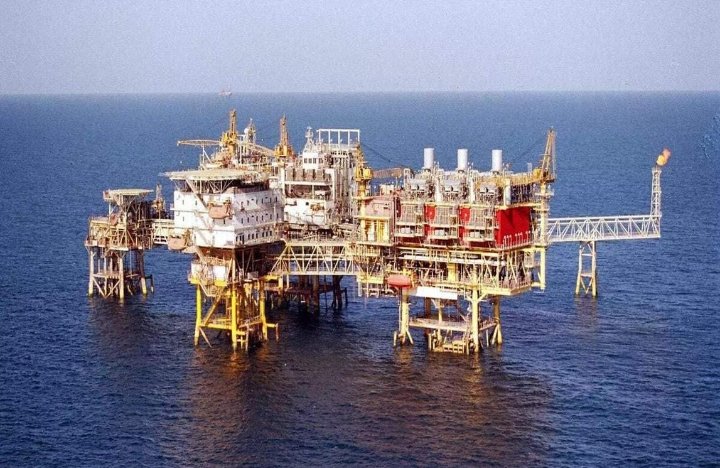
Industrial Internet of Things sensors have become essential across production facilities. Oil wells, offshore platforms, pipelines, storage terminals, and refineries continuously generate information on pressure, temperature, vibration, flow rates, equipment health, and production efficiency. Connected sensors transmit this information in real time, enabling operators to monitor assets continuously rather than relying solely on periodic inspections.
Predictive maintenance is one of the most valuable Industry 4.0 applications. Traditional maintenance schedules often replace equipment based on fixed timelines regardless of its actual condition. Predictive systems analyse operational data to estimate when equipment is likely to fail. Maintenance teams can then schedule repairs before breakdowns occur, reducing costly shutdowns while extending equipment life.
Digital twins are becoming increasingly important in refinery operations. A digital twin creates a virtual representation of physical equipment, processing units, or even entire refineries. Engineers use these digital models to simulate operating conditions, evaluate process improvements, and test maintenance strategies without disrupting live production. This reduces operational risk while improving efficiency and reliability.
Refineries are among the most energy intensive industrial facilities. Artificial intelligence can optimise energy consumption by continuously analysing production variables and recommending operational adjustments. Even small improvements in energy efficiency can generate significant financial savings while reducing carbon emissions across large refining complexes.
Pipeline infrastructure also benefits from digital transformation. India’s extensive pipeline network transports crude oil, natural gas, and refined products across long distances. Smart sensors installed along pipelines can detect pressure changes, corrosion, leaks, and structural weaknesses almost immediately. Real time monitoring improves safety while reducing environmental risks and product losses.
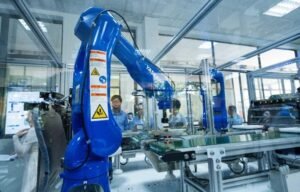
Robotics is expanding rapidly throughout the industry. Inspection robots can enter confined spaces, inspect storage tanks, monitor offshore platforms, and examine hazardous environments where human access may be difficult or dangerous. Drone technology complements these capabilities by providing aerial inspections of pipelines, refineries, and remote production facilities with greater speed and accuracy.
Safety has always been a defining priority within the oil and gas sector. Industry 4.0 strengthens safety through continuous monitoring, intelligent alarm systems, wearable safety devices, and automated emergency response technologies. Artificial intelligence can identify abnormal operating patterns before they develop into major incidents, allowing operators to intervene proactively.
Cybersecurity has become equally critical. Modern energy infrastructure depends on connected industrial control systems that manage production, transportation, and refining processes. A cyber attack targeting these systems could disrupt fuel supplies or compromise national energy security. Strong cybersecurity frameworks, industrial network segmentation, continuous monitoring, and zero trust architectures must therefore become standard across the sector.
Environmental sustainability is another area where digital technologies provide measurable benefits. Smart monitoring systems continuously track emissions, water consumption, waste generation, and energy efficiency. Digital analytics help companies optimise operations while supporting compliance with increasingly demanding environmental regulations. Better environmental performance also strengthens international competitiveness.
India’s public sector energy companies and private operators both have opportunities to accelerate Industry 4.0 adoption. Collaboration with technology companies, engineering firms, universities, and research institutions can support innovation while developing solutions specifically designed for Indian operating conditions.
The workforce must also evolve alongside technological change. Future petroleum engineers, refinery operators, maintenance specialists, and production managers will require expertise in artificial intelligence, industrial analytics, robotics, cybersecurity, automation, and digital engineering in addition to traditional petroleum and chemical engineering knowledge.
Government policy can encourage this transformation through targeted investments in industrial research, digital infrastructure, workforce development, cybersecurity standards, and technology demonstration projects. Support for domestic technology development can also create export opportunities for Indian companies building industrial automation solutions for global energy markets.
Industry 4.0 should not be viewed simply as an upgrade to existing equipment. It represents a fundamental shift in how the oil and gas sector operates, makes decisions, manages risk, and delivers value. Companies that successfully integrate intelligent technologies into their operations will achieve higher productivity, stronger reliability, improved safety, and greater resilience.
India’s oil and gas industry has long been a pillar of national development. By embracing Industry 4.0, it can become more efficient, environmentally responsible, digitally secure, and globally competitive. The future of energy will not depend solely on the resources beneath the ground, but also on the intelligence embedded within the systems that discover, produce, refine, and deliver them.