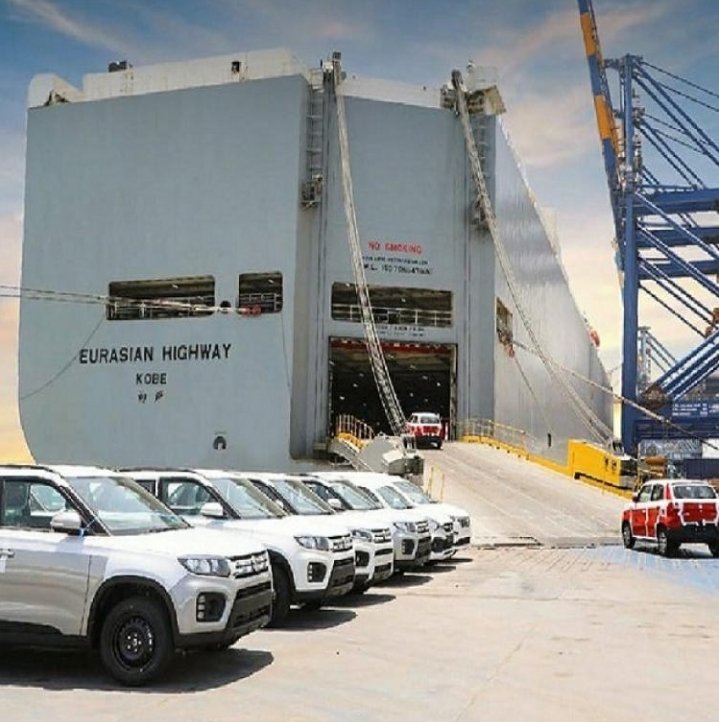
India’s automotive industry has established itself as one of the country’s strongest manufacturing sectors, supplying passenger vehicles, commercial vehicles, motorcycles, tractors, and automotive components to markets around the world. While manufacturing capabilities continue to improve, financing international trade remains a major challenge for many exporters, particularly small and medium-sized enterprises. A stronger export credit intelligence ecosystem could significantly improve the competitiveness of Indian automotive companies in global markets.
Export credit is more than simply providing loans. It involves assessing buyer risk, monitoring international markets, understanding payment trends, evaluating political stability, and reducing uncertainty in cross-border transactions. Companies that possess better intelligence about export financing opportunities can expand into new markets with greater confidence.
Indian automotive exports often involve buyers from developing economies where access to commercial finance is limited. Manufacturers may hesitate to enter these markets because of concerns over payment defaults or uncertain economic conditions. A national export credit intelligence system could reduce these concerns by providing verified financial information about overseas buyers and market conditions.
Such a platform could integrate information from export credit agencies, customs authorities, international trade databases, shipping records, insurance providers, and financial institutions. Instead of relying solely on historical relationships, exporters could evaluate potential buyers using current financial and trade indicators.
Artificial intelligence can further improve credit intelligence by analyzing payment histories, import volumes, currency movements, commodity prices, political developments, and shipping activity. Rather than simply assigning a static credit rating, AI could generate dynamic risk profiles that change as market conditions evolve.
For automotive manufacturers, this intelligence would influence strategic decisions about where to expand exports. Markets showing improving payment reliability, increasing vehicle demand, and stable economic growth could receive higher priority. Conversely, markets facing financial instability or rising geopolitical risks could be monitored more carefully before major investments are made.
Small auto component manufacturers stand to gain significantly from improved export credit intelligence. Many possess advanced manufacturing capabilities but lack access to reliable financial information about international buyers. A centralized digital platform could reduce information asymmetry, enabling smaller firms to compete alongside larger exporters.
Banks financing automotive exports could also benefit. Better intelligence allows lenders to evaluate export proposals more accurately, resulting in faster loan approvals and improved allocation of credit. Exporters with strong market intelligence may qualify for more competitive financing terms because financial institutions have greater confidence in their business plans.
Insurance providers play an equally important role. Export credit insurance protects businesses against payment defaults and political risks. By combining insurance data with trade intelligence, exporters can make informed decisions regarding which markets require additional financial protection and which markets present relatively lower risk.
Government agencies could contribute by integrating data from customs systems, export promotion councils, logistics providers, and international trade agreements. Such integration would create a comprehensive knowledge base supporting evidence-based export decisions.
The automotive industry is also undergoing significant technological transformation through electric vehicles, connected mobility, autonomous systems, and software-defined vehicles. These technologies create new export opportunities but also introduce additional financial and regulatory complexity. Credit intelligence systems should therefore include information about technology adoption, regulatory compliance, and infrastructure readiness across different international markets.
Trade agreements increasingly influence export financing decisions. Preferential tariff arrangements, local content requirements, environmental regulations, and certification standards directly affect business profitability. Export credit intelligence platforms should automatically incorporate these developments into market assessments, allowing companies to respond quickly.
Supply chain resilience has become another critical factor following recent global disruptions. Exporters require intelligence not only about buyers but also about logistics networks, shipping routes, port congestion, and supplier reliability. Integrating these factors into financial decision-making would create a more comprehensive understanding of export risk.
Data visualization dashboards could simplify complex information for business leaders. Interactive maps displaying demand growth, financing availability, payment reliability, logistics performance, and regulatory changes would allow executives to compare multiple export destinations efficiently.
Academic institutions and industry associations could support continuous improvement of export credit intelligence by conducting research on emerging markets, financial trends, and international competitiveness. Their findings could strengthen policy development and industry best practices.
India has ambitious goals for expanding manufacturing and exports under initiatives such as Make in India. Achieving these objectives requires more than increasing production capacity. Companies also need confidence that international transactions can be completed safely, efficiently, and profitably.
A modern export credit intelligence ecosystem would help transform uncertainty into opportunity. By combining financial analytics, artificial intelligence, trade data, logistics information, and policy intelligence, India can strengthen its automotive export ecosystem while reducing risks for manufacturers of every size.
The future of automotive trade will increasingly depend on the ability to combine manufacturing excellence with financial intelligence. Exporters who understand markets before entering them, evaluate risks scientifically, and adapt quickly to changing global conditions will be better positioned to compete internationally. Building stronger export credit intelligence is therefore not merely a financial reform. It is a strategic investment in the long-term competitiveness of India’s automotive industry.