
Global supply chains move trillions of dollars’ worth of goods every year, yet financing remains one of the biggest challenges for manufacturers, suppliers and distributors. Small and medium-sized businesses often wait 30 to 120 days before receiving payment for delivered goods. During this waiting period, companies struggle with cash flow, limiting their ability to purchase raw materials, pay employees and expand production. Web3 technology offers a new approach through a blockchain-powered Supply Chain Finance Network that connects manufacturers, suppliers, banks and investors on a single transparent platform.
Supply chain finance allows suppliers to receive early payment on approved invoices while buyers continue paying according to their agreed credit terms. Traditional systems rely on banks, paperwork and manual verification, making the process slow and expensive. A Web3 platform digitizes the entire financing lifecycle using blockchain, smart contracts and tokenized financial assets.
Every purchase order begins as a digital record on the blockchain. Manufacturers issue purchase orders that suppliers accept electronically. Once goods are shipped, logistics providers update delivery milestones directly on the blockchain. Buyers verify receipt of goods, creating an immutable record that financial institutions and investors can trust without repeatedly requesting supporting documents.
Invoices become tokenized digital assets. Instead of waiting several months for payment, suppliers can immediately offer verified invoices for financing on the blockchain network. Banks, fintech companies or institutional investors purchase these tokenized invoices at a small discount, providing suppliers with immediate working capital.
Smart contracts automate settlement. Once the buyer reaches the agreed payment date, funds are transferred automatically to the financing institution while ownership records update instantly. Administrative costs decline because manual reconciliation, invoice matching and payment processing are largely automated.
Artificial intelligence significantly improves risk assessment. AI continuously analyzes buyer payment history, supplier performance, industry trends and macroeconomic conditions to estimate default risk. Financing institutions receive dynamic risk scores before purchasing invoices, allowing more accurate pricing and reducing financial losses.
Fraud prevention becomes substantially stronger because every transaction is permanently recorded on the blockchain. Duplicate invoices, altered purchase orders and fake delivery confirmations become much easier to detect. AI further strengthens security by identifying suspicious transaction patterns that may indicate fraudulent activity.
Small manufacturers stand to benefit the most. Many struggle to secure affordable working capital because they lack extensive collateral or credit history. With verified blockchain transaction records demonstrating successful deliveries and consistent customer payments, lenders gain greater confidence in financing smaller businesses.
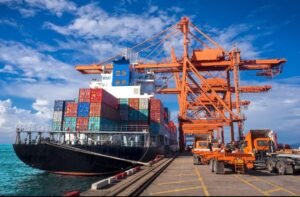
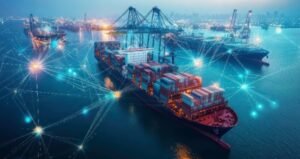
Cross-border trade also becomes more efficient. International shipments typically involve exporters, importers, customs authorities, shipping companies, insurance providers and multiple banks. A shared blockchain ledger reduces paperwork while improving coordination between all participants. Smart contracts automate document verification and payment release when shipment milestones are completed.
Agricultural supply chains present another valuable application. Food processors frequently purchase crops from thousands of farmers through intermediaries. Blockchain records product origin, quality inspections, logistics and payment history. Farmers receive faster payments while financial institutions gain verified transaction data to support agricultural financing.
Pharmaceutical supply chains require high levels of traceability. Medicines move through manufacturers, distributors, hospitals and pharmacies while maintaining strict regulatory compliance. A Web3 finance platform combines financial settlement with product traceability, helping reduce counterfeit products while improving payment efficiency across the healthcare ecosystem.
Tokenization also creates new investment opportunities. Institutional investors, pension funds and asset managers can purchase diversified portfolios of tokenized invoices representing real commercial transactions. These assets generate relatively predictable short-term returns while providing businesses with much-needed liquidity.
Environmental sustainability can be incorporated into financing decisions. AI evaluates carbon emissions, renewable energy usage and environmental compliance across supply chains. Companies demonstrating sustainable operations may receive preferential financing terms, encouraging greener industrial practices.
Governments can benefit from increased transparency. Tax authorities and customs agencies receive verified transaction records, reducing tax evasion while improving trade reporting. Public sector procurement programs can also utilize blockchain finance networks to ensure faster payments for contractors supplying infrastructure and public services.
Cybersecurity remains essential because commercial transaction data is highly valuable. Multi-layer encryption, secure identity verification, digital signatures and continuous threat monitoring protect business information while maintaining network integrity.
India provides an ideal environment for such innovation. As manufacturing expands through initiatives supporting industrial growth, supply chain finance will become increasingly important. Industries including automotive manufacturing, electronics, pharmaceuticals, textiles, steel, food processing and renewable energy could all benefit from blockchain-based financing networks.
A Web3 Supply Chain Finance Network represents more than a digital payment platform. It creates an intelligent financial ecosystem where verified commercial transactions become instantly financeable assets. By combining blockchain transparency, smart contract automation and artificial intelligence, businesses gain faster access to capital, investors gain new asset classes and supply chains become more resilient, efficient and globally competitive.