Agricultural policy is usually implemented in the real world and evaluated afterward. A government promotes a crop, builds storage, expands irrigation or supports a processing industry, and only later discovers whether the intervention produced the expected results.
Digital twins could change this sequence.
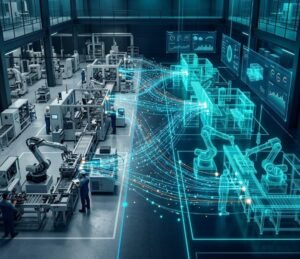
An agricultural digital twin would create a computer-based representation of a region’s farms, crops, water resources, processing facilities, warehouses, transportation systems and markets. Governments could use the model to simulate different policy decisions before committing large amounts of public money.
A district could test what might happen if farmers shifted part of their land from one crop to another. The model could examine expected production, water demand, processing requirements, storage capacity, transport needs and potential market effects.
The purpose would not be to predict the future perfectly. It would be to reveal potential consequences before they become expensive real-world problems.
The same system could simulate agro-processing investments. If a region is expected to produce large quantities of fruit, policymakers could model the effects of adding a new processing facility. The system could estimate whether sufficient raw material would be available, whether additional cold storage would be necessary and whether transportation infrastructure could handle the increased movement of agricultural products.
This would turn agricultural planning into an iterative process of experimentation.
Different scenarios could be tested digitally before being implemented physically.
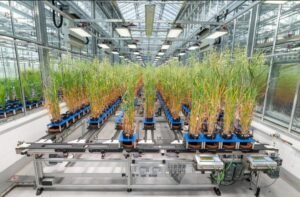
The system could also incorporate genetics and crop characteristics. Researchers could model how different varieties might perform under local environmental conditions and how their characteristics would affect downstream processing.
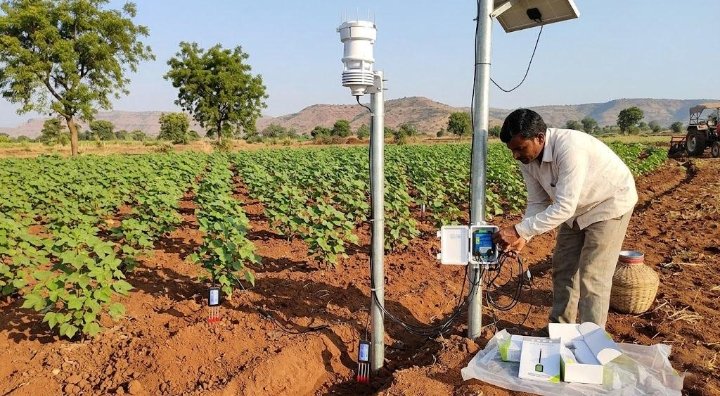
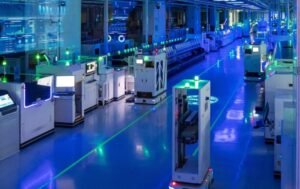
Over time, agricultural digital twins could become living models continuously updated by field sensors, satellite observations, weather information, production records and processing data.
Government would therefore have a dynamic picture of the agricultural economy rather than relying primarily on periodic surveys.
This infrastructure could be particularly valuable for regions where agricultural land, water and industrial capacity are limited. Instead of simply expanding production, policymakers could search for combinations that maximize economic value while respecting resource constraints.
The long-term ambition would be a digital laboratory for agricultural governance, where policies and investments are tested virtually before they are implemented in the physical economy.