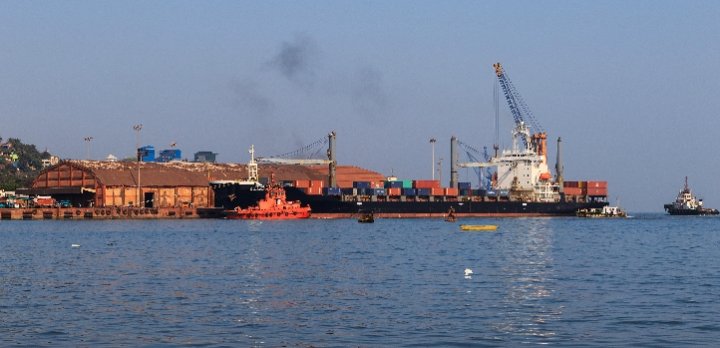
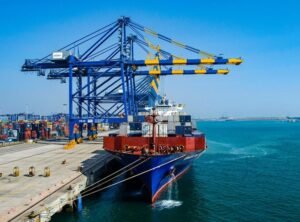
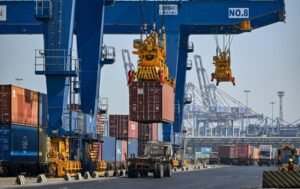
India’s maritime trade is entering a phase in which the largest ports may no longer be the only centres of attention. As the country looks to move more cargo by sea, smaller and regional ports could become increasingly important to manufacturers, exporters and coastal businesses.
The shift is being supported by a broader policy effort to increase the use of coastal shipping and inland waterways. In the Union Budget 2026, the government announced a Coastal Cargo Promotion Scheme with the objective of increasing the combined share of inland waterways and coastal shipping from 6 percent to 12 percent by 2047. The government has also introduced measures including concessions on port charges, priority berthing and faster clearance for coastal cargo.
For Indian trade, the significance goes beyond moving ships from one port to another. The real opportunity is to connect smaller manufacturing centres with ports that can provide practical access to domestic and international markets.
India has a long coastline, but the country’s industrial geography is spread far beyond its major metropolitan centres. Engineering companies, steel manufacturers, food processors, chemical producers, textile businesses and agricultural exporters are often located in smaller cities and industrial clusters. For many of these companies, transportation to a major port can become an important component of the final cost of their products.
A stronger network of regional ports could change that equation.
Consider a manufacturer located relatively close to the coast. If goods can be transported a short distance to a regional port and then moved by sea to another Indian port or an international destination, the company may have an alternative to sending the entire shipment by road. This becomes particularly relevant for heavy and relatively low-value cargo where transportation costs can significantly influence competitiveness.
The government’s own logistics data illustrates the economic logic behind the shift. Inland water transport has been estimated at a lower freight cost per tonne-kilometre than road transport, while also offering potential environmental advantages. Cargo movement on India’s national waterways reached 218 million metric tonnes in 2025-26, compared with 18 million metric tonnes in 2013-14.
The same principle can apply to coastal shipping.
Coastal vessels can carry commodities such as construction materials, steel, cement, fertilizers, agricultural products and other bulk cargo between Indian ports. These shipments do not necessarily require the speed of air freight or the flexibility of road transport. For suitable cargo, moving larger quantities by sea can create a different logistics model.
This could also create opportunities for smaller ports that have historically played a secondary role in India’s trade infrastructure.
The challenge, however, is that a port cannot become a successful trade gateway simply by having a berth and a channel. It needs road and rail connectivity, storage facilities, cargo handling equipment, customs infrastructure, digital systems, reliable shipping services and nearby industrial activity.
Last-mile connectivity is therefore critical.
The government has been integrating ports into the PM GatiShakti planning framework, including the mapping of operational ports and identification of road and rail connectivity requirements. The Sagarmala programme also focuses on port modernisation, connectivity, coastal communities and multimodal logistics.
This is where smaller ports could develop a different business model from the country’s largest container gateways.
A regional port does not necessarily have to compete directly with a major transshipment hub. It could instead specialise. One port could become important for agricultural exports. Another could serve a steel or mineral cluster. A third could specialise in coastal distribution of construction materials. Such specialisation could make investment more targeted and improve the economics of port operations.
There is also an opportunity for private companies.
The government has recently revised its policy governing waterfront and associated land for port-dependent industries. The revised framework is intended to facilitate capacity expansion and private investment, including through public-private partnerships.
This could create a wider ecosystem around ports. Warehouses, cold storage facilities, container freight stations, truck terminals, ship repair facilities and logistics parks can develop around cargo centres. A port can therefore become more than a place where ships load and unload goods. It can become the centre of a regional logistics economy.
For exporters, this could eventually mean more choices.
At present, companies often organise their logistics around established ports because shipping lines, freight forwarders, customs services and inland transportation networks are already concentrated there. Smaller ports need sufficient cargo volumes and dependable services before exporters will routinely shift their operations.
This creates a classic infrastructure challenge. Businesses want reliable services before committing cargo, while shipping and logistics companies want sufficient cargo before investing in services.
Government policy can help break this cycle, but commercial demand ultimately has to sustain the network.
India’s new maritime legislation could also influence this transition. The Coastal Shipping Act, 2025 came into force in March 2026 and provides a dedicated legal framework for coastal shipping. The government says the framework is intended to reduce compliance burdens and expand participation in the sector.
The numbers already indicate that coastal cargo is growing. Data presented by the Ministry of Ports, Shipping and Waterways shows coastal cargo handled at major ports rising from 171 million tonnes in 2021-22 to 196 million tonnes in 2024-25.
The next stage will be about determining how much of this growth can be distributed beyond the biggest ports.
For India, that could have an important regional development effect. A port connected to an industrial cluster can reduce the geographic disadvantage faced by businesses located away from major metropolitan centres. It can also encourage new warehouses, processing facilities and manufacturing units to emerge around coastal districts.
There is another potential benefit. Greater use of coastal shipping can reduce dependence on long-distance road movement for suitable categories of cargo. This could help reduce pressure on highways while creating additional demand for ships, port equipment, marine services and logistics professionals.
The opportunity is therefore not simply about building more ports. It is about creating a network in which ports, highways, railways, waterways, warehouses and industrial clusters function as one trading system.
India’s major ports will continue to handle a large share of international trade. But the future of Indian logistics may increasingly depend on what happens beyond those major gateways.
If smaller ports can develop reliable connectivity, specialised cargo markets and efficient logistics ecosystems, they could become important trade gateways for the next generation of Indian manufacturing and exports.