Urban flooding has become one of the most serious challenges facing cities in monsoon climate regions. Even moderate rainfall can overwhelm drainage networks because of rapid urbanization, increasing paved surfaces, blocked storm drains, and aging infrastructure. Roads become impassable, businesses shut down, public transport is disrupted, and homes suffer extensive damage. Traditional drainage management depends largely on manual inspections and scheduled maintenance, making it difficult to respond quickly when weather conditions change. Industry 4.0 offers a smarter approach by transforming urban drainage systems into intelligent infrastructure capable of monitoring, predicting, and responding to flooding in real time.
Industry 4.0 integrates artificial intelligence, the Internet of Things, cloud computing, digital twins, robotics, automation, and advanced analytics into connected infrastructure. Applied to urban drainage, these technologies create a continuously monitored network that provides city authorities with complete visibility of drainage performance before, during, and after heavy rainfall.
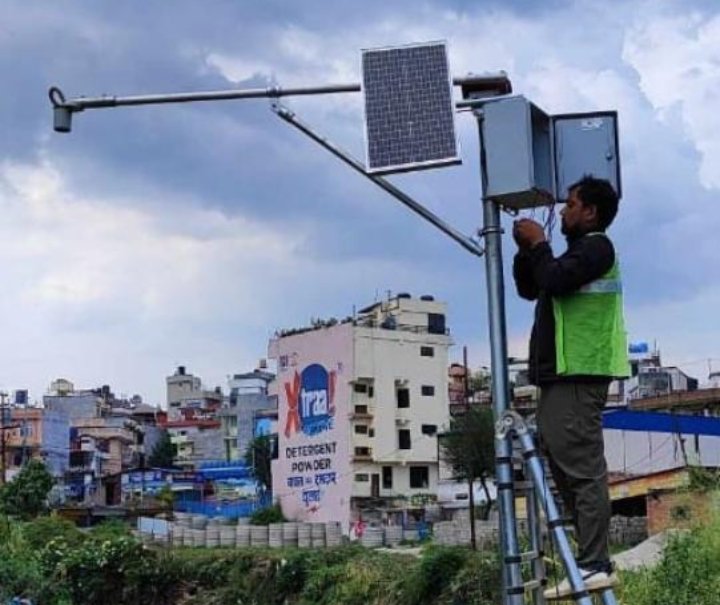
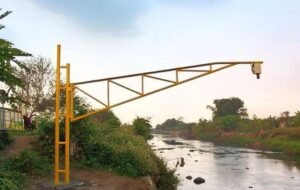
The foundation of a smart drainage system is a network of IoT sensors placed throughout the city’s stormwater infrastructure. Sensors installed inside drains, culverts, underground pipes, canals, retention ponds, and pumping stations measure water levels, flow rates, water pressure, rainfall intensity, and sediment accumulation. These sensors transmit data every few seconds to centralized control systems.
Artificial intelligence processes this information together with weather forecasts, satellite rainfall estimates, historical flooding records, and river water levels. Machine learning models identify areas where flooding is likely to occur before water begins overflowing onto streets. Instead of reacting after complaints are received, city engineers receive predictive alerts that allow preventive action.
Digital twin technology provides an advanced planning tool. A digital twin creates a virtual model of the entire drainage network, including underground pipelines, canals, pumping stations, retention ponds, roads, buildings, and surrounding terrain. Engineers can simulate heavy rainfall scenarios to understand how stormwater moves through the city. Different drainage improvement projects can be tested virtually before construction begins, reducing planning risks and improving investment decisions.
Computer vision enhances inspection efficiency. Cameras installed at major drainage junctions continuously monitor water flow and debris accumulation. Artificial intelligence identifies blocked drains, illegal dumping, excessive vegetation growth, and damaged infrastructure automatically. Maintenance crews receive precise locations that require immediate attention instead of inspecting thousands of drains manually.
Autonomous inspection robots provide another important capability. Small robotic vehicles travel through underground drainage tunnels carrying cameras, laser scanners, and environmental sensors. They identify cracks, sediment buildup, collapsed pipes, root intrusion, and structural damage that would otherwise require hazardous manual inspections.
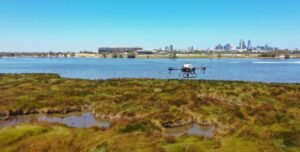
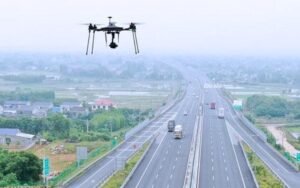
Drone technology supports rapid assessment after severe rainfall. Drones survey flooded streets, drainage canals, retention ponds, and riverbanks, providing real time aerial imagery to emergency response teams. Artificial intelligence analyzes these images to estimate flood extent, identify blocked waterways, and prioritize emergency operations.
Cloud computing connects municipal engineering departments, disaster management authorities, weather agencies, transportation services, electricity utilities, and emergency responders through a shared information platform. Every agency works with the same real time operational data, improving coordination during heavy rainfall events.
Edge computing increases system reliability. Intelligent controllers installed at pumping stations and drainage control points continue processing sensor data even if communication with cloud servers is temporarily interrupted during storms. Automatic gate controls and pumping systems remain operational without requiring constant human supervision.
Predictive maintenance significantly reduces operational costs. Sensors continuously monitor pumps, valves, electrical equipment, and mechanical components for vibration, temperature, pressure, and energy consumption. Artificial intelligence identifies early signs of equipment wear and schedules maintenance before failures occur during critical weather events.
Renewable energy can strengthen drainage resilience. Solar powered sensor stations continue transmitting environmental data during electrical outages, while battery backed pumping stations maintain flood protection when grid power is unavailable. Intelligent energy management systems optimize electricity consumption while ensuring reliable operation.
Citizen participation also becomes part of the Industry 4.0 ecosystem. Mobile applications allow residents to report blocked drains, localized flooding, overflowing canals, or damaged drainage covers by uploading photographs and location information. Artificial intelligence verifies these reports and integrates them into maintenance planning, improving response times.
India’s rapidly expanding cities provide strong opportunities for adopting smart drainage systems. Metropolitan areas such as Mumbai, Chennai, Bengaluru, Kochi, Hyderabad, Kolkata, and Delhi experience recurring urban flooding during the southwest monsoon. Population growth and increasing construction have reduced natural water absorption while placing greater pressure on drainage infrastructure. Industry 4.0 technologies can help cities manage stormwater more effectively without relying solely on expensive expansion projects.
Economic benefits are substantial. Reduced flooding lowers infrastructure repair costs, minimizes traffic disruptions, protects businesses from operational losses, and decreases emergency response expenditures. Insurance claims related to flood damage may also decline as predictive management improves urban resilience.
Environmental benefits are equally important. Intelligent drainage systems improve stormwater management while reducing untreated wastewater discharge into rivers and lakes. Continuous monitoring also supports better water quality management by identifying pollution sources during rainfall events.
Implementation requires investment in communication networks, sensors, cloud platforms, cybersecurity, and workforce training. Artificial intelligence models require reliable environmental data collected over many years to achieve high forecasting accuracy. Long term maintenance of digital infrastructure is equally important for sustained performance.
Industry 4.0 is transforming urban drainage from a passive network into an intelligent system capable of predicting and responding to flooding before damage occurs. Through artificial intelligence, IoT sensors, robotics, drones, cloud computing, and digital twins, cities gain the ability to manage monsoon rainfall more efficiently while protecting infrastructure, supporting economic activity, and improving public safety. As climate variability increases and urban populations continue to grow, smart drainage monitoring will become a fundamental component of resilient and sustainable cities.