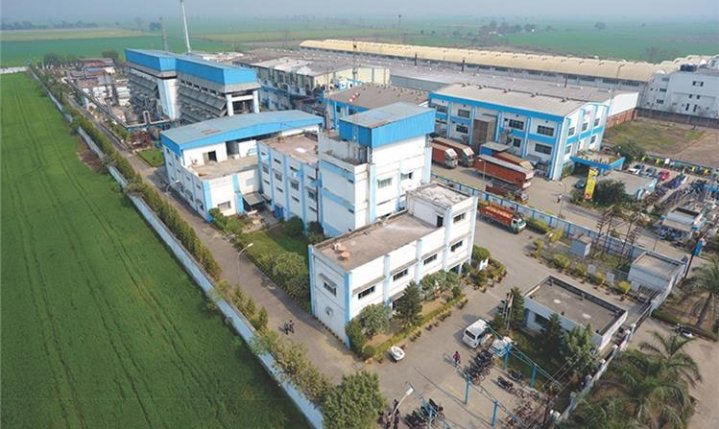
India is one of the world’s leading producers of agrochemicals, manufacturing insecticides, herbicides, fungicides, plant growth regulators and other crop protection products for domestic agriculture and international markets. The industry supports food production, agricultural exports and rural productivity while contributing significantly to the country’s chemical exports. As global markets demand higher quality, stricter traceability and sustainable production, Industry 4.0 technologies offer an opportunity to transform India’s agrochemical manufacturing sector.
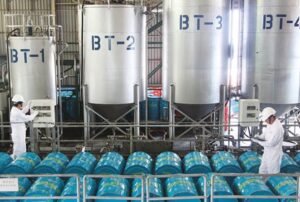
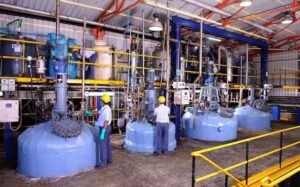
Agrochemical production involves complex chemical synthesis, formulation, blending, filtration, drying and packaging operations. Every manufacturing stage requires precise control over reaction conditions, ingredient proportions and product specifications. Even minor variations can affect the effectiveness, stability and safety of the final product.
Industry 4.0 enables manufacturers to monitor these production processes continuously through connected sensors and industrial automation. Reactors, mixers, storage tanks, pipelines and packaging lines generate real-time operational information, allowing engineers to understand plant performance at every moment.
Artificial intelligence enhances process optimization by analysing production records together with live sensor data. Machine learning algorithms identify operating conditions that maximize production efficiency while reducing raw material consumption, energy use and production waste. Manufacturers can improve profitability while maintaining strict quality standards.
Digital twins provide virtual models of agrochemical manufacturing facilities. Engineers can simulate production changes, equipment upgrades and new product formulations before introducing them into actual operations. Virtual testing reduces development time while minimizing production risks.
Predictive maintenance strengthens plant reliability by monitoring pumps, agitators, compressors, filtration systems and packaging equipment. Connected sensors analyse vibration, temperature, electrical performance and pressure to detect equipment wear before failures interrupt production. Planned maintenance improves operational continuity and reduces unexpected downtime.
Quality control becomes increasingly automated through online analytical systems. Chemical composition, concentration, particle size and formulation characteristics can be measured throughout production instead of relying only on laboratory testing after manufacturing. Immediate feedback allows operators to make rapid process adjustments whenever necessary.
India exports agrochemicals to numerous countries with varying regulatory requirements. Industry 4.0 supports export competitiveness by maintaining complete digital production records, batch traceability and quality documentation. These capabilities strengthen customer confidence while simplifying compliance with international standards.
Raw material management also benefits from digital technologies. Active ingredients and specialty chemicals often represent a significant share of manufacturing costs. Smart inventory systems monitor stock levels, predict procurement requirements and reduce unnecessary storage while ensuring uninterrupted production.
Environmental sustainability is becoming increasingly important within the agrochemical industry. Intelligent monitoring systems continuously measure emissions, wastewater quality, solvent recovery and energy consumption. Manufacturers gain detailed insight into environmental performance while improving compliance with evolving regulations.
Water management represents another major opportunity. Many agrochemical manufacturing processes require substantial water for production and cleaning operations. Connected monitoring systems optimize water recycling, detect leaks and improve overall resource efficiency, reducing both costs and environmental impact.
Worker safety remains a central priority because agrochemical manufacturing involves handling reactive chemicals and specialized formulations. Industry 4.0 systems continuously monitor storage conditions, process parameters and gas concentrations while issuing immediate alerts whenever abnormal situations develop.
Supply chain integration creates additional value by connecting procurement, production planning, warehouse operations and customer orders through unified digital platforms. Manufacturers can respond more effectively to seasonal agricultural demand while minimizing inventory costs.
The increasing use of precision agriculture also creates new opportunities. Manufacturers equipped with intelligent production systems can produce highly specialized formulations tailored for modern farming technologies. Digital manufacturing improves flexibility when producing smaller batches designed for specific crops or regional conditions.
Indian software companies have an opportunity to develop specialized manufacturing execution systems, industrial analytics platforms and quality management software specifically designed for agrochemical production. Such solutions strengthen domestic technological capabilities while supporting industrial modernization.
Engineering institutions should prepare graduates for the future of chemical manufacturing by integrating automation, artificial intelligence, industrial analytics and digital manufacturing into chemical engineering curricula. A digitally skilled workforce will support long-term industrial competitiveness.
Government initiatives promoting advanced manufacturing, agricultural innovation and industrial digitalization can accelerate Industry 4.0 adoption across agrochemical manufacturing clusters. Collaborative research involving universities, technology firms and manufacturers can further strengthen innovation.
India’s agrochemical industry already enjoys a strong international reputation for manufacturing capability and export performance. Industry 4.0 provides an opportunity to build upon these strengths through intelligent production systems that improve efficiency, quality and sustainability.
As global agriculture becomes increasingly technology driven, customers will expect greater traceability, consistent quality and environmentally responsible manufacturing. Smart factories equipped with connected technologies are better positioned to meet these expectations while supporting long-term export growth.
Industry 4.0 represents the next stage in the evolution of India’s agrochemical industry. By combining chemical engineering expertise with digital technologies, manufacturers can build more efficient, resilient and globally competitive production systems that contribute to both agricultural productivity and industrial development.