India’s fertilizer industry is one of the country’s most strategically important manufacturing sectors. It supports food security, agricultural productivity and rural livelihoods while supplying millions of tonnes of urea, diammonium phosphate and complex fertilizers every year. As the country works toward improving manufacturing efficiency and reducing environmental impacts, Industry 4.0 technologies are becoming increasingly relevant. Among these technologies, digital twins offer a particularly promising opportunity for fertilizer manufacturing plants.
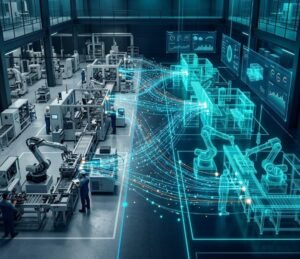
A digital twin is a virtual representation of a physical asset, production line or entire factory. Using sensors, industrial automation systems and real-time operational data, the digital model mirrors what is happening inside the plant. Engineers can observe equipment performance, simulate operational changes and predict future outcomes without interrupting production.
Fertilizer plants operate through highly integrated chemical processes involving reactors, compressors, pipelines, boilers, heat exchangers and storage systems. Even a small operational disruption can affect production efficiency, increase energy consumption or create safety concerns. Digital twins allow operators to monitor these interconnected systems continuously and identify potential problems before they become serious.
India’s large fertilizer manufacturing complexes consume significant quantities of natural gas, electricity and water. Energy costs account for a major share of production expenses. A digital twin can analyse operating conditions throughout the plant and recommend adjustments that reduce fuel consumption while maintaining product quality. Even modest improvements in energy efficiency can generate substantial financial savings over time.
Predictive maintenance is another major advantage. Equipment failures in fertilizer plants often result in expensive shutdowns and production losses. By continuously analysing vibration, pressure, temperature and flow data, digital twins can identify early signs of wear in pumps, compressors and rotating machinery. Maintenance teams can schedule repairs during planned shutdowns instead of responding to unexpected failures.
Safety is especially important in fertilizer manufacturing because many production processes involve ammonia, high-pressure systems and hazardous chemicals. Digital twins provide operators with continuous visibility into operating conditions and can issue early warnings when process parameters move outside safe limits. This additional layer of monitoring strengthens plant safety while reducing operational risks.
Environmental compliance also benefits from digital twin technology. Fertilizer manufacturers must manage emissions, wastewater and resource consumption according to regulatory standards. Digital twins can simulate process adjustments that reduce emissions while maintaining production efficiency. Plant managers gain better insight into how operational decisions influence environmental performance.
India has invested heavily in digital infrastructure over the past decade, creating favourable conditions for industrial digitalisation. Fertilizer plants equipped with modern sensors, industrial control systems and reliable communication networks can gradually integrate digital twin technologies without replacing existing production equipment entirely.
Artificial intelligence further enhances digital twins by identifying patterns that human operators may overlook. AI algorithms can analyse years of operational data alongside real-time measurements to recommend process improvements, forecast equipment performance and optimise production schedules according to seasonal demand.
The agricultural sector itself could benefit from closer integration between fertilizer production and digital agriculture. Manufacturing plants equipped with digital twins can improve production planning based on agricultural demand forecasts, helping reduce shortages and excess inventory during different cropping seasons.
Training represents another important application. Fertilizer plants require highly skilled engineers and operators capable of managing complex chemical processes. Digital twins create realistic virtual environments where employees can practise responding to equipment failures, process disturbances and emergency situations without exposing themselves or the facility to actual risks.
Research and development activities can also accelerate through virtual modelling. Engineers can test process modifications, evaluate equipment upgrades and optimise operating conditions using digital simulations before implementing physical changes inside the plant. This reduces experimentation costs while improving decision-making.
Government agencies have an opportunity to encourage digital twin adoption through targeted industrial modernisation programmes. Financial incentives supporting sensor deployment, industrial automation and workforce training could accelerate digital transformation across fertilizer manufacturing facilities.
Universities and engineering institutions should also participate by incorporating digital twin technologies into chemical engineering education. Graduates entering the fertilizer industry would possess practical knowledge of advanced manufacturing systems, strengthening India’s future industrial workforce.
Indian technology companies can develop specialised software platforms designed specifically for fertilizer manufacturing. Rather than relying entirely on imported industrial software, domestic innovation can create solutions suited to Indian operating conditions, regulatory requirements and production practices.
Cybersecurity must remain an important consideration as fertilizer plants become increasingly connected. Secure industrial communication networks, data protection systems and continuous monitoring are essential to protect critical manufacturing infrastructure from digital threats.
The transition toward digital twins does not require complete replacement of existing facilities. Manufacturers can begin with individual production units, maintenance systems or energy management applications before expanding digital capabilities across the entire plant. This phased approach reduces investment risks while allowing organisations to develop internal expertise.
Several fertilizer manufacturing companies already possess advanced automation systems that provide a strong foundation for digital twin implementation. By integrating these existing technologies with artificial intelligence, industrial analytics and real-time monitoring, manufacturers can unlock additional operational value without fundamentally changing established production processes.
India’s fertilizer industry has played a central role in supporting agricultural development for decades. As Industry 4.0 reshapes manufacturing worldwide, digital twins offer an opportunity to improve efficiency, strengthen safety, reduce environmental impacts and enhance global competitiveness. By embracing this technology within fertilizer manufacturing plants, India can build a smarter and more resilient chemical industry capable of supporting both industrial growth and national food security for the decades ahead.