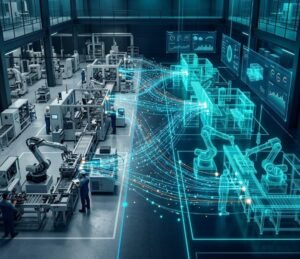
Digital twin technology is emerging as one of the most important components of Industry 4.0. A digital twin is a virtual representation of a physical system that continuously receives real time information through sensors and connected devices. In manufacturing, digital twins are used to optimize production and predict equipment failures. The same concept has significant potential in India’s fisheries and aquaculture sector, where environmental conditions, fish health and operational efficiency constantly influence productivity.
India is among the world’s largest producers of fish and aquaculture products. States such as Andhra Pradesh, Kerala, Tamil Nadu, Odisha, West Bengal and Gujarat have built strong fisheries ecosystems that support millions of livelihoods. However, fish farming remains vulnerable to unpredictable weather, fluctuating water quality, disease outbreaks and inefficient resource utilization. Digital twin technology provides a scientific framework for managing these challenges using continuous data analysis and predictive decision making.
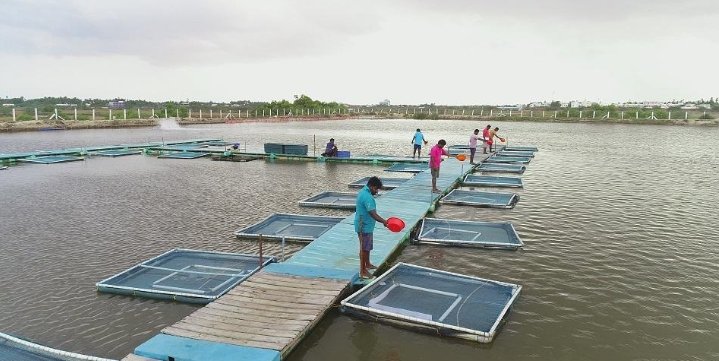
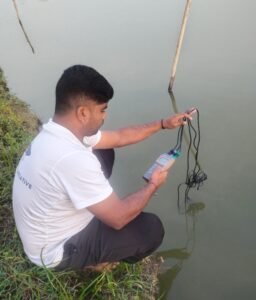
A digital twin begins with the installation of IoT sensors throughout the fish farm. Sensors monitor dissolved oxygen, water temperature, pH, salinity, ammonia, turbidity and water levels. Cameras observe fish movement and feeding behaviour, while automated feeding systems record feed consumption. Weather stations contribute information about rainfall, wind, humidity and solar radiation. All this information flows into a cloud platform where a virtual copy of the farm is continuously updated.
Instead of viewing individual measurements separately, farm managers interact with a complete digital model of their ponds or tanks. The system reflects current conditions in real time and predicts how those conditions may change over the coming hours or days.
Artificial intelligence strengthens the digital twin by analysing historical records together with current sensor information. The system can simulate different management decisions before they are implemented in the real world. For example, managers can evaluate how changing feed schedules may influence fish growth, oxygen demand and production costs. They can also predict the effects of heavy rainfall or increasing temperatures on pond conditions.
Disease prevention becomes more proactive through digital twin technology. The system continuously evaluates environmental variables associated with disease development. If multiple risk factors begin to appear together, the digital twin alerts operators before visible symptoms emerge. Early intervention reduces mortality and minimizes economic losses.
Feed represents one of the largest operating expenses in aquaculture. Digital twins analyse fish growth rates, feeding behaviour and water quality to recommend optimal feeding schedules. Automated feeders can then deliver the right quantity of feed at the right time, reducing waste while improving feed conversion efficiency.
Water resource management also improves significantly. The digital twin predicts when water quality will deteriorate and recommends partial water exchange or aeration before conditions become harmful. This reduces unnecessary water usage while maintaining healthier production environments.
Government fisheries departments can use digital twins beyond individual farms. District level or state level digital twins can combine information from multiple farms, reservoirs and coastal regions. Authorities gain a comprehensive understanding of production trends, disease risks, water availability and environmental changes. This supports evidence based planning and targeted policy interventions.
Research institutions also benefit from the large volumes of data generated by digital twins. Scientists can evaluate how different environmental conditions influence fish growth across multiple regions and seasons. New farming practices can be tested virtually before field implementation, reducing research costs and accelerating innovation.
Insurance companies may eventually use digital twin data to improve risk assessment. Farms that consistently maintain healthy operating conditions through continuous monitoring may qualify for lower insurance premiums because their production risks are lower.
Banks and financial institutions can also use verified operational data when evaluating loan applications. Instead of relying only on historical financial records, lenders gain insight into the current performance and management quality of aquaculture enterprises.
Climate change increases uncertainty for fisheries across India. Rising temperatures, changing rainfall patterns and extreme weather events directly affect fish production. Digital twins help farmers prepare for these challenges by simulating future environmental conditions and identifying appropriate adaptation strategies before problems occur.
Export competitiveness also improves. International buyers increasingly expect scientifically managed production systems with complete operational records. Digital twins automatically document environmental conditions, production history and management practices, supporting quality certification and international compliance.
Successful implementation requires affordable sensor technology, reliable internet connectivity and digital literacy among farmers. Government support through pilot projects, fisheries cooperatives and technology partnerships can accelerate adoption, particularly among small and medium scale producers.
Universities, fisheries research institutes and technology companies have an important role in developing digital twin models specifically designed for Indian fish species, climatic conditions and farming practices. Local innovation will ensure that solutions remain practical and economically viable.
India’s fisheries sector is entering a period where future growth will depend not only on expanding production but also on improving efficiency, sustainability and resilience. Digital twin technology provides a powerful Industry 4.0 solution that transforms fish farming from reactive management to predictive intelligence.
By integrating IoT sensors, artificial intelligence, cloud computing and advanced simulation models, digital twins can help India’s fisheries sector produce more with fewer resources while improving profitability, environmental sustainability and global competitiveness. As adoption expands, this technology has the potential to become a cornerstone of the country’s next generation blue economy.