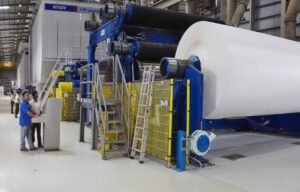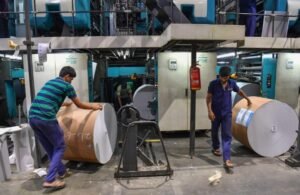
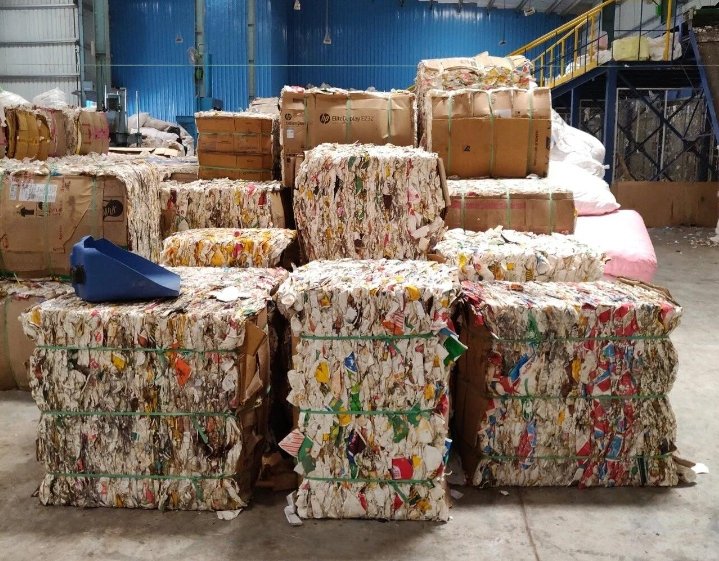
India’s paper industry is expanding rapidly due to increasing demand from packaging, education, healthcare, publishing, food delivery, and e-commerce. At the same time, millions of tonnes of waste paper are generated every year by households, offices, schools, industries, shopping centres, warehouses, and commercial establishments. Much of this recyclable material is collected through fragmented and informal networks, resulting in inconsistent quality, supply shortages, and inefficient pricing. A National Paper Recycling Exchange can digitally connect the entire recycling ecosystem, making paper recovery more efficient while strengthening India’s circular economy.
The platform would function as a nationwide digital marketplace connecting waste paper collectors, municipal corporations, scrap dealers, recycling companies, paper mills, logistics providers, packaging manufacturers, financial institutions, and government agencies. Every participant would operate through a secure cloud platform designed specifically for the paper recycling industry.
Every batch of recyclable paper would receive a digital identity. Information such as paper grade, source, weight, moisture level, contamination level, collection date, and storage location would be digitally recorded before entering the recycling chain.
Artificial intelligence would automatically classify waste paper using computer vision systems. Cameras installed at recycling centres would identify newspapers, office paper, corrugated boxes, cartons, magazines, paperboard, kraft paper, tissue waste, and mixed paper grades. Machine learning algorithms would estimate quality and recommend the most suitable recycling process.
Real-time pricing would improve transparency across the industry. AI would continuously analyse recycled paper demand, pulp prices, transportation costs, import prices, seasonal demand, and mill capacity to generate fair market pricing. Buyers and sellers would benefit from more efficient transactions based on current market conditions.
The platform would optimise logistics using artificial intelligence. Collection vehicles would receive AI-generated routes that minimise fuel consumption while maximising collection efficiency. Large recycling centres could coordinate transportation directly with paper mills, reducing delivery delays and operational costs.
Internet of Things sensors would monitor warehouse conditions. Temperature, humidity, fire safety systems, and storage capacity would be continuously monitored to maintain paper quality before recycling. Alerts would notify operators if environmental conditions threaten stored inventory.
Blockchain technology would strengthen traceability. Every collection event, ownership transfer, quality inspection, transportation milestone, and recycling certificate would be securely recorded. Paper manufacturers could verify that recycled fibre originated from authorised collection networks and met quality standards.
Paper mills would gain access to a more stable supply of recycled fibre. Better visibility into nationwide inventory would reduce dependence on imported recovered paper while improving production planning and lowering raw material costs.
Municipal corporations would benefit through improved waste management. The platform would provide dashboards showing paper collection rates, recycling volumes, regional recovery performance, and landfill diversion. This information would support better urban waste management policies.
Schools, universities, offices, retail chains, and industrial parks could participate directly by listing recyclable paper for sale through the exchange. Large generators of waste paper would receive better prices while contributing to national recycling efforts.
Banks and financial institutions could integrate digital financing into the platform. Verified transaction histories and inventory records would support working capital loans for recycling businesses and equipment financing for collection operators.
Insurance providers would benefit from digital warehouse monitoring and inventory tracking, improving risk assessment for storage facilities, transportation fleets, and recycling plants.
Government agencies responsible for environment, forestry, urban development, industry, and commerce would gain access to anonymised national recycling intelligence. Aggregated data would reveal recycling performance, raw material availability, regional demand, and opportunities for expanding domestic paper recovery.
Artificial intelligence would also calculate environmental benefits. The platform would estimate reductions in landfill waste, water consumption, energy use, greenhouse gas emissions, and tree harvesting resulting from increased recycling. Manufacturers could include verified sustainability metrics in environmental reporting.
Cloud computing would enable nationwide participation, allowing businesses of every size to access secure digital services through scalable infrastructure. Manufacturers, recyclers, collectors, and policymakers would receive customised dashboards supporting operational and strategic decision-making.
Cybersecurity would protect commercial transactions, inventory records, logistics information, and customer data through encrypted communications, digital identity systems, continuous monitoring, and secure cloud architecture.
Technology companies could develop AI sorting systems, recycling analytics software, logistics optimisation platforms, IoT monitoring solutions, blockchain traceability tools, and cloud infrastructure specifically designed for India’s recycling industry. Universities and research institutions could contribute advanced fibre recovery technologies, automated quality assessment systems, and predictive recycling models.
As demand for paper products continues to grow, recovered fibre will become an increasingly valuable industrial resource. A digitally connected recycling ecosystem will help India reduce imports, improve environmental performance, strengthen domestic manufacturing, and create new business opportunities.
A National Paper Recycling Exchange represents a major Industry 4.0 opportunity. By integrating artificial intelligence, IoT, blockchain, cloud computing, and digital logistics into a unified recycling platform, India can build a modern circular paper economy that supports sustainable manufacturing, efficient resource utilisation, stronger supply chains, and long-term industrial competitiveness.