The aluminium industry depends on an efficient supply chain that connects bauxite mines, alumina refineries, aluminium smelters, rolling mills, fabrication units, warehouses, ports, and international customers. Even minor delays in transportation or inventory management can increase production costs and reduce export competitiveness. As India expands its manufacturing sector, a Smart Aluminium Supply Chain Platform powered by Industry 4.0 technologies can significantly improve the movement of aluminium across the country and into global markets.
The platform would integrate every participant in the aluminium value chain through a common digital infrastructure. Mining companies, transport operators, railway authorities, warehouse operators, manufacturers, logistics providers, shipping companies, ports, customs authorities, banks, and exporters would exchange information through a secure cloud-based network.
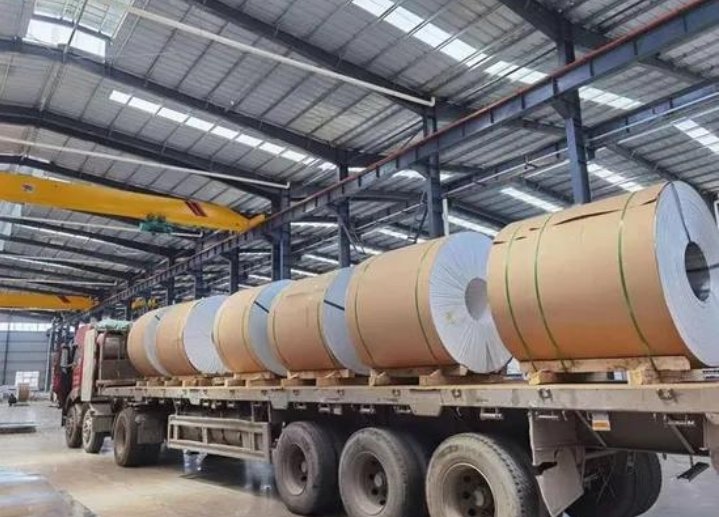
Every shipment of bauxite, alumina, primary aluminium, billets, ingots, coils, sheets, foils, extrusions, and finished products would receive a unique digital identity. IoT sensors attached to vehicles and containers would continuously transmit information such as location, temperature, vibration, humidity, travel speed, and estimated arrival time.
Artificial intelligence would analyze this information in real time to identify delays, congestion, equipment failures, and bottlenecks. If a railway route becomes congested or severe weather affects a port, the system automatically recommends alternative logistics routes to minimize disruptions.
Inventory management becomes much more efficient through AI forecasting. Manufacturing plants receive accurate predictions regarding raw material availability, customer demand, and transportation schedules. This reduces unnecessary stockpiling while preventing shortages that could interrupt production.
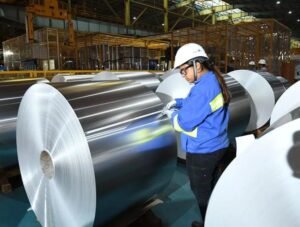
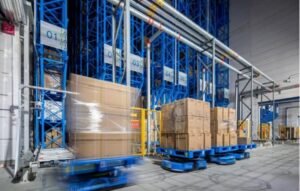
Warehouse operations also benefit from automation. Smart storage systems equipped with barcode scanners, RFID tags, autonomous forklifts, and robotic inventory management improve the speed and accuracy of material handling. AI optimizes warehouse layouts based on product movement patterns and shipment priorities.
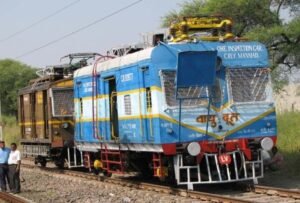
India’s railway network plays an important role in aluminium transportation. Bulk shipments of bauxite, alumina, and finished aluminium products move across long distances before reaching factories and ports. The platform integrates railway schedules, freight capacity, maintenance activities, and route availability to improve transportation planning.
Road transport companies also participate through GPS-enabled fleet management systems. AI continuously evaluates fuel efficiency, vehicle utilization, maintenance schedules, driver performance, and delivery timelines. Logistics providers can reduce transportation costs while improving delivery reliability.
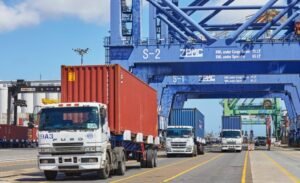
Port operations become more efficient as well. The platform connects exporters with port authorities, customs agencies, shipping lines, and freight forwarders. Digital documentation reduces paperwork, while AI predicts vessel arrivals, berth availability, cargo handling capacity, and loading schedules.
International buyers gain access to shipment tracking information throughout the export journey. Verified delivery timelines improve customer confidence while reducing uncertainty in international supply chains.
Blockchain technology can be integrated to create tamper-resistant logistics records. Every transfer between mines, warehouses, factories, transport companies, and ports is securely recorded. This improves traceability while simplifying regulatory compliance and quality assurance.
Banks and trade finance institutions benefit because shipment status is visible throughout the supply chain. Verified logistics information reduces uncertainty in export financing, invoice discounting, and working capital lending.
Insurance companies gain more accurate information for marine cargo, inland transit, and warehouse insurance. Real-time monitoring of shipment conditions allows faster claim verification while encouraging better logistics practices.
Government agencies responsible for transportation, mining, exports, and industrial development receive aggregated logistics intelligence. Anonymous data reveals freight movement patterns, infrastructure bottlenecks, and regional supply chain performance, supporting evidence-based investment decisions.
Artificial intelligence also supports sustainability. The platform recommends transportation routes that reduce fuel consumption and carbon emissions while maximizing vehicle utilization. Better logistics planning contributes to India’s environmental goals without compromising industrial productivity.
Cloud computing provides the scalable infrastructure required to process millions of logistics events every day. Secure cloud platforms ensure that information remains available to authorized participants regardless of location.
Cybersecurity remains essential because logistics systems form part of India’s critical industrial infrastructure. Encrypted communications, secure digital identities, continuous monitoring, and zero-trust architecture protect operational information from cyber threats.
Technology companies can develop IoT devices, logistics software, AI analytics, blockchain platforms, warehouse automation systems, and fleet management solutions tailored specifically for the aluminium sector. These innovations create new opportunities for India’s growing industrial technology ecosystem.
As aluminium demand continues to increase across construction, transportation, renewable energy, aerospace, packaging, and electric vehicles, logistics efficiency will become an increasingly important competitive advantage.
A Smart Aluminium Supply Chain Platform represents a major Industry 4.0 opportunity for India. By integrating artificial intelligence, IoT, blockchain, cloud computing, and digital logistics into a unified ecosystem, India can reduce transportation costs, improve export reliability, strengthen industrial productivity, and establish a resilient supply chain capable of supporting long-term economic growth.