The global aluminium industry is becoming increasingly focused on transparency, sustainability, and responsible sourcing. International buyers no longer evaluate aluminium products only on price and quality. They also want to know where the aluminium originated, how it was produced, whether environmental standards were followed, and whether the supply chain complies with international regulations. For India, one of the world’s largest aluminium producers, blockchain based aluminium traceability offers an opportunity to strengthen export competitiveness while building greater confidence among global customers.
A blockchain based traceability platform creates a secure digital identity for every batch of aluminium produced in India. Beginning at the bauxite mine, each stage of production is digitally recorded. Mining, transportation, alumina refining, aluminium smelting, rolling, extrusion, fabrication, warehousing, logistics, and export are all linked together through a tamper resistant digital ledger.
The journey begins when bauxite is extracted from a licensed mine. Digital records capture the mining location, extraction date, production volume, environmental approvals, and transportation details. This information is permanently stored within the blockchain network.
When the bauxite reaches an alumina refinery, additional production information is recorded. Details such as refining batch numbers, quality analysis, production efficiency, and environmental monitoring become part of the product’s digital history. As alumina moves to aluminium smelters, every transfer is securely documented.
Artificial intelligence strengthens the system by automatically verifying data consistency across the supply chain. AI compares production quantities, transport records, inventory levels, laboratory reports, and export documents. If unusual discrepancies appear, the system immediately alerts operators for further verification before products enter international markets.
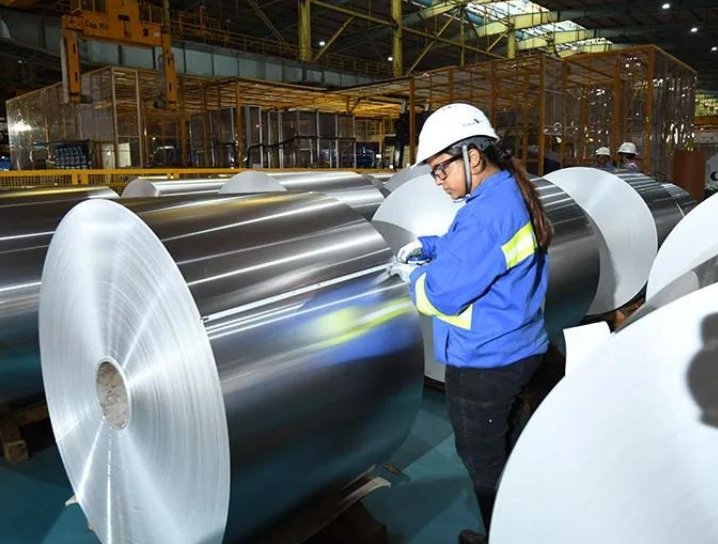
The platform continues tracking aluminium through rolling mills, extrusion plants, casting facilities, and downstream manufacturers. Every finished product receives a digital certificate that allows international buyers to verify its complete manufacturing history.
Global industries increasingly demand supply chain transparency. Automobile manufacturers, aircraft producers, construction companies, renewable energy developers, and packaging firms want assurance that raw materials originate from responsible producers. Blockchain based traceability provides this confidence through independently verifiable digital records.
Environmental reporting becomes much more reliable. Information regarding renewable energy usage, carbon emissions, water consumption, recycling rates, and waste management practices is permanently linked to production batches. Buyers seeking lower carbon aluminium products can compare suppliers using verified environmental data instead of relying solely on company declarations.
The platform also improves quality management. Laboratory reports measuring chemical composition, alloy specifications, tensile strength, and mechanical properties are digitally attached to every production batch. Customers receive certified quality information before products leave India.
Export documentation becomes significantly more efficient. Customs authorities, shipping companies, banks, insurance providers, and overseas buyers all access verified digital information from the same secure platform. Administrative paperwork is reduced while international trade moves more quickly.
Banks financing aluminium exports also benefit. Verified production records and transparent supply chain information reduce commercial uncertainty. Financial institutions can evaluate trade finance applications more efficiently because critical documentation already exists within the digital ecosystem.
Insurance providers gain access to reliable production and logistics information. Verified manufacturing histories, transport records, and warehouse conditions improve risk assessment for export shipments while supporting more efficient claims processing if necessary.
India’s aluminium recycling industry can also participate. Recycled aluminium receives its own digital identity documenting collection sources, refining processes, quality testing, and manufacturing history. International buyers increasingly value recycled aluminium because of its lower environmental footprint.
Government agencies responsible for mining, exports, environmental regulation, and industrial development gain access to comprehensive digital reporting. Production volumes, export statistics, sustainability performance, and compliance information become available through secure dashboards, improving regulatory efficiency while reducing manual reporting requirements.
Small and medium sized manufacturers also benefit from participation. Digital traceability allows smaller exporters to demonstrate compliance with international quality and sustainability standards, improving access to premium overseas markets that may otherwise favor larger multinational suppliers.
Cybersecurity remains fundamental to the platform. Blockchain infrastructure, encrypted communications, secure cloud architecture, digital identity management, and continuous monitoring protect commercially valuable information against unauthorized access while maintaining system integrity.
Indian technology companies have opportunities to develop blockchain platforms, supply chain software, laboratory information systems, AI analytics, cloud infrastructure, and cybersecurity solutions tailored specifically for the aluminium industry. These technologies can later be adapted for steel, copper, lithium, rare earth minerals, and other industrial sectors.
Universities and research institutions may contribute by developing improved blockchain architectures, supply chain analytics, sustainability measurement techniques, and artificial intelligence models that support industrial traceability.
As global trade becomes increasingly focused on transparency and sustainability, digital infrastructure will become as important as manufacturing capacity itself. Countries capable of providing trusted, verifiable, and efficient supply chain information will enjoy stronger competitive advantages.
Blockchain based aluminium traceability represents a strategic Industry 4.0 investment for India. By integrating blockchain, artificial intelligence, cloud computing, digital certification, and secure supply chain management into a unified platform, India can strengthen the international reputation of its aluminium exports while improving operational efficiency, increasing buyer confidence, and positioning itself as a trusted supplier in the evolving global industrial economy.