Healthy soil is the foundation of agricultural productivity. India has millions of farms with different soil types, nutrient levels, water-holding capacities, organic matter content, and mineral compositions. Yet many farming decisions continue to rely on generalized recommendations rather than field-specific information. An AI Powered Soil Intelligence Infrastructure would create a nationwide digital ecosystem that continuously measures, analyzes, and predicts soil health, enabling more scientific and sustainable farming.
Traditional soil testing provides valuable information but is often conducted infrequently. Soil conditions change over time because of rainfall, irrigation, fertilizer application, crop rotation, erosion, and climate variation. A digital soil intelligence infrastructure would combine laboratory testing, field sensors, satellite observations, drone imagery, weather information, and artificial intelligence into a continuously updated national platform.
The first layer of the infrastructure would consist of modern soil laboratories distributed across agricultural regions. These laboratories would analyze samples for nitrogen, phosphorus, potassium, micronutrients, pH, salinity, organic carbon, and other critical indicators. Every result would be uploaded into a centralized digital database that builds long-term soil profiles for different farming regions.
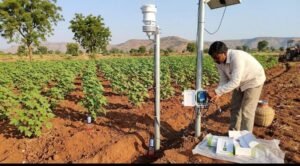
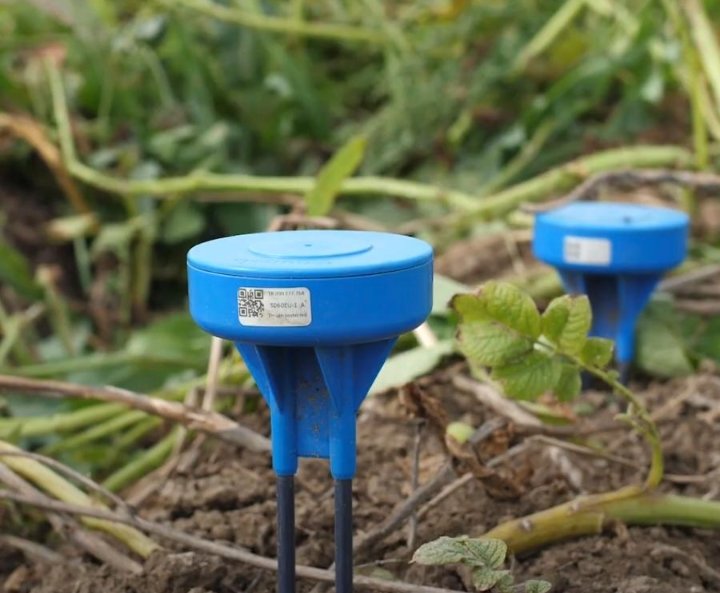
Internet of Things sensors installed in fields would provide continuous measurements of soil moisture, temperature, electrical conductivity, and other important parameters. Instead of waiting months between laboratory tests, farmers would receive near real-time information about changing soil conditions throughout the growing season.
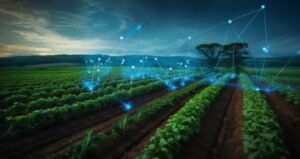
Artificial intelligence would integrate this information with satellite imagery, rainfall records, historical crop yields, fertilizer usage, irrigation schedules, and weather forecasts. Machine learning models could estimate nutrient depletion, identify declining soil health, predict productivity, and recommend corrective actions before significant yield losses occur.
One of the greatest advantages of such infrastructure is precision fertilizer management. Instead of applying identical fertilizer quantities across an entire field, farmers could receive location-specific recommendations. Different parts of the same farm often require different nutrient levels. Variable-rate fertilizer application reduces waste while improving crop performance and lowering production costs.
Water management also becomes more efficient. Soil moisture monitoring enables irrigation systems to deliver water only where it is needed. Artificial intelligence can estimate future moisture levels using weather forecasts and evaporation models, allowing irrigation schedules to be optimized for both productivity and water conservation.
Crop selection becomes increasingly scientific through soil intelligence. Farmers planning future seasons could evaluate which crops are most suitable for their fields based on nutrient availability, soil structure, drainage characteristics, historical productivity, and expected climate conditions. This reduces risk while improving long-term profitability.
Soil degradation remains a growing concern across many agricultural regions. Excessive fertilizer use, salinity, erosion, declining organic matter, and poor water management gradually reduce soil productivity. AI systems can identify early warning signs before degradation becomes severe, enabling timely intervention through improved farming practices.
Carbon management represents another important opportunity. Healthy soils store significant amounts of carbon, contributing to climate change mitigation. A digital soil intelligence infrastructure could estimate carbon storage, monitor improvements resulting from sustainable farming practices, and support future carbon credit markets for agriculture.
Agricultural research institutions would gain access to one of the largest soil datasets in the world. Scientists could analyze regional soil variations, evaluate fertilizer effectiveness, develop improved crop varieties, and better understand interactions between soil, climate, and agricultural productivity. Such knowledge strengthens evidence-based agricultural policy.
Financial institutions would also benefit. Banks providing agricultural loans often face uncertainty regarding long-term farm productivity. Verified soil health information allows more accurate assessment of agricultural potential, supporting better lending decisions and reducing financial risk.
Insurance providers can integrate soil intelligence with weather and crop monitoring systems to improve risk assessment. Understanding soil conditions helps explain crop performance during droughts, floods, and extreme weather events, leading to faster and more accurate claim evaluations.
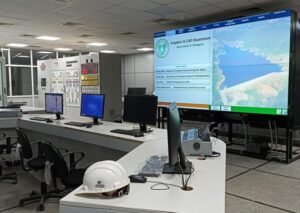
Government agencies would gain powerful planning tools. National soil health maps updated continuously through digital infrastructure would identify nutrient deficiencies, salinity problems, erosion risks, and regions requiring conservation investments. Agricultural development programmes could therefore target resources more effectively.
Private technology companies would find numerous innovation opportunities. Startups could develop specialized applications for fertilizer optimization, irrigation management, pest prediction, crop planning, carbon monitoring, sustainability reporting, and farm advisory services using standardized soil intelligence data.
India has already demonstrated leadership in building digital public infrastructure. Extending this success to soil intelligence would strengthen one of the country’s most valuable natural resources. An AI Powered Soil Intelligence Infrastructure would improve agricultural productivity, reduce input costs, conserve water, protect soil health, strengthen food security, and support a more sustainable agricultural economy for future generations.