Scrap processing is one of the oldest industrial activities in the world. Long before modern recycling became a global priority, metal scrap was collected, sorted, melted, and reused to manufacture new products. Today, scrap processing supports steel plants, foundries, aluminium producers, copper manufacturers, automobile recycling, ship breaking, construction, and heavy engineering. As India expands its manufacturing sector and circular economy, Industry 4.0 can transform scrap processing into a highly efficient and intelligent industrial ecosystem.
Scrap processing involves collection, transportation, inspection, sorting, cutting, shredding, baling, storage, and distribution. Every stage affects the quality of recycled materials supplied to manufacturers. Traditionally, much of this work has relied on manual inspection and operator experience. Industry 4.0 enables these activities to become data driven and highly automated.
The Industrial Internet of Things forms the foundation of smart scrap processing. Sensors installed on shredders, crushers, conveyors, balers, cranes, weighbridges, loaders, and processing equipment continuously measure machine performance, vibration, energy consumption, operating temperatures, production output, and equipment health. Plant managers receive real time visibility into every stage of operations.
Artificial intelligence converts operational data into better decisions. AI systems optimize equipment scheduling, material flow, storage utilization, and processing sequences. By analyzing incoming scrap volumes and market demand, AI can recommend the most efficient production schedules while reducing operational costs.
Machine vision is one of the most valuable Industry 4.0 technologies for scrap processing. High resolution cameras combined with artificial intelligence can automatically identify different metals, remove contaminants, classify material grades, and separate recyclable products with far greater accuracy than manual inspection. Better sorting improves the quality of recycled materials supplied to steel mills and manufacturing industries.
Digital twins provide another important capability. Every processing plant can have a virtual model that mirrors production in real time. Engineers can simulate equipment upgrades, production changes, storage layouts, and workflow improvements before implementing them in the actual facility. This reduces operational risks while improving long term planning.
Predictive maintenance significantly improves equipment reliability. Scrap processing machinery operates under severe mechanical stress while handling heavy materials. Sensors continuously monitor motors, bearings, hydraulic systems, gearboxes, and cutting equipment. Artificial intelligence predicts maintenance requirements before unexpected failures interrupt production.
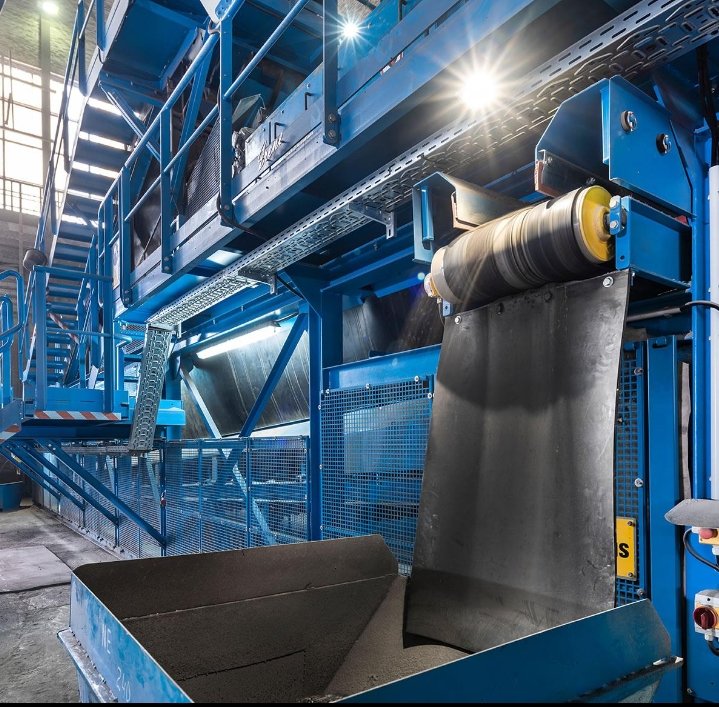
Automation also improves material handling. Robotic cranes, automated guided vehicles, conveyor systems, and intelligent storage equipment move scrap efficiently throughout processing facilities. Automation reduces manual handling while increasing productivity and workplace safety.
Environmental performance becomes stronger through connected technologies. Smart monitoring systems continuously measure dust emissions, noise levels, energy consumption, wastewater, and air quality. Digital analytics identify opportunities to reduce environmental impact while improving regulatory compliance.
Worker safety remains a top priority because scrap processing involves heavy machinery, sharp materials, and hazardous operating conditions. Wearable devices, environmental sensors, machine safety systems, and intelligent alerts reduce workplace risks while improving emergency response capabilities.
Supply chain integration extends Industry 4.0 beyond the processing plant. Scrap collectors, recycling centers, steel mills, foundries, transport companies, ports, and manufacturers can exchange real time information regarding inventory, production schedules, logistics, and market demand. Better coordination strengthens the entire recycling ecosystem.
Energy management also improves significantly. Shredders, crushers, conveyors, and processing equipment consume large amounts of electricity. Smart energy systems continuously monitor power usage and optimize equipment operation, reducing both operating costs and carbon emissions.
India’s transition toward a circular economy depends heavily on efficient recycling industries. High quality recycled metals reduce dependence on imported raw materials, lower production costs, and decrease environmental impact across manufacturing sectors.
The adoption of Industry 4.0 can begin with connected sensors, machine vision, predictive maintenance, and digital monitoring before expanding into robotics, digital twins, and advanced automation. This gradual transformation allows recycling companies to modernize without disrupting existing operations.
Scrap processing has supported industrial development for generations by turning discarded materials into valuable resources. Industry 4.0 represents the next stage of that evolution. By integrating artificial intelligence, connected equipment, machine vision, digital twins, robotics, and advanced analytics, India’s scrap processing industry can become more productive, environmentally sustainable, and globally competitive while strengthening the country’s manufacturing and recycling economy.