India’s textile industry is one of the oldest industries in the world and remains one of the country’s largest employers and exporters. From cotton and silk to technical textiles and synthetic fabrics, the sector supplies global markets with a wide variety of products. As international competition intensifies, manufacturers must improve productivity, quality, sustainability, and speed. Industry 4.0 provides the technological foundation for transforming India’s textile industry into a globally competitive smart manufacturing ecosystem.
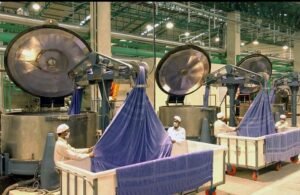
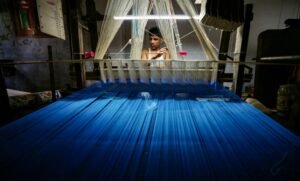
Textile manufacturing consists of multiple interconnected stages including spinning, weaving, knitting, dyeing, finishing, cutting, stitching, and packaging. Every stage influences the quality of the final product. Traditionally, many of these operations have depended on manual supervision and periodic quality inspections. Industry 4.0 replaces this approach with continuous monitoring and intelligent automation.
The Industrial Internet of Things enables thousands of sensors to collect real time information from spinning machines, looms, knitting equipment, dyeing units, compressors, boilers, and finishing lines. Machine speed, yarn tension, vibration, temperature, humidity, energy consumption, and production output are monitored continuously through a centralized digital platform.
Artificial intelligence analyzes this operational data to optimize manufacturing performance. AI systems identify production bottlenecks, recommend machine adjustments, predict equipment failures, and improve scheduling. Instead of relying only on operator experience, production decisions become data driven and highly responsive to changing conditions.
Digital twins can significantly improve factory operations. Every production line can have a virtual replica that mirrors real time performance. Engineers can simulate production schedules, machine settings, fabric designs, and workflow changes before implementing them on the factory floor. This reduces costly experimentation while accelerating process improvements.
Predictive maintenance is another major advantage. Textile factories depend on high speed machinery operating continuously for long production cycles. Unexpected failures can disrupt production schedules and delay customer deliveries. Sensors measuring vibration, temperature, lubrication, and electrical loads enable artificial intelligence to detect early signs of equipment wear. Maintenance teams receive alerts before breakdowns occur, allowing repairs during planned maintenance windows.
Machine vision systems strengthen quality control. High resolution cameras inspect fabrics for weaving defects, color inconsistencies, holes, stains, loose threads, and surface imperfections while production continues at full speed. Artificial intelligence classifies defects instantly and removes defective products before they reach customers. This improves consistency while reducing waste.
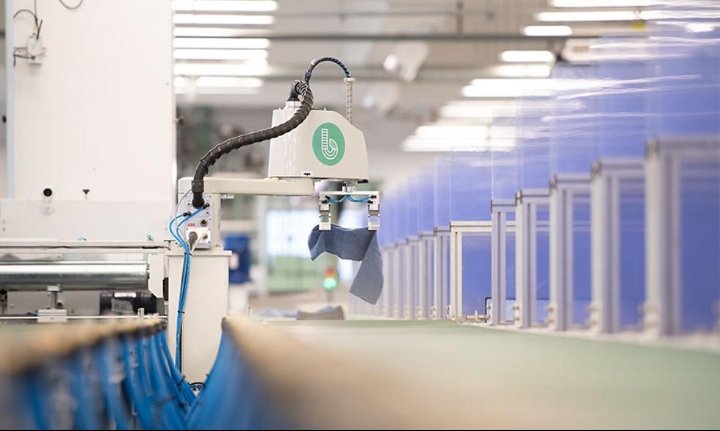
Robotics also plays an increasing role in textile manufacturing. Automated systems transport yarn, fabric rolls, finished garments, and packaging materials throughout the factory. Robotic handling reduces manual effort while improving speed, accuracy, and workplace safety.
Supply chain integration extends Industry 4.0 beyond the factory. Raw material suppliers, textile mills, garment manufacturers, logistics providers, warehouses, exporters, and retailers can exchange information through digital platforms. Real time visibility into inventory levels, production status, and customer demand enables manufacturers to reduce inventory costs while improving delivery performance.
Energy efficiency has become increasingly important because textile manufacturing consumes significant amounts of electricity, steam, and water. Smart energy management systems monitor consumption across every production process and recommend improvements that reduce operating costs and carbon emissions.
Water management is especially critical in dyeing and finishing operations. Digital monitoring systems optimize water usage, chemical dosing, wastewater treatment, and recycling processes. Manufacturers can reduce environmental impact while complying with increasingly strict international sustainability requirements.
Worker safety also benefits from connected technologies. Wearable devices, environmental sensors, and automated safety monitoring systems can detect excessive temperatures, chemical exposure, machine hazards, and emergency situations. Digital alerts improve response times while creating safer working environments.
Global buyers increasingly demand transparency regarding production practices, environmental performance, and product traceability. Industry 4.0 enables manufacturers to maintain digital records covering raw materials, production batches, quality inspections, environmental performance, and shipment history. These capabilities strengthen India’s competitiveness in international textile markets.
The transition to smart manufacturing does not require complete factory replacement. Many textile manufacturers can begin by installing sensors, digital monitoring systems, and artificial intelligence on existing equipment before gradually introducing robotics, digital twins, and advanced automation.
India has the talent, manufacturing capacity, and global reputation to become a leader in smart textile manufacturing. By embracing Industry 4.0 technologies, manufacturers can produce higher quality products with greater efficiency while reducing waste, conserving resources, and improving sustainability.
The textile industry has continuously evolved for centuries by adopting new technologies. Industry 4.0 represents the next major step in that journey. Through artificial intelligence, connected machinery, digital twins, robotics, and intelligent analytics, India’s textile sector can strengthen its global leadership while ensuring that one of the country’s oldest industries remains competitive in the digital era.