For decades, India’s export strategy has focused primarily on goods and information technology services. Pharmaceuticals, engineering products, textiles, chemicals, automobiles, software, and business process outsourcing have become major contributors to the country’s economy. As the world enters the era of intelligent manufacturing, India has an opportunity to develop an entirely new export category. Smart manufacturing solutions.
Industry 4.0 combines artificial intelligence, robotics, industrial automation, digital twins, industrial Internet of Things, cloud computing, machine vision, predictive analytics, and advanced software to transform factories into intelligent production systems. Countries across Asia, Europe, Africa, and Latin America are modernising their industries and searching for affordable, reliable technology partners. India is well positioned to meet this demand.
India already possesses many of the required strengths. The country has one of the world’s largest engineering workforces, a globally respected software industry, expanding electronics manufacturing, growing startup ecosystems, and decades of experience delivering technology services to international clients. Rather than importing every component of Industry 4.0, India can increasingly design, build, and export complete industrial solutions.
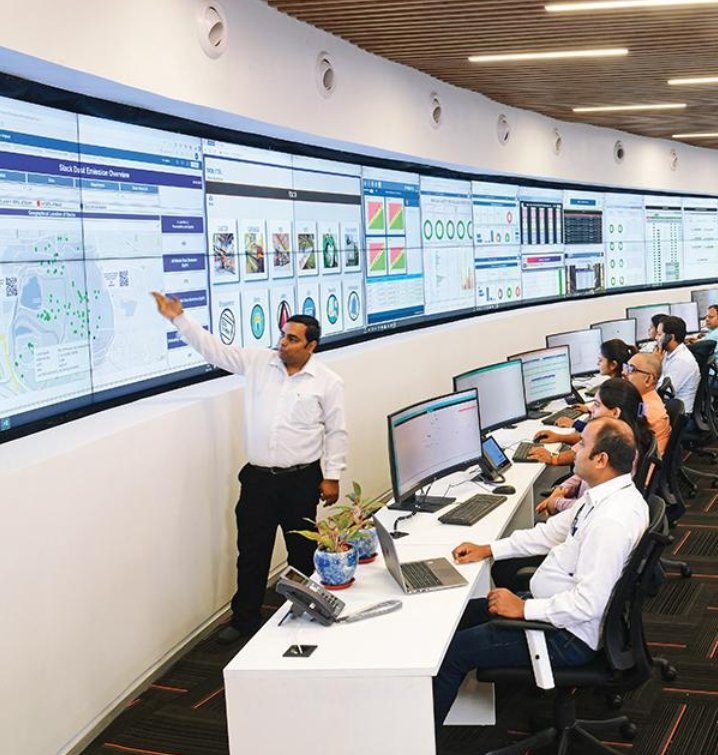
The opportunity extends far beyond robots. Modern factories require integrated systems that connect machines, production planning, quality control, inventory management, maintenance, cybersecurity, logistics, and energy management. Indian companies can develop software platforms that manage these operations while integrating with equipment from manufacturers across the world.
Artificial intelligence represents one of the fastest growing export opportunities. AI systems can optimise production schedules, predict equipment failures, improve quality inspection, analyse industrial data, and reduce energy consumption. These capabilities are valuable across manufacturing sectors including pharmaceuticals, chemicals, food processing, automotive production, mining, electronics, and consumer goods.
Industrial cybersecurity is another emerging export sector. As factories become increasingly connected, protecting operational technology networks has become a global priority. India already has a growing cybersecurity industry with expertise in financial services, telecommunications, and information technology. Expanding these capabilities into industrial cybersecurity creates new international business opportunities.
Digital twin technology also deserves attention. Digital twins create virtual models of factories, production lines, power plants, mines, and industrial equipment. Engineers use these models to simulate operational changes, improve efficiency, and reduce maintenance costs. Indian software companies and engineering firms can provide digital twin development services to manufacturers worldwide.
India’s electronics manufacturing industry can also benefit from this transition. Smart factories require industrial sensors, communication devices, embedded systems, programmable controllers, and edge computing equipment. Producing these technologies domestically reduces import dependence while creating new export markets.
The pharmaceutical sector provides a practical example. India is already one of the world’s leading medicine producers. Indian companies can expand beyond exporting pharmaceuticals by supplying digital manufacturing platforms, laboratory automation systems, quality management software, and regulatory compliance technologies to pharmaceutical manufacturers globally.
The chemical industry offers similar opportunities. Smart monitoring systems, process optimisation software, industrial analytics, and environmental compliance platforms can become valuable exports alongside chemical products themselves. Instead of competing only on manufacturing costs, Indian companies can compete on technology and expertise.
Mining is another sector undergoing rapid digital transformation. Autonomous vehicles, remote monitoring, predictive maintenance, geological data analysis, and environmental management systems are increasingly becoming standard worldwide. Indian technology companies can build affordable solutions tailored for developing economies that are modernising their mining industries.
India’s startup ecosystem has an important role to play. Many startups are already developing artificial intelligence platforms, industrial analytics software, robotics applications, and automation technologies. With appropriate financial support and international market access, these companies can become global suppliers of Industry 4.0 solutions.
Academic institutions must also contribute to this vision. Engineering colleges and universities should strengthen research in robotics, industrial artificial intelligence, industrial communication systems, embedded electronics, advanced manufacturing, and automation engineering. Strong collaboration between academia and industry will accelerate innovation while preparing graduates for emerging global markets.
Government policy can significantly accelerate this transformation. Incentives for industrial research, advanced manufacturing, semiconductor production, robotics development, export promotion, and international technology partnerships can strengthen India’s position within the global Industry 4.0 landscape. Export financing and standards certification will also help Indian companies compete internationally.
Small and medium enterprises should not be overlooked. Many specialised engineering firms already manufacture industrial equipment, machine components, electrical systems, and automation products. Supporting these businesses with digital capabilities allows them to participate in global supply chains while expanding export opportunities.
Trade diplomacy will also become increasingly important. Bilateral partnerships focused on industrial technology, digital manufacturing standards, technical training, and research collaboration can open new markets for Indian Industry 4.0 companies. Emerging economies in Africa, Southeast Asia, Latin America, and the Middle East represent particularly promising destinations.
India’s success in information technology demonstrated that intellectual capability can become a powerful export engine. The next evolution is combining software excellence with engineering expertise to serve the global manufacturing economy. Countries investing in industrial modernisation need integrated technology partners rather than isolated products.
The future of manufacturing will depend not only on factories but also on the intelligence embedded within those factories. Nations capable of exporting industrial knowledge, automation platforms, digital infrastructure, and engineering innovation will capture a larger share of global economic value.
India has the talent, industrial base, entrepreneurial energy, and technological capability to become one of the world’s leading suppliers of smart manufacturing solutions. By treating Industry 4.0 as both a domestic transformation and an export opportunity, India can create a new generation of high value industries that strengthen economic growth, expand global influence, and position the country at the centre of the next industrial revolution.