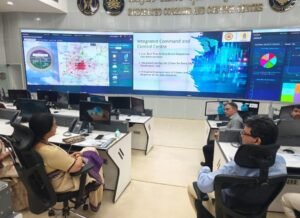
India’s growth story over the coming decades will depend not only on ambitious policies but also on the quality of evidence that shapes those policies. As the country pursues rapid economic development, technological leadership and social progress, policymaking must increasingly rely on data, research and measurable outcomes rather than assumptions or isolated observations. Building an evidence based policy ecosystem can help India improve governance, allocate public resources more effectively and respond more quickly to emerging national challenges.
Evidence based policymaking is the process of designing, implementing and evaluating public policies using reliable information. It combines statistical data, academic research, field studies, economic analysis, technological tools and continuous feedback from citizens to support better decision making. Rather than relying solely on historical practices or administrative intuition, governments use objective evidence to determine which interventions are most likely to succeed.
India has already created a strong digital foundation that supports this transition. Digital identity systems, online payment platforms, electronic public services and expanding digital governance initiatives generate valuable information about public service delivery. These digital systems provide policymakers with timely insights into healthcare, education, welfare programmes, taxation, agriculture and infrastructure. The challenge now is to transform this information into actionable knowledge.
High quality data should become the foundation of every major public policy. Accurate information allows governments to identify problems early, understand regional differences and measure the impact of interventions. Whether addressing employment, industrial development, education or healthcare, reliable datasets help ensure that decisions are based on measurable realities rather than broad assumptions.
Research institutions have an equally important role to play. Universities, think tanks and specialised research organisations possess expertise in economics, public administration, technology, engineering, healthcare and environmental science. Strong partnerships between these institutions and government departments encourage the development of practical policy solutions supported by scientific analysis. Policymaking becomes stronger when academic knowledge is connected with administrative experience.
Artificial intelligence offers powerful new tools for evidence based governance. AI systems can analyse large datasets, identify patterns and generate forecasts that assist policymakers in understanding future challenges. Predictive analytics can estimate the effects of demographic change, industrial growth, climate risks, healthcare demand and infrastructure requirements. Such capabilities enable governments to act proactively rather than waiting for problems to become more severe.
Pilot projects should become standard practice before nationwide implementation of major policies. Testing new initiatives in selected districts or states provides valuable evidence regarding operational challenges, financial implications and citizen responses. Successful models can then be expanded with greater confidence, while programmes that perform poorly can be redesigned before significant public resources are committed.
Policy evaluation deserves greater institutional attention. Many government programmes continue for years without comprehensive assessment of their long term effectiveness. Independent evaluations conducted by research institutions and professional organisations provide objective analysis of programme outcomes. Such evaluations should examine not only expenditure but also measurable improvements in public welfare, economic productivity and service quality.
Open government data can further strengthen the policy ecosystem. Making non sensitive public datasets available to researchers, entrepreneurs and civil society organisations encourages innovation while improving transparency. Technology companies can develop analytical tools, researchers can identify emerging trends and citizens gain greater understanding of government performance. Open data also encourages collaboration between the public and private sectors.
District administrations should become active contributors to evidence based governance. Local officials possess first hand knowledge of implementation challenges and community needs. Digital reporting systems allow districts to share real time information with state and national governments, creating a continuous feedback loop that improves policy design. Local innovations that demonstrate measurable success can be adopted by other districts facing similar challenges.
Economic policymaking particularly benefits from evidence driven approaches. Employment trends, industrial production, export performance, investment flows and consumer demand can all be monitored continuously through digital systems. Governments can respond more effectively to changing economic conditions while identifying sectors requiring additional policy support. Evidence based industrial strategies improve competitiveness while encouraging sustainable economic growth.
Healthcare offers another compelling example. Integrated health information systems allow policymakers to monitor disease trends, hospital capacity, vaccination coverage and public health outcomes. Resources can then be directed towards areas experiencing the greatest need, improving both efficiency and health outcomes. Evidence also supports better planning for future healthcare infrastructure and workforce development.
Education policies should similarly rely on measurable indicators. Student learning outcomes, attendance, teacher availability, digital access and infrastructure quality provide valuable information about the performance of educational systems. Continuous assessment enables governments to identify successful teaching methods while addressing gaps in educational quality across different regions.
Climate resilience will increasingly require evidence based planning. Weather data, satellite imagery, water availability, agricultural production and environmental monitoring systems provide essential information for developing adaptation strategies. Policymakers can use these insights to strengthen disaster preparedness, improve water management and promote sustainable development.
Technology infrastructure forms the backbone of this policy ecosystem. Secure cloud platforms, interoperable databases, digital identity systems and advanced cybersecurity capabilities allow government departments to exchange information efficiently while protecting sensitive data. Standardised data formats improve collaboration across ministries, states and local governments.
Human capacity remains just as important as technology. Civil servants, policymakers and public administrators should receive training in data interpretation, policy analysis, artificial intelligence and research methods. A workforce capable of understanding and applying evidence effectively will strengthen governance across every level of government.
Ethics and privacy must guide the development of evidence based policymaking. Citizens should remain confident that personal information is collected responsibly, stored securely and used only for legitimate public purposes. Transparent governance frameworks, strong data protection laws and independent oversight help maintain public trust while supporting innovation.
International experience provides valuable lessons, but policies should always reflect India’s unique social, economic and cultural realities. Adapting global best practices to local conditions ensures that reforms remain practical and effective. India’s diversity requires flexible policy frameworks capable of addressing different regional priorities while supporting national development objectives.
Evidence based policymaking also encourages accountability. Clearly defined objectives, measurable indicators and regular public reporting allow governments to evaluate progress objectively. Successful programmes can be expanded, while less effective initiatives can be modified or replaced based on reliable evidence. This culture of continuous improvement strengthens public confidence in governance.
India stands at a moment when digital transformation, artificial intelligence and expanding research capabilities can fundamentally improve the quality of public policy. Building an evidence based policy ecosystem will not eliminate every governance challenge, but it will enable better decisions, more efficient use of public resources and stronger long term development outcomes.
The future of governance will increasingly belong to nations that combine vision with evidence, innovation with accountability and technology with human judgment. By investing in data systems, research partnerships, digital infrastructure and analytical capacity, India can create a policymaking ecosystem that supports faster economic growth, better public services and more informed national development for generations to come.