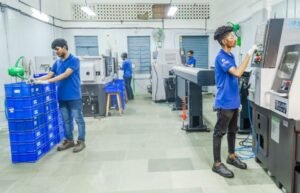
Small manufacturers often struggle to access advanced machinery because purchasing and maintaining industrial equipment requires substantial capital. At the same time, existing factories may have underutilised machines, vacant production slots and spare processing capacity. A digital infrastructure platform built around manufacturing tokens could connect these two groups and make industrial resources more accessible.
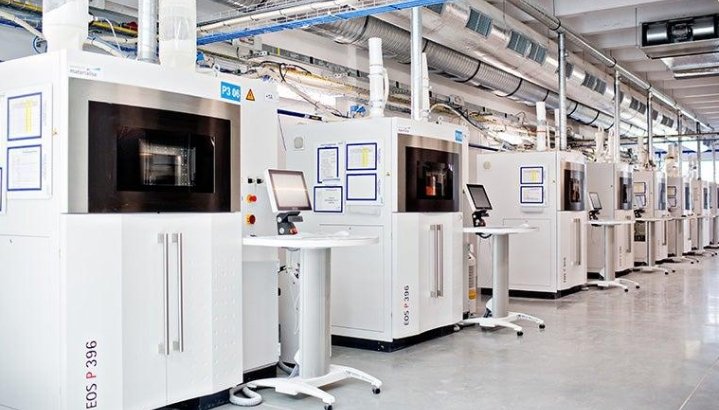
The concept involves creating digital units that represent clearly defined rights to use verified manufacturing capacity. A token might correspond to one hour on a CNC machine, a specified quantity of fabrication work, a packaging-line slot or a reserved period on an industrial 3D printer. These units would operate as digital service entitlements rather than speculative financial assets.
A manufacturer needing a component could search the platform for available machinery, technical capabilities, production schedules and prices. Instead of investing in equipment, the business could purchase the required machine time from a participating factory. Machine owners could list unused capacity, establish booking conditions and earn additional revenue from existing assets.
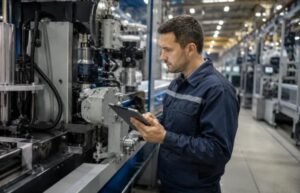
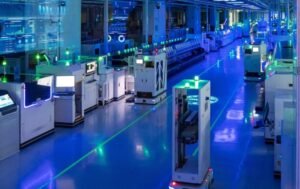
Industry 4.0 technologies would support the system. IoT sensors and machine controllers could record operating hours, production quantities and equipment availability. Digital production records could document job completion, while AI-based scheduling could match orders with suitable machines according to cost, location, technical specifications and delivery deadlines. Integration with computer-aided manufacturing systems could eventually allow production files and job instructions to move securely between approved participants.
The business could generate revenue through booking commissions, subscriptions for participating factories, production coordination fees and premium scheduling services. Additional services could include quality inspection, material procurement, transportation and maintenance coordination.
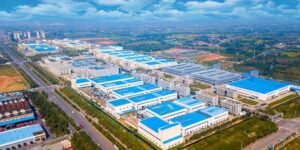
The model could be particularly useful for industrial clusters containing metalworking workshops, fabrication units, furniture manufacturers, packaging businesses and small engineering companies. A pilot could begin with a limited network of factories offering a few standardised services. For example, local businesses needing metal components could book verified machine time or outsource specific production jobs through the platform.
The principal challenge is standardisation. Machines with similar names may differ significantly in accuracy, tooling, material compatibility and operator expertise. The platform must therefore verify equipment specifications, establish clear quality requirements, protect confidential designs and define responsibility for defective products, delays and equipment damage.
Tokens also require careful design. Each unit should have an identifiable meaning, enforceable terms and transparent redemption rules. A conventional database-based credit system may be sufficient initially; blockchain technology is only worth introducing if it solves a specific problem involving independent verification or coordination across organisations. Transferable tokens, investment features or secondary trading may introduce additional legal and regulatory obligations.
Over time, the platform could evolve into a distributed manufacturing operating system. Businesses would submit production requirements, the system would allocate jobs across available facilities, and digital records would track materials, machine usage, quality checks and delivery. Small manufacturers could participate in larger production contracts without individually owning every required capability.
The larger opportunity lies in treating manufacturing capacity as a service that can be measured, scheduled and shared. By connecting idle machinery with unmet production demand, local manufacturing tokens could improve industrial asset utilisation, reduce entry barriers for new enterprises and create a digitally coordinated network of small manufacturers.