International trade traditionally depends on money, credit, and formal payment systems. Yet businesses frequently possess goods they cannot easily sell while simultaneously purchasing other goods they need. A manufacturer may have surplus steel, another may hold unused electronic components, and a third may have excess packaging materials. Each company has something of economic value, but conventional trading systems do not always make it easy to exchange these resources directly.
Digital barter networks could offer an alternative.
The concept is to create a technology platform that enables businesses to exchange surplus inventory, production capacity, services, and materials through coordinated multilateral transactions. Instead of requiring two companies to want exactly what the other offers, the platform would identify chains of compatible exchanges involving multiple participants.
For example, a textile manufacturer may offer surplus fabric to a furniture producer. The furniture producer might supply products to a hotel, while the hotel provides accommodation credits or other services to a logistics company. The logistics company could then provide transportation services to the textile manufacturer. A digital network could coordinate these exchanges, provided every participant agrees to the terms and the valuations are independently established.
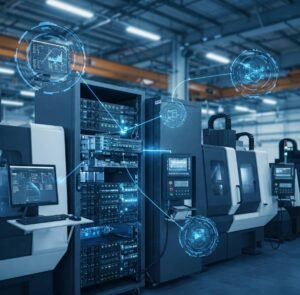
Artificial intelligence could help identify potential matches by comparing inventories, purchasing requirements, geographical locations, transportation costs, and expected demand. A company holding excess materials could discover buyers that would otherwise remain outside its commercial network.
The model could be particularly useful for small and medium-sized enterprises. Businesses often accumulate slow-moving inventory because customer demand changes, production plans are revised, or orders are cancelled. Selling these materials through conventional channels may require substantial discounts. A barter network could provide additional ways to exchange them for useful resources.
A more advanced system could introduce trade credits. When a company supplies verified goods or services, it receives credits that can be redeemed against purchases from other participating businesses. These credits would represent contractual claims within the network rather than automatically functioning as money. Clear rules would be required for valuation, expiry, redemption, and settlement.
India could pilot such networks within industrial estates, manufacturing clusters, agricultural processing zones, and export-oriented business communities. Common quality standards and digital inventory records would help participants assess available goods. Warehousing and inspection partners could verify deliveries, while dispute-resolution procedures could address disagreements over quality and valuation.
However, barter does not eliminate economic costs. Businesses still need to account for transportation, storage, taxes, accounting treatment, and differences in the value of exchanged goods. Cross-border transactions would face additional customs, foreign-exchange, and regulatory requirements. In India, barter transactions may still create taxable supplies under applicable law, even when no cash changes hands.
The network would also need safeguards against inflated valuations, counterfeit goods, non-delivery, and participants accumulating credits they cannot redeem. Transparent pricing benchmarks, verified participants, transaction limits, and reliable settlement mechanisms would be essential.
The most promising application may not be replacing money altogether. It may be reducing the amount of useful inventory and productive capacity that remains idle because businesses cannot find an appropriate buyer or supplier.
If successful, digital barter networks could create a complementary layer of commerce in which industrial surpluses become inputs for other businesses. For India, this could improve resource utilization, support smaller manufacturers, and create new commercial relationships across industrial clusters.
The central innovation is simple: a business should not have to leave valuable resources unused merely because its existing trading relationships cannot convert them into something useful.