Imagine a system where agricultural policy does not begin with deciding which crops farmers should grow. It begins with identifying which biological properties future industries will need.
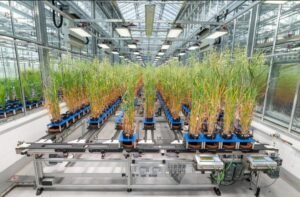
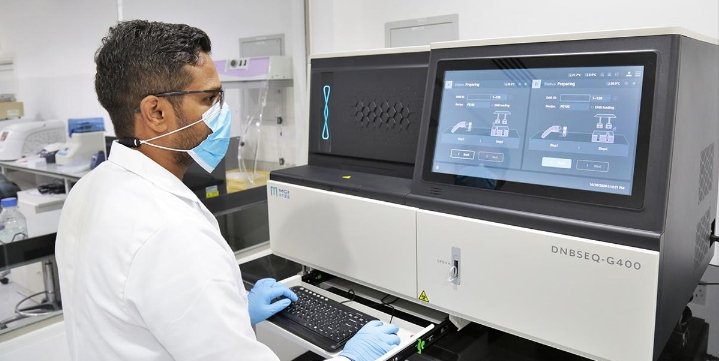
A government could establish biological foundries that catalogue crop genetics, biochemical characteristics and processing behaviour. Food companies, pharmaceutical manufacturers, biomaterial producers and other industries could submit requirements for future biological inputs.
The system could then search existing genetic diversity for organisms and varieties possessing useful characteristics.
One company might need a plant with unusually high fibre content. Another might require an oilseed with a particular composition. A food manufacturer might seek a fruit with exceptional processing yield. A biomaterials company could be interested in agricultural residues containing valuable structural compounds.
Machine learning could connect these industrial requirements with enormous biological datasets.
Instead of asking which crop is most profitable today, policymakers could ask which biological characteristics may become strategically valuable over the next decade.
This creates a radically different form of agricultural industrial policy.
The biological foundry would not necessarily create genetically modified organisms. It could begin with characterization, conventional breeding, genomic analysis, tissue culture, marker-assisted breeding and controlled experimentation, while more advanced biotechnology could be pursued only within appropriate scientific and regulatory frameworks.
The most unusual feature would be the connection to downstream manufacturing.
A processing company could effectively communicate a biological specification to the research system. Researchers could translate that specification into measurable crop traits. Breeding programmes could search for those traits. Farmers could eventually cultivate the resulting varieties under defined production systems.
Agriculture would become an upstream research platform for manufacturing.
A region could therefore develop a portfolio of biological capabilities rather than simply a portfolio of crops.
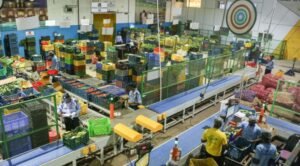
One district might specialize in high-value fibres. Another could specialize in oils and plant-based ingredients. Another could develop tropical fruit genetics for processing. Another could focus on fermentation feedstocks or agricultural biomaterials.
The government would provide research infrastructure, standards, data systems and coordination rather than attempting to operate every farm or factory.
Over time, the most valuable infrastructure might not be a new agricultural market.
It could be a biological discovery network that continuously searches the country’s genetic diversity for the raw materials of industries that do not yet exist.