Agriculture is usually organized around the crop. Farmers grow rice, banana, coconut, mango, spices or cassava, and the market determines what happens after harvest. A more advanced model would organize agriculture around the final industrial product. Instead of asking only which crop grows best in a region, the question would be which biological characteristics processors need and whether crops can be developed specifically to provide them.
This creates an opportunity to connect crop genetics, biotechnology and agro-processing into one industrial system.
A food processor may not simply want a particular crop. It may want a crop with a specific combination of characteristics. A starch manufacturer may require high starch content and particular processing properties. An oil producer may want seeds with a desirable oil profile. A beverage manufacturer may require particular flavour compounds. A fruit processor may want varieties that produce higher pulp yields and remain stable during processing. A fibre manufacturer may require plants with stronger or longer fibres.
Traditional agricultural markets often treat these characteristics as secondary. A genetics-led processing economy would make them central.
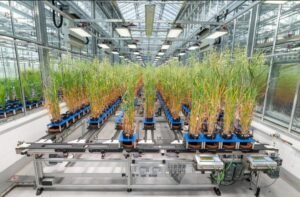
The basic idea is to develop regional crop genetics platforms where farmers, food processors, biotechnology companies, universities and research institutions work together to develop varieties for clearly defined industrial applications.
The processor becomes part of the breeding conversation.
Suppose a regional food industry has a growing demand for jackfruit puree. Instead of simply purchasing whatever jackfruit is available, processors could define their requirements. They might need particular pulp characteristics, consistent fruit size, suitable sweetness, lower processing losses and a predictable harvest period. Researchers could then investigate existing genetic diversity and breeding approaches that could help meet those requirements.
The same principle could apply to bananas, coconut, cassava, spices, pulses, oilseeds and many other crops.
This does not mean replacing conventional agriculture with laboratories. It means adding a biological research layer between agriculture and manufacturing.
The resulting value chain could begin with genetics and breeding, continue through specialized cultivation, move into controlled collection and quality testing, and end in highly specialized processing facilities.
A farmer participating in such a system would no longer be selling only a commodity. The farmer would be producing a biologically specified industrial input.
That distinction could be economically important.
Commodity agriculture generally competes heavily on price. If many producers sell similar raw materials, buyers have substantial bargaining power. But when a crop has characteristics specifically matched to a processing technology or branded product, the relationship can become more specialized.
A processor may value reliability, consistency and biochemical characteristics as much as the basic weight of the crop.
Digital infrastructure could make this system significantly more powerful. Farmers could record varieties, planting dates, production conditions and harvest information. Collection centres could perform standardized quality measurements. Processing factories could record how different varieties behave during manufacturing.
Over several seasons, this would generate an enormous dataset connecting genetics, agricultural conditions and industrial performance.
Machine learning could potentially identify relationships that are difficult to see through conventional observation. Certain varieties may perform better under specific climatic conditions. Particular genetic characteristics may correlate with processing yields. Some cultivation practices may influence the concentration of valuable compounds.
The system could therefore become a feedback loop.
Genetics influences agriculture. Agriculture produces raw material. Processing measures industrial performance. The resulting data goes back to researchers and breeders. New varieties can then be evaluated against actual manufacturing requirements.
This is where biotechnology becomes particularly interesting.
Future agro-processing may not be limited to conventional food products. Biological materials can increasingly become inputs for ingredients, nutraceuticals, enzymes, fermentation products, biomaterials and other industrial applications.
A crop that is not particularly valuable as a commodity could become valuable if a specific compound can be extracted efficiently.
For example, a plant might contain useful fibres, pigments, oils, proteins, starches or other compounds. Processing technology can determine whether those compounds can be extracted economically. Genetics can potentially influence the quantity and characteristics of those compounds.
This creates a three-way relationship between biology, processing technology and markets.
The processing factory determines what characteristics have economic value. Biotechnology investigates how those characteristics can be obtained. Farmers produce the biological material at scale.
Regional specialization could become another major opportunity.
Different regions could develop different biological industrial identities based on climate, agricultural traditions, research capacity and processing infrastructure.
One region could specialize in high-value spice genetics and extraction. Another could develop fibre crops for biomaterials. Another could focus on tropical fruit varieties optimized for beverages and concentrates. Coastal regions could explore algae and aquaculture biotechnology. Agricultural districts could specialize in particular starches, oils or fermentation feedstocks.
This would be different from simply establishing food parks.
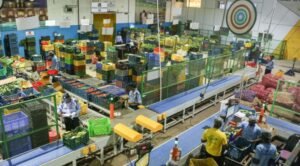
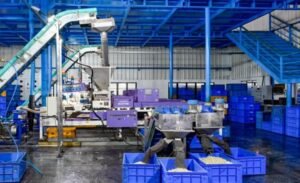
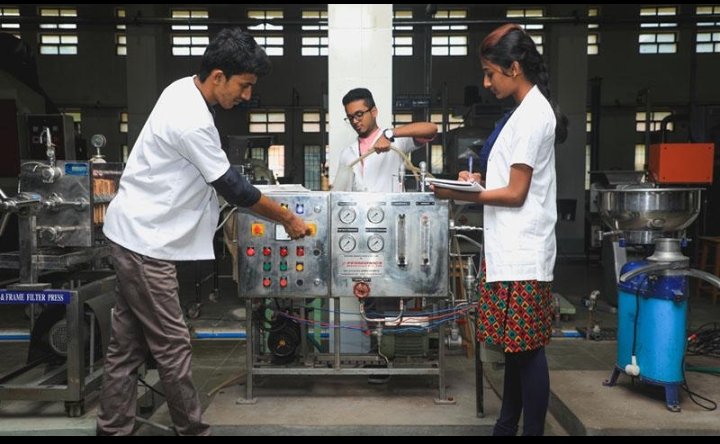
A conventional food park brings processors together physically. A biological industrial cluster would connect genetics laboratories, nurseries, farms, processing facilities, testing laboratories, cold chains and product companies into a single ecosystem.
The result could be a new form of industrial cluster built around biological resources.
For Kerala, such a model could be particularly relevant because land is limited and agricultural production is diverse. Competing primarily through large-scale commodity agriculture is difficult when compared with regions possessing vast areas of agricultural land.
Higher-value biological specialization offers another path.
The objective would not necessarily be to grow more of everything. It would be to extract more economic value from selected biological resources.
Consider coconut as an example. Coconut is already important, but the economic possibilities extend far beyond selling whole coconuts or conventional coconut products. Different varieties could potentially be evaluated for oil characteristics, water quality, fibre properties, processing efficiency and other attributes. Processing facilities could then specialize around those characteristics.
The same logic could apply to banana, jackfruit, cassava and spices.
However, such a system requires strong governance.
Genetic resources must be handled responsibly. Farmers should benefit from commercially successful varieties. Intellectual property arrangements should be transparent. Research institutions and private companies need clear agreements concerning ownership and licensing. Traditional knowledge and biological resources require appropriate legal and ethical protection.
Biotechnology also requires rigorous biosafety and regulatory oversight. Not every genetic intervention is appropriate for every application, and breeding strategies should be evaluated according to the technology being used, the organism involved and the intended market.
The objective should therefore be technological ambition combined with scientific discipline.
A regional genetics platform could begin without immediately pursuing the most controversial technologies. It could start by characterizing existing varieties, establishing germplasm collections, measuring biochemical traits and identifying varieties already possessing valuable industrial characteristics.
Modern breeding, genomics, marker-assisted selection, tissue culture and other appropriate technologies could then be introduced according to the crop and application.
The economic opportunity lies in building the complete system.
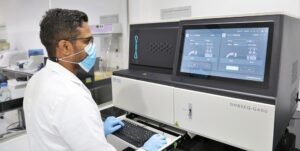
Imagine a future agro-processing district where a food company identifies a demand for a particular ingredient. Researchers translate that requirement into measurable biological characteristics. Breeders identify or develop suitable varieties. Nurseries multiply planting material. Farmer networks cultivate the crop. Digital systems track production. Collection centres measure quality. Specialized factories process the harvest. Research laboratories analyze the output. The processor feeds performance data back into the research system.
Agriculture would no longer be disconnected from industrial research.
It would become part of a continuous innovation cycle.
This could ultimately change how regions think about agriculture. The fundamental question would shift from “What crops can we grow?” to “What biological materials can our region produce, and what industries can be built around them?”
That is a much larger question.
It connects farms with laboratories, factories with universities, and biological diversity with industrial strategy. It turns genetics from a background scientific activity into part of economic planning.
The future of agro-processing may therefore begin long before a crop is planted. It may begin in the laboratory, where researchers identify the biological characteristics that a future industry will need.
The farm would then become the production floor of a much larger biological manufacturing system.