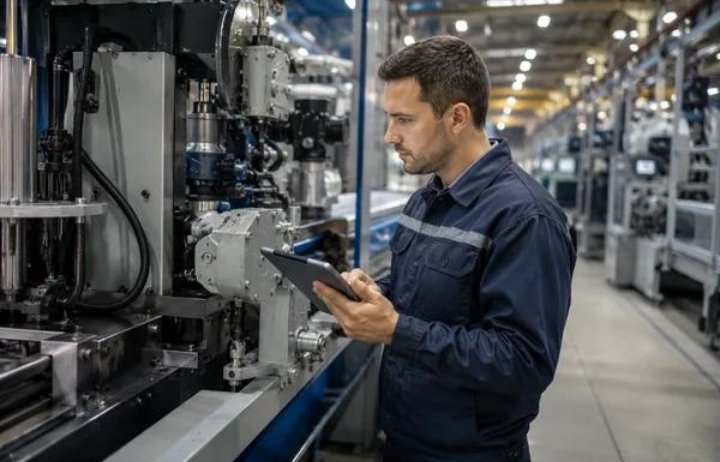
A factory can lose significant time and money when an important machine unexpectedly stops working. Production may halt, workers may remain idle, orders may be delayed and emergency repairs may require expensive spare parts and specialist technicians. Traditional maintenance systems often respond to these failures after they occur. Industry 4.0 creates the possibility of changing this model by using continuous equipment data to identify potential failures before they happen.
Predictive maintenance networks extend this idea beyond individual machines and individual factories. Instead of treating maintenance as an isolated activity inside each company, a connected industrial ecosystem can create a wider network of equipment information, maintenance providers, spare-parts suppliers, engineers and service organizations.
The basic principle is simple. Machines generate signals about their condition. Sensors can measure vibration, temperature, pressure, sound, electrical characteristics, lubrication conditions and other variables. These measurements can be collected continuously and analyzed to identify patterns associated with equipment deterioration.
A machine does not necessarily fail without warning. Many failures are preceded by subtle changes in its operating behaviour. A bearing may begin vibrating differently. A motor may consume more electricity than normal. A pump may develop unusual pressure characteristics. A temperature may gradually increase.
Individually, these changes may not appear significant. When combined with historical information, however, they can provide useful evidence that equipment requires inspection.
This is where predictive maintenance differs from conventional preventive maintenance. Preventive maintenance usually follows a schedule. A machine may be serviced after a certain number of operating hours, regardless of its actual condition. Predictive maintenance attempts to determine when intervention is actually needed based on evidence about the machine’s condition.
This can reduce unnecessary maintenance while lowering the risk of unexpected failures.
The first stage of a predictive maintenance network would therefore be the creation of an equipment data layer. Machines across participating factories could send selected operational information to their respective maintenance systems. Data would not necessarily have to leave the factory. Edge computing could allow much of the analysis to occur locally, with only relevant alerts or anonymized information being shared externally.
This distinction is important because industrial data can be commercially sensitive.
A company may not want to reveal its production volumes or manufacturing processes to other companies. However, it may be willing to share information indicating that a particular class of machine requires specialist maintenance. The network can therefore be designed around controlled data sharing rather than unrestricted access.
Maintenance companies could become active participants in the network. Instead of waiting for customers to call after a breakdown, service providers could receive authorized alerts when equipment requires inspection.
A factory experiencing abnormal vibration in a critical motor could automatically generate a maintenance request. The system could identify technicians with the appropriate expertise, check their availability and determine whether the necessary spare part is available locally.
This could significantly shorten the time between detection and intervention.
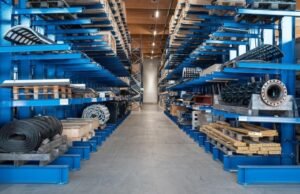
Spare-parts management could become another component of the system. A predictive maintenance platform could identify components likely to require replacement and connect that information with inventories maintained by manufacturers, distributors and local suppliers.
This creates an important operational advantage. A predictive warning is much more valuable if the organization can act on it.
Knowing that a bearing may fail in two weeks is useful. Knowing this while simultaneously identifying an available replacement part and an available technician is considerably more useful.
Artificial intelligence can assist with these decisions. Machine-learning systems can examine historical equipment data and identify patterns associated with failures. As more operating data becomes available, models can potentially become better at distinguishing normal variations from meaningful abnormalities.
However, AI predictions should be treated as decision support rather than unquestionable truth. Industrial environments contain many variables, and an unusual sensor reading may have multiple explanations. Engineers need the ability to inspect the evidence and determine whether intervention is actually required.
The human technician therefore remains important.
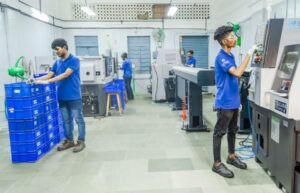
Industry 4.0 does not necessarily eliminate maintenance workers. Instead, it can change their role from emergency responders to condition-based specialists. Rather than spending most of their time searching for failed machines, technicians can focus on diagnosing equipment, interpreting data and performing planned interventions.
This can improve workplace safety as well. Some equipment failures can create hazardous conditions. Detecting deterioration before catastrophic failure gives workers an opportunity to address the problem under controlled conditions.
The network could become particularly valuable for small and medium-sized manufacturers. Large corporations can often employ dedicated reliability engineers and sophisticated maintenance teams. Smaller factories may not have enough equipment or resources to justify such specialized capabilities.
A shared predictive maintenance service could provide these companies with access to industrial analytics, remote diagnostics and specialist expertise without requiring each factory to build a large internal team.
Industrial parks could establish common predictive maintenance platforms serving multiple companies. The platform could maintain information about authorized equipment categories, approved service providers and spare-parts suppliers while keeping company-specific operational data protected.
This could create an entirely new industrial service industry.
Maintenance companies could evolve from businesses that primarily sell labour and replacement parts into technology-enabled reliability partners. Their value would increasingly come from preventing downtime rather than responding to breakdowns.
Equipment manufacturers could also participate. When a manufacturer has thousands of machines operating around the world, aggregated and appropriately protected information about equipment behaviour can reveal recurring failure patterns. Manufacturers could use these insights to improve machine design, maintenance recommendations and component quality.
This creates a feedback loop between manufacturing and maintenance.
The machine generates operational data. The data reveals failure patterns. The patterns inform maintenance. Maintenance experience informs machine design. Improved machines generate new operational data.
The industrial ecosystem becomes capable of learning.
There are also implications for insurance and financing. If reliable equipment-condition data becomes available, insurers may be able to assess certain operational risks differently, subject to applicable regulations and actuarial evidence. Financial institutions financing industrial equipment could potentially gain better information about asset condition and operational continuity.
Such developments would require careful governance because equipment data should not automatically become a mechanism for intrusive monitoring of businesses or workers.
Data governance therefore needs to be established at the beginning. Companies should know what information is collected, who can access it, how long it is retained and what purposes it can be used for.
Cybersecurity is equally important. A compromised predictive maintenance system could provide attackers with information about industrial equipment and operational vulnerabilities. Critical systems should therefore use appropriate network segmentation, authentication, encryption and monitoring.
The system should also be designed to avoid excessive false alarms. If workers receive hundreds of inaccurate warnings, they may eventually ignore the system. Predictive maintenance therefore requires careful calibration and continuous evaluation.
The ultimate measure is not the number of alerts generated. It is whether the system reduces unplanned downtime, improves maintenance efficiency, increases equipment availability and helps companies make better decisions.
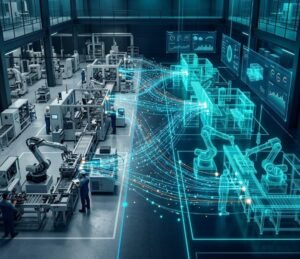
A mature predictive maintenance network could eventually become part of a broader industrial digital ecosystem. Equipment condition could connect to production planning, inventory management, logistics, energy management and digital twins.
A machine predicted to require maintenance could automatically influence the production schedule. The system could determine an appropriate maintenance window, check spare-parts availability and coordinate a technician. Production managers would see the expected impact before the intervention occurs.
This is where predictive maintenance becomes more than a technical application. It becomes an organizational capability.
The factory begins to anticipate problems instead of simply reacting to them.
At the district level, the concept could become even more powerful. Multiple factories could participate in a shared network of maintenance expertise, spare parts and service providers. Specialized technicians could move between facilities according to demand. Spare parts could be positioned strategically according to predicted requirements.
Industrial maintenance would become an interconnected service ecosystem rather than a collection of isolated emergency responses.
The larger Industry 4.0 transformation is therefore not simply about putting sensors on machines. It is about creating industrial systems capable of sensing, interpreting and responding to changes before those changes become expensive failures.
Predictive maintenance networks provide one pathway toward that future. They transform maintenance from a reactive function into a continuous intelligence system, allowing factories to understand the condition of their machines, plan interventions more effectively and build stronger connections between equipment, workers, technology providers and industrial infrastructure.