India possesses modest but strategically important gold resources spread across several states, including Karnataka, Andhra Pradesh, Jharkhand, Rajasthan, and parts of Chhattisgarh. As demand for gold continues to grow, improving the management of these resources has become an important national priority. One of the most valuable Industry 4.0 initiatives would be the creation of a National Gold Mine Database, a digital infrastructure that connects exploration agencies, mining companies, government departments, research institutions, and investors through a single secure platform.
Today, geological surveys, drilling reports, mineral resource estimates, environmental studies, production statistics, satellite imagery, and exploration records are often stored across multiple organizations. Accessing this information may require significant time and coordination. A centralized digital database would integrate these datasets into a common platform, making gold resource management more efficient.
The platform would begin by digitizing every known gold occurrence, exploration block, mining lease, and historical mining location in India. Geographic Information Systems would display these locations on interactive digital maps together with geological formations, fault lines, mineral belts, infrastructure, water resources, forests, transportation networks, and nearby communities.
Artificial intelligence would analyze decades of geological information to identify new exploration opportunities. Machine learning algorithms compare rock formations, mineral signatures, drilling results, geochemical samples, and satellite imagery from successful gold deposits with unexplored regions across the country. The system recommends areas that may deserve detailed geological investigation.
Remote sensing technology further strengthens exploration. High resolution satellite imagery provides continuous updates regarding land use changes, vegetation patterns, drainage systems, and geological structures. AI processes these images to detect subtle indicators associated with gold bearing formations, allowing exploration agencies to prioritize field surveys more effectively.
Mining companies benefit from improved planning. Before applying for new exploration licenses, investors gain access to verified geological information, historical drilling records, infrastructure availability, and environmental considerations. Better information reduces exploration risk while encouraging responsible investment.
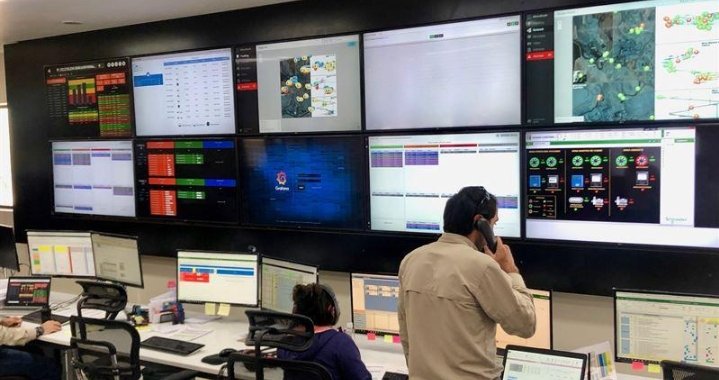
Government agencies gain a comprehensive overview of national gold resources. Production statistics, reserve estimates, royalty collections, lease boundaries, environmental clearances, and operational status are available through secure digital dashboards. Decision makers can monitor the industry’s performance using real time information instead of fragmented reports.
The platform also supports environmental management. Every mining lease can be linked to digital records covering forest permissions, biodiversity assessments, water usage, rehabilitation plans, and environmental monitoring data. Regulators receive automatic notifications if compliance reports are overdue or operational activities exceed approved boundaries.
Digital twins represent another advanced Industry 4.0 application. Active gold mines can develop virtual models that simulate geological conditions, production schedules, equipment performance, and underground development. Engineers evaluate different mining strategies digitally before implementing changes in actual operations, reducing operational risk while improving productivity.
Internet of Things devices installed at active mines continuously transmit operational information to the database. Production volumes, equipment performance, groundwater levels, environmental measurements, and worker safety indicators become available for authorized monitoring. Artificial intelligence analyzes these data streams to identify trends and recommend operational improvements.
Universities and geological research institutions also benefit. Access to standardized geological datasets supports academic research, mineral exploration studies, and the development of new exploration technologies. Researchers can apply advanced data science techniques to improve mineral prediction models specific to Indian geology.
Investors receive greater confidence through transparent information. Verified resource estimates, exploration history, production data, regulatory approvals, and infrastructure availability reduce uncertainty during investment evaluation. This may encourage greater participation in India’s mineral exploration sector.
Artificial intelligence also supports long term resource planning. By analyzing production trends, reserve depletion rates, exploration success, import dependence, and projected demand, AI helps policymakers develop strategies for future gold resource development.
The database can integrate with customs authorities, bullion markets, refineries, and recycling networks to provide a complete picture of India’s gold ecosystem. Domestic production, imports, recycling, refining, exports, and industrial consumption become connected through digital infrastructure, enabling better policy coordination.
Cybersecurity remains an essential requirement because geological information has strategic and commercial value. Secure cloud infrastructure, encrypted communications, role based access controls, and continuous monitoring protect sensitive resource data while allowing appropriate access for authorized users.
Technology companies gain opportunities to develop specialized geospatial software, cloud platforms, AI analytics, geological modeling tools, cybersecurity solutions, and remote sensing applications. These capabilities can later support similar mining initiatives for copper, lithium, rare earth elements, iron ore, and other strategic minerals.
India is placing increasing emphasis on critical mineral security, digital governance, and self reliance in resource management. A National Gold Mine Database aligns with these objectives by transforming fragmented geological records into a unified digital knowledge platform.
Rather than functioning as a simple information repository, the database becomes an intelligent decision support system powered by artificial intelligence, geospatial analytics, cloud computing, digital twins, and real time operational data. It strengthens exploration, improves governance, encourages investment, supports environmental compliance, and enables more informed management of India’s gold resources.
The National Gold Mine Database represents an important Industry 4.0 initiative that can modernize the country’s mining sector while laying the digital foundation for smarter exploration and sustainable resource development in the decades ahead.