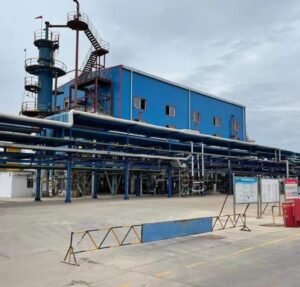
India’s chemical industry is one of the largest contributors to the country’s manufacturing economy, supplying raw materials for pharmaceuticals, agriculture, textiles, automobiles, construction, electronics, and consumer products. Chemical plants operate complex processes involving high temperatures, high pressures, hazardous chemicals, and continuous production systems. Managing these operations safely and efficiently requires constant monitoring. Digital Twin Infrastructure offers a new Industry 4.0 approach that enables chemical plants to operate with greater intelligence, reliability, and safety.
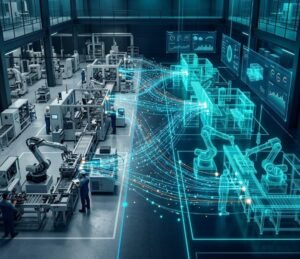
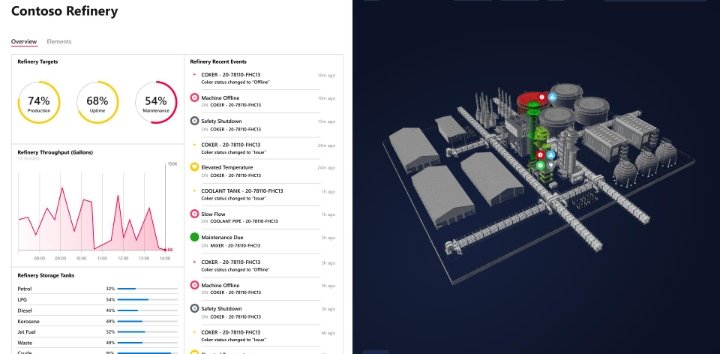
A digital twin is a real-time virtual model of a physical chemical plant. Every reactor, storage tank, pipeline, valve, heat exchanger, compressor, pump, and processing unit is represented digitally. Thousands of sensors continuously collect operational information and update the digital model every second, allowing engineers to monitor the entire plant from a centralized command centre.
The primary advantage of digital twins is predictive decision making. Instead of reacting after problems occur, engineers can identify abnormal conditions while they are still developing. Changes in pressure, temperature, vibration, flow rate, chemical composition, or equipment performance immediately appear within the digital model, allowing preventive action before production is affected.
Chemical reactions require extremely precise operating conditions. Even small deviations may reduce product quality or create unsafe situations. Artificial intelligence continuously analyses sensor information and recommends adjustments to maintain optimal reaction conditions. Automated control systems can implement these corrections almost instantly, reducing human error while improving consistency.
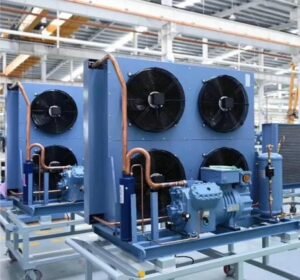
Predictive maintenance becomes another important capability. Rotating equipment such as pumps, compressors, mixers, and turbines naturally experience wear during continuous operation. AI studies vibration patterns, electrical consumption, temperature changes, and mechanical behaviour to estimate the remaining useful life of equipment. Maintenance can therefore be scheduled before unexpected failures interrupt production.
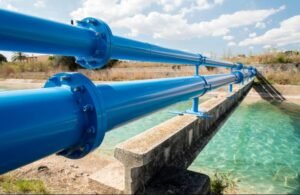
Leak detection is significantly improved through digital infrastructure. Hazardous chemicals may escape through damaged pipelines, valves, flanges, or storage systems. Gas sensors, pressure monitors, thermal cameras, and acoustic monitoring devices continuously inspect the facility. Artificial intelligence identifies abnormal conditions immediately, enabling rapid emergency response before small leaks become major incidents.
Energy optimization provides substantial economic benefits. Chemical manufacturing requires large amounts of electricity, steam, cooling water, compressed air, and fuel. Digital twins continuously analyse utility consumption across every production unit. AI identifies opportunities to improve heat recovery, optimize process flows, reduce energy waste, and lower operating costs without affecting production quality.
Simulation capabilities distinguish digital twins from conventional monitoring systems. Engineers can evaluate proposed process changes within the virtual environment before applying them in the physical plant. New production recipes, equipment modifications, capacity expansions, and maintenance strategies can all be tested digitally, reducing operational risks.
Worker safety improves through continuous environmental monitoring. Sensors measure toxic gas concentrations, oxygen levels, airborne chemicals, fire hazards, and explosion risks across the facility. AI combines this information with weather conditions, equipment status, and production data to identify developing safety threats and recommend immediate protective actions.
Emergency preparedness also becomes more effective. Digital twins simulate fires, explosions, chemical releases, equipment failures, and utility disruptions using real operational data. Plant managers can evaluate emergency response strategies before actual incidents occur, strengthening preparedness and reducing response times.
Environmental compliance benefits from continuous emissions monitoring. Air emissions, wastewater quality, chemical discharges, and waste generation are automatically measured and documented. Digital reporting improves regulatory transparency while helping companies identify opportunities to reduce environmental impact.
Supply chain integration extends digital intelligence beyond the factory. Production planning systems communicate directly with raw material suppliers, transport companies, storage terminals, and customers. Inventory levels, production schedules, maintenance activities, and logistics become synchronized through shared digital information.
Research and development teams also benefit from detailed operational data. Scientists can analyse production performance over extended periods to optimize chemical reactions, improve catalyst performance, reduce waste generation, and accelerate the commercialization of new chemical products.
Cybersecurity remains essential because modern chemical plants rely heavily on interconnected operational technology. Secure industrial communication networks, continuous threat monitoring, strong authentication systems, and network segmentation help protect critical infrastructure against cyber attacks while maintaining uninterrupted production.
India possesses world-class expertise in chemical engineering, industrial automation, software development, and artificial intelligence. Integrating these strengths through Digital Twin Infrastructure can modernize chemical manufacturing across the country. The result would be safer industrial operations, higher production efficiency, lower operating costs, improved environmental performance, stronger export competitiveness, and a chemical industry fully prepared for the demands of Industry 4.0.