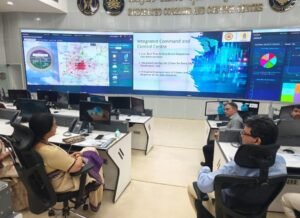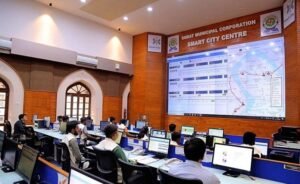
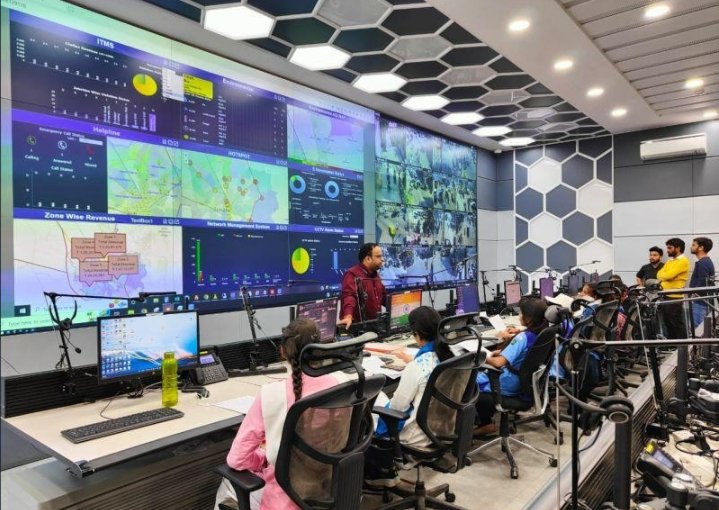
India generates enormous amounts of public data every day. Hospitals admit patients, schools record attendance, roads are monitored, trains move across the country, crops are harvested, electricity flows through power grids, weather stations collect observations, and government departments process millions of transactions. Yet much of this information remains scattered across separate systems, making it difficult for policymakers to obtain a comprehensive and timely picture of what is happening across the country.
A real time governance dashboard can change this. By integrating data from different government departments into a unified digital platform, India can enable faster decisions, better coordination, and more effective public services. Rather than waiting for weekly or monthly reports, administrators would have access to continuously updated information that reflects the current situation on the ground.
The concept is simple but powerful. Every ministry, state government, district administration, and public agency already collects data for its own operations. A national governance dashboard would securely bring together selected information through standardized digital interfaces while respecting privacy and security requirements. Decision makers could view national trends while also drilling down into state, district, and local data when necessary.
One of the greatest advantages of such a system would be early warning. Problems often develop gradually before becoming major crises. Water shortages, disease outbreaks, traffic congestion, crop failures, infrastructure deterioration, and financial irregularities usually leave digital signals long before they become visible through traditional reporting systems. A real time dashboard supported by artificial intelligence could identify these signals and alert officials before situations worsen.
Healthcare offers a compelling example. Hospitals, laboratories, pharmacies, ambulance services, and primary health centers generate continuous streams of information. When combined responsibly, this data could reveal emerging disease clusters, shortages of medicines, rising hospital occupancy, or unusual health trends. Health authorities would be able to allocate resources more efficiently and respond more quickly to emergencies.
Agriculture would also benefit significantly. Satellite imagery, weather forecasts, soil conditions, irrigation data, market prices, and crop reports could be integrated into a single platform. Farmers would receive better guidance while governments could anticipate production levels, prepare procurement strategies, and respond faster to droughts or floods.
Infrastructure management is another area where real time monitoring can improve governance. Roads, bridges, railways, airports, ports, power stations, and water supply systems require continuous maintenance. Sensors and digital reporting systems can provide information on equipment performance, maintenance schedules, traffic patterns, and service disruptions. Instead of reacting after failures occur, agencies could carry out preventive maintenance based on actual operating conditions.
Education systems also produce valuable information every day. School attendance, examination performance, teacher vacancies, digital learning participation, and infrastructure status can all be monitored through integrated dashboards. District education officials would be able to identify schools requiring additional support and direct resources where they are needed most.
Public finance is equally important. Government spending across ministries and states involves thousands of ongoing projects. A unified dashboard could track expenditure, project progress, procurement timelines, and implementation milestones. Senior officials would gain greater visibility into how public funds are being utilized, improving accountability and reducing delays.
Disaster management demonstrates the importance of timely information. India frequently experiences floods, cyclones, landslides, heat waves, and earthquakes. During emergencies, information often comes from multiple agencies simultaneously. A real time governance dashboard could combine weather forecasts, satellite imagery, transportation networks, emergency shelters, hospital capacity, and rescue operations into a common operational picture, enabling better coordination among different departments.
Artificial intelligence would significantly enhance the usefulness of such dashboards. Rather than simply displaying information, AI systems could identify patterns, forecast future developments, recommend resource allocation, and detect unusual activities that deserve attention. Human administrators would continue making final decisions, but AI would help them process far more information than traditional methods allow.
Cybersecurity must be a fundamental part of any national governance dashboard. Sensitive government systems must remain protected against cyber attacks, unauthorized access, and data breaches. Strong encryption, identity management, continuous monitoring, regular security audits, and resilient backup systems are essential to maintaining public confidence in digital governance.
Privacy protection is equally critical. Not every piece of government data should be shared across departments, and personal information must always be handled responsibly. Clear legal frameworks, strict access controls, and transparent governance policies are necessary to ensure that citizens retain confidence in how their information is managed.
The success of a national dashboard also depends on interoperability. Government departments often use different software platforms that cannot easily communicate with one another. Standardized data formats, common application programming interfaces, and national digital standards would allow systems to exchange information securely while preserving departmental autonomy.
District administrations would become major beneficiaries of this transformation. Local officials could monitor development projects, healthcare indicators, education performance, agricultural conditions, public grievances, and infrastructure maintenance from a single platform. Faster access to reliable information would improve planning and reduce administrative delays.
Citizens would also experience direct benefits. Public dashboards could provide selected non confidential information about government projects, service delivery, environmental conditions, and infrastructure performance. Greater transparency encourages accountability while enabling citizens to better understand how government programs are progressing.
Several countries are already investing heavily in digital governance platforms that combine real time analytics with public administration. India has the advantage of possessing one of the world’s largest digital public infrastructures, including digital identity, payment systems, and expanding connectivity. Building a national governance dashboard would represent a natural progression from these achievements.
Implementation should occur in phases rather than attempting nationwide deployment immediately. Pilot projects in selected ministries and states can demonstrate value, identify technical challenges, and establish best practices before larger scale expansion. Continuous learning will be essential as technology evolves rapidly.
Training government officials is equally important. Technology delivers value only when people understand how to use it effectively. Civil servants at every level should receive training in digital systems, data interpretation, cybersecurity, and responsible use of artificial intelligence.
India’s future will increasingly depend on the quality and speed of government decision making. As the economy grows and society becomes more complex, traditional administrative methods alone will not be sufficient. Decision makers need accurate information delivered at the right time and presented in ways that support informed action.
A national real time governance dashboard would not replace good leadership, sound policies, or effective institutions. Instead, it would provide the information needed for these institutions to perform at their highest potential. By integrating technology with strong governance principles, India can create a public administration system that is faster, more transparent, more accountable, and better prepared for the challenges of the future.