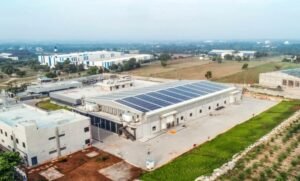
Industrial heat pumps are emerging as one of the most important technologies for reducing energy consumption and carbon emissions in manufacturing. They recover waste heat from industrial processes and upgrade it to useful temperatures for heating, drying, washing and steam generation. Industries such as food processing, textiles, chemicals, pharmaceuticals, paper, dairy and beverages are increasingly adopting industrial heat pumps to improve efficiency and reduce fuel costs. As India pursues energy-efficient industrialization, manufacturing industrial heat pumps presents a major opportunity. Industry 4.0 can transform this sector through intelligent production systems that improve quality, productivity and global competitiveness.
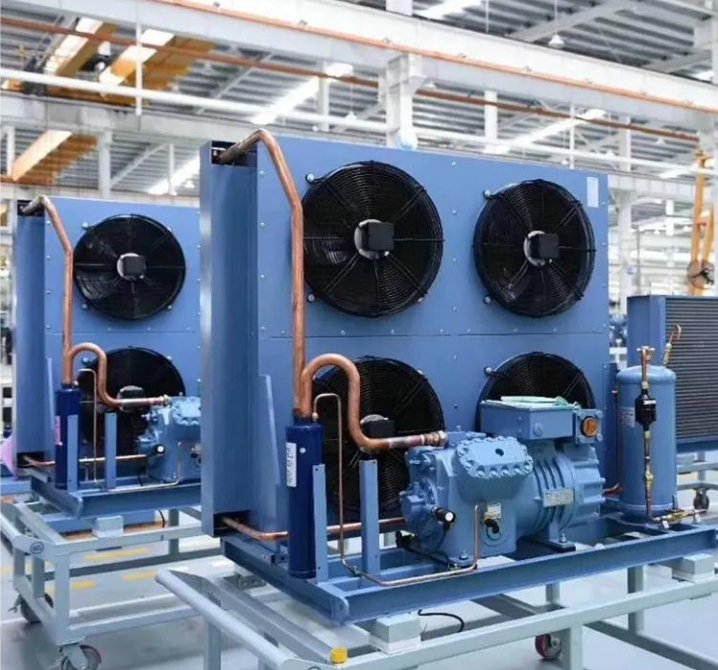
Industrial heat pumps consist of compressors, evaporators, condensers, expansion valves, heat exchangers, refrigerant circuits, sensors and electronic control systems. Manufacturing these systems requires precision fabrication, automated assembly, leak testing, refrigeration charging and performance verification. Every production stage must meet strict engineering standards to ensure reliable long-term operation.
Industry 4.0 enables manufacturers to continuously monitor production using connected sensors across fabrication shops, coil manufacturing lines, welding stations, assembly lines, testing facilities and warehouses. Engineers receive real-time production information that improves efficiency and product consistency.
Artificial intelligence strengthens manufacturing by analysing historical production data together with live operational information. Machine learning models optimize assembly sequences, improve material utilization and reduce production bottlenecks while maintaining engineering quality. Continuous optimization increases factory productivity without compromising reliability.
Digital twins create virtual replicas of both manufacturing facilities and finished heat pump systems. Engineers can simulate airflow, refrigerant circulation, thermal performance and production layouts before making physical changes. Virtual testing reduces development costs while accelerating innovation.
Predictive maintenance improves reliability across CNC machines, robotic welders, tube bending equipment, fin presses, compressors and automated assembly systems. Connected sensors monitor vibration, motor performance and equipment temperature, allowing maintenance teams to prevent unexpected failures.
Automated quality inspection ensures every heat pump meets demanding performance standards. Machine vision systems inspect welded joints, tubing connections and assembly accuracy, while intelligent testing systems verify cooling capacity, heating performance, refrigerant pressure and electrical safety before shipment.
India’s food processing industry represents one of the largest future markets for industrial heat pumps. Smart manufacturing enables equipment suppliers to deliver reliable systems for dairy plants, cold storage facilities, beverage manufacturers and food processing units seeking lower energy costs.
The textile industry also offers significant opportunities because dyeing, washing and drying processes require large amounts of heat. Industry 4.0 supports the efficient production of customized heat pump systems designed for textile manufacturing applications.
Supply chain integration connects suppliers of compressors, motors, electronic controls, copper tubing, heat exchangers and insulation materials with manufacturing facilities through digital platforms. Better coordination reduces inventory costs, improves production scheduling and shortens delivery times.
Energy optimization improves manufacturing efficiency across welding, machining, testing and assembly operations. Intelligent monitoring systems analyse electricity consumption and identify opportunities to reduce operating costs while maintaining production quality.
Environmental sustainability becomes increasingly important as manufacturers transition to low-global-warming-potential refrigerants and recyclable materials. Industry 4.0 continuously monitors material usage, emissions and production waste, helping manufacturers achieve sustainability goals while reducing costs.
Worker safety improves through connected monitoring of refrigeration charging stations, welding operations, automated machinery and heavy material handling systems. Intelligent warning systems immediately alert operators whenever unsafe conditions develop.
Research and development benefits from Industry 4.0 through data-driven engineering. Artificial intelligence analyses product testing, customer operating data and manufacturing performance to identify opportunities for higher energy efficiency, quieter operation and improved durability.
Indian software companies can develop specialized manufacturing execution systems, predictive maintenance platforms and digital performance testing software specifically for HVAC and heat pump manufacturing. These technologies can strengthen India’s industrial software capabilities while supporting advanced equipment manufacturing.
Engineering institutions should expand mechanical engineering and refrigeration engineering programs by incorporating industrial automation, artificial intelligence, digital twins and smart manufacturing technologies. Future engineers will increasingly design and manage intelligent factories producing advanced energy-efficient equipment.
Government initiatives promoting industrial energy efficiency, clean manufacturing, sustainable cooling and advanced manufacturing can accelerate Industry 4.0 adoption across the heat pump industry. Collaboration among manufacturers, research laboratories and technology firms can strengthen India’s domestic manufacturing ecosystem.
Global demand for industrial heat pumps is expected to grow rapidly as countries seek to improve industrial energy efficiency and reduce carbon emissions. India has the engineering expertise, manufacturing capacity and growing domestic demand needed to become a competitive global supplier.
Industry 4.0 transforms industrial heat pump manufacturing into a connected, intelligent production ecosystem where quality, efficiency and innovation are continuously optimized. By integrating artificial intelligence, predictive maintenance, digital twins, robotics and automated quality inspection, India’s industrial heat pump manufacturing industry can strengthen the country’s clean energy transition while building a globally competitive export sector for advanced industrial equipment.