Carbon capture technologies are becoming increasingly important as industries seek to reduce greenhouse gas emissions while maintaining industrial productivity. Carbon capture equipment is used in power plants, cement factories, steel mills, refineries, fertilizer plants and chemical industries to separate carbon dioxide from industrial exhaust gases for storage or commercial use. As India expands its clean energy initiatives, manufacturing carbon capture equipment presents a strategic industrial opportunity. Industry 4.0 can help build globally competitive production facilities capable of delivering high-quality systems for domestic and international markets.
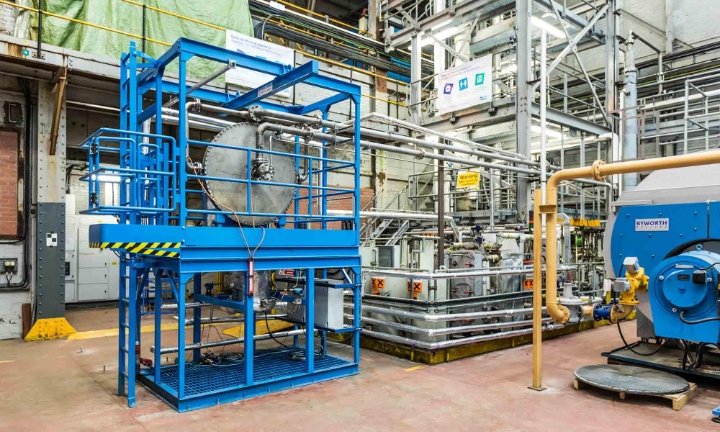
Carbon capture equipment includes absorption columns, gas separation units, heat exchangers, pressure vessels, compressors, membrane modules, piping systems and advanced control equipment. Manufacturing these products requires precision engineering, high-quality fabrication and rigorous testing to ensure reliable operation under demanding industrial conditions.
Industry 4.0 enables manufacturers to monitor production continuously through connected sensors installed across fabrication workshops, welding stations, machining centres, coating facilities and testing laboratories. Engineers receive real-time information that improves production efficiency and quality control.
Artificial intelligence strengthens manufacturing by analysing production histories together with live operational data. Machine learning models identify process settings that improve welding quality, machining precision and material utilization while reducing energy consumption and production time. Continuous optimization improves productivity without compromising engineering standards.
Digital twins provide virtual models of manufacturing facilities and individual equipment designs. Engineers can simulate fabrication sequences, evaluate structural performance and optimize production layouts before manufacturing begins. Virtual validation reduces development time while minimizing technical risks.
Predictive maintenance improves the reliability of CNC machines, robotic welding systems, laser cutters, bending machines and heavy lifting equipment. Connected sensors continuously monitor vibration, spindle performance, motor temperature and hydraulic systems to detect equipment wear before breakdowns occur.
Automated quality inspection transforms manufacturing through machine vision, laser measurement and non-destructive testing technologies. Artificial intelligence analyses weld quality, dimensional accuracy and surface finish in real time, allowing immediate corrections whenever deviations are detected.
India’s steel and cement industries represent major future markets for carbon capture equipment. Smart manufacturing systems enable equipment suppliers to consistently produce high-performance systems capable of operating under harsh industrial environments while meeting international engineering standards.
The fertilizer and refinery sectors also create growing demand for carbon capture technologies because these industries generate concentrated carbon dioxide streams suitable for capture and utilization. Intelligent manufacturing supports customized equipment production for diverse industrial applications.
Supply chain integration connects raw material procurement, fabrication planning, warehouse management and customer orders through unified digital platforms. Better coordination reduces manufacturing lead times while improving inventory management and delivery performance.
Energy optimization improves efficiency throughout fabrication facilities. Intelligent monitoring systems analyse electricity consumption across welding equipment, machine tools, compressors and heat treatment operations, identifying opportunities to reduce operating costs.
Environmental sustainability is strengthened through digital monitoring of emissions, material utilization, waste generation and recycling. Industry 4.0 enables manufacturers to reduce scrap metal, optimize resource consumption and improve overall environmental performance.
Worker safety benefits from connected monitoring systems that supervise robotic work cells, heavy lifting operations, welding environments and high-pressure testing facilities. Automated alerts enable rapid responses whenever unsafe operating conditions develop.
Research and development becomes increasingly data driven through Industry 4.0. Artificial intelligence analyses manufacturing performance, equipment testing and customer feedback to identify opportunities for lighter designs, improved efficiency and reduced manufacturing costs.
Indian engineering companies have the opportunity to develop specialized industrial automation software, digital inspection systems and predictive maintenance platforms tailored specifically for heavy process equipment manufacturing. These technologies can strengthen domestic engineering capabilities while creating export opportunities.
Engineering institutions should modernize mechanical engineering, manufacturing engineering and industrial automation programs by incorporating robotics, digital twins, artificial intelligence and smart factory technologies. Future engineers will require interdisciplinary expertise to manage intelligent fabrication facilities.
Government initiatives supporting clean energy, carbon management, advanced manufacturing and industrial digitalization can accelerate Industry 4.0 adoption across carbon capture equipment manufacturing. Collaboration among public research institutions, equipment manufacturers and technology companies can strengthen India’s position in this emerging sector.
Global demand for carbon capture systems is expected to grow as countries pursue net-zero emissions while maintaining industrial production. Equipment manufacturers capable of delivering reliable, cost-effective and digitally enabled solutions will become increasingly important participants in global clean technology supply chains.
Industry 4.0 transforms carbon capture equipment manufacturing into a connected, intelligent production ecosystem where quality, efficiency and innovation are continuously optimized. By integrating artificial intelligence, predictive maintenance, digital twins, robotics and automated inspection systems, India’s carbon capture equipment industry can support domestic decarbonization while building a globally competitive export sector for advanced environmental technologies.