India’s industrial ceramics industry is steadily evolving from producing conventional refractory materials to manufacturing high-performance engineering ceramics used in electronics, aerospace, healthcare, renewable energy, automotive systems and semiconductor equipment. Advanced ceramics such as alumina, zirconia, silicon carbide and silicon nitride are becoming critical materials for modern industries. Industry 4.0 offers India an opportunity to modernize ceramic manufacturing through intelligent production systems that improve precision, efficiency and global competitiveness.
Industrial ceramic manufacturing involves powder preparation, mixing, milling, granulation, shaping, pressing, sintering, machining and inspection. Every stage influences the strength, density, thermal resistance and dimensional accuracy of the final product. Small variations in moisture, particle size or furnace temperature can significantly affect product performance.
Industry 4.0 enables manufacturers to monitor production continuously through connected sensors installed across mixers, ball mills, presses, kilns, machining centres and inspection systems. Engineers receive real-time operational information that improves process stability and enables rapid corrective action.
Artificial intelligence enhances manufacturing by analysing production data collected from thousands of manufacturing cycles. Machine learning algorithms identify relationships between raw material characteristics, processing conditions and final product quality. Manufacturers can optimize production parameters while reducing waste and improving consistency.
Digital twins provide virtual models of ceramic manufacturing facilities. Engineers can simulate kiln performance, production schedules, material flow and equipment modifications before making physical changes. This reduces development time while lowering operational risks.
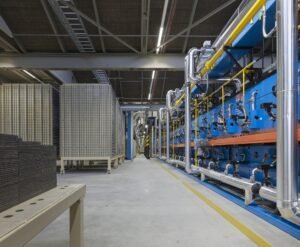
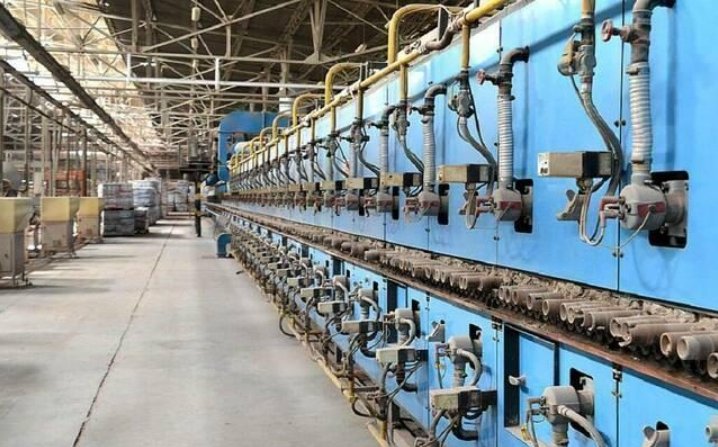
Sintering remains one of the most critical and energy-intensive stages of ceramic production. Intelligent furnace management systems continuously monitor temperature profiles, heating rates and cooling cycles. Automated adjustments ensure uniform sintering while reducing energy consumption and improving product quality.
Predictive maintenance improves reliability across ball mills, hydraulic presses, kilns, conveyors and CNC machining systems. Connected sensors monitor vibration, motor performance, bearing conditions and temperature, allowing maintenance teams to repair equipment before unexpected failures occur.
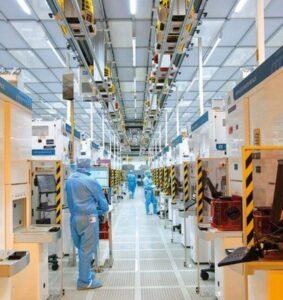
Online quality inspection transforms product verification. High-resolution cameras, laser scanners and artificial intelligence inspect dimensions, surface quality, cracks and defects immediately after production. Automated inspection reduces rejection rates while improving consistency for demanding industrial applications.
India’s electronics manufacturing sector increasingly requires advanced ceramic components for insulating substrates, electronic packaging and high-temperature applications. Smart manufacturing systems enable ceramic producers to consistently achieve the tight tolerances demanded by electronics manufacturers.
The renewable energy sector also creates growing demand for industrial ceramics used in fuel cells, battery systems, wind turbines and solar manufacturing equipment. Industry 4.0 helps manufacturers scale production while maintaining high product reliability.
Supply chain integration improves operational efficiency by connecting raw material procurement, inventory management, production planning and customer demand into a unified digital platform. Better coordination reduces production delays while improving delivery performance.
Energy optimization is especially important because ceramic manufacturing depends heavily on high-temperature kilns operating for extended periods. Intelligent energy management software optimizes fuel consumption, recovers waste heat and minimizes energy losses, reducing production costs and environmental impact.
Environmental sustainability also benefits from Industry 4.0. Connected monitoring systems continuously measure emissions, dust levels and resource utilization while supporting compliance with environmental regulations. Manufacturers gain better visibility into their environmental performance and identify opportunities for further improvements.
Water management becomes more efficient through digital monitoring of cooling systems, slurry preparation and recycling operations. Smart systems reduce freshwater consumption while improving process efficiency.
Worker safety improves through continuous monitoring of kiln operations, dust control systems, compressed air networks and heavy machinery. Automated warning systems notify operators whenever equipment operates outside safe conditions.
Research and development becomes increasingly data driven. Artificial intelligence analyses manufacturing records and laboratory results to identify opportunities for developing stronger, lighter and more heat-resistant ceramic materials. Continuous learning from production data accelerates innovation.
Indian automation companies can develop specialized software platforms, kiln control systems and industrial analytics solutions designed specifically for ceramic manufacturing. These domestic technologies can strengthen India’s industrial automation ecosystem while reducing dependence on imported digital systems.
Engineering institutions should integrate advanced materials science, industrial automation, artificial intelligence and digital manufacturing into ceramic engineering and mechanical engineering curricula. Future engineers will require interdisciplinary knowledge to manage intelligent manufacturing facilities.
Government initiatives promoting advanced materials, semiconductor manufacturing, defence production and industrial digitalization can accelerate Industry 4.0 adoption across the industrial ceramics sector. Collaborative research involving universities, manufacturers and technology companies can further strengthen innovation.
Global demand for advanced ceramics continues to expand as industries adopt electric vehicles, renewable energy technologies, aerospace systems and semiconductor manufacturing equipment. India has an opportunity to become an important supplier by combining its manufacturing capabilities with intelligent production technologies.
Industry 4.0 transforms industrial ceramics manufacturing into a connected, data-driven production ecosystem where quality, efficiency and sustainability are continuously optimized. By integrating artificial intelligence, predictive maintenance, digital twins and automated inspection systems, India’s industrial ceramics industry can strengthen its role in global advanced manufacturing while supporting the country’s ambitions in high-technology industries.