India’s ambition to become a global semiconductor manufacturing hub extends beyond chip fabrication plants. One of the most strategic opportunities lies in the production of semiconductor chemicals, which are essential for every stage of chip manufacturing. Ultra-high-purity acids, solvents, photoresists, developers, etchants, specialty gases and cleaning chemicals form the foundation of semiconductor fabrication. Industry 4.0 can help India establish world-class semiconductor chemical manufacturing by delivering precision, traceability and operational excellence.
Semiconductor chemicals differ from conventional industrial chemicals because they require purity levels measured in parts per billion or even parts per trillion. Tiny impurities can damage semiconductor wafers, reduce chip performance and lower manufacturing yields. Every stage of production must therefore operate under tightly controlled conditions.
Industry 4.0 enables manufacturers to continuously monitor production through intelligent sensors placed across reactors, purification columns, filtration systems, storage vessels and packaging lines. Every parameter, including temperature, pressure, flow rate, chemical purity and particle contamination, can be observed in real time.
Artificial intelligence enhances manufacturing by analysing production histories alongside live process data. Machine learning models identify operating conditions that maximize purity while reducing waste, energy consumption and production variability. Continuous optimization improves manufacturing efficiency without compromising stringent quality standards.
Digital twins create virtual replicas of semiconductor chemical plants. Engineers can simulate new purification methods, evaluate equipment upgrades and optimize production layouts before implementing changes in actual facilities. Virtual experimentation accelerates innovation while minimizing operational risk.
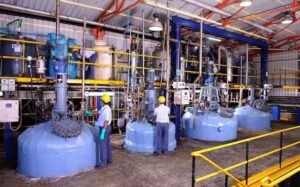
Predictive maintenance becomes especially valuable because semiconductor chemical manufacturing relies on highly specialized equipment such as ultra-filtration units, precision pumps, distillation columns and cleanroom-compatible filling systems. Connected sensors detect early signs of mechanical wear, allowing maintenance teams to prevent unexpected failures that could disrupt production.
Quality assurance reaches a new level through continuous online analytical systems. Advanced instruments monitor chemical purity, trace metal contamination, moisture levels and particulate counts throughout production. Immediate corrective action ensures every batch consistently meets semiconductor industry specifications.
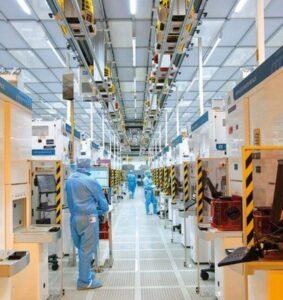
Cleanroom integration represents another important Industry 4.0 application. Digital monitoring systems continuously track airborne particles, humidity, temperature and air pressure within manufacturing environments. Automated adjustments maintain stable cleanroom conditions essential for contamination-free production.
India’s expanding semiconductor ecosystem creates a growing domestic market for locally manufactured electronic chemicals. Domestic production reduces dependence on imports while strengthening supply chain resilience for semiconductor fabrication plants, electronics manufacturers and research institutions.
Supply chain management also benefits from intelligent digital platforms. Raw material procurement, production scheduling, inventory management and customer deliveries become interconnected, enabling manufacturers to respond rapidly to market demand while maintaining full product traceability.
Energy management plays an important role because purification, cleanroom operation and precision manufacturing require significant electricity. Smart energy management systems optimize equipment utilization, monitor consumption patterns and identify opportunities to reduce energy costs without affecting production quality.
Water management is equally critical. Semiconductor chemicals require ultra-pure water throughout manufacturing and cleaning operations. Connected monitoring systems continuously evaluate water quality, optimize recycling processes and detect contamination before it affects production.
Environmental monitoring strengthens regulatory compliance by continuously measuring emissions, wastewater quality and chemical handling activities. Automated reporting simplifies environmental management while supporting sustainable manufacturing practices.
Worker safety improves through intelligent monitoring of hazardous chemical storage, ventilation systems and production equipment. Automated warning systems immediately alert personnel whenever abnormal operating conditions or chemical leaks are detected.
Research and development benefits significantly from Industry 4.0. Artificial intelligence analyses laboratory data together with manufacturing performance to identify opportunities for improving purification technologies, reducing contamination risks and developing new specialty chemicals for next-generation semiconductor applications.
Indian software companies have an opportunity to develop specialized manufacturing execution systems, contamination monitoring platforms and industrial analytics tools designed specifically for semiconductor chemical production. These technologies can become valuable exports as semiconductor manufacturing expands globally.
Engineering institutions should introduce dedicated programs covering semiconductor materials, industrial automation, process analytics and digital manufacturing. Developing a skilled workforce capable of operating advanced chemical manufacturing facilities will be essential for long-term competitiveness.
Government initiatives supporting semiconductor manufacturing, specialty chemicals and digital industrialization can accelerate Industry 4.0 adoption across the semiconductor chemical sector. Collaboration between research laboratories, chemical manufacturers, chipmakers and technology firms can strengthen India’s position within global semiconductor supply chains.
Global demand for semiconductor chemicals continues to grow alongside artificial intelligence, electric vehicles, data centres, telecommunications and consumer electronics. India has an opportunity to become a trusted supplier by combining chemical engineering expertise with intelligent manufacturing technologies.
Industry 4.0 transforms semiconductor chemical manufacturing into a highly connected, data-driven ecosystem where quality, precision and efficiency are continuously optimized. By integrating artificial intelligence, predictive maintenance, digital twins and real-time quality monitoring, India’s semiconductor chemicals industry can become a strategic pillar of the country’s semiconductor ambitions while strengthening its role in the global electronics value chain.