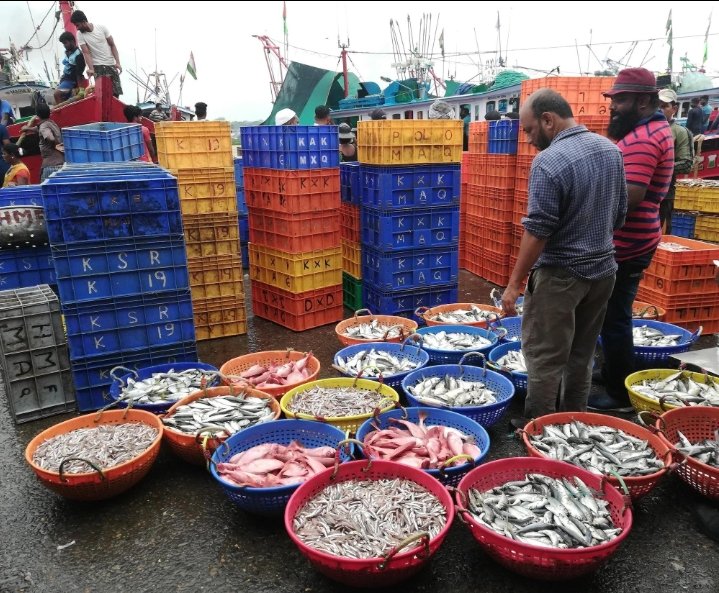
India’s fisheries sector produces millions of tonnes of fish every year, yet matching supply with market demand remains a persistent challenge. At times, fishermen return with abundant catches only to find prices have collapsed because markets are oversupplied. At other times, processors and retailers struggle to source enough fish to meet consumer demand. These fluctuations reduce incomes for fishermen, increase waste and create uncertainty throughout the seafood supply chain. Industry 4.0 technologies, particularly artificial intelligence driven demand forecasting, can help address these problems.
Demand forecasting uses artificial intelligence and machine learning to predict future market demand by analysing large volumes of historical and real time data. Instead of relying on intuition or previous experience alone, fisheries businesses can make informed production, storage and marketing decisions based on predictive analytics.
Artificial intelligence studies multiple sources of information simultaneously. It analyses historical seafood sales, seasonal consumption patterns, weather conditions, festivals, export orders, hotel and restaurant demand, transportation trends, fuel prices and even consumer buying behaviour. By combining these variables, the system estimates future demand with far greater accuracy than conventional forecasting methods.
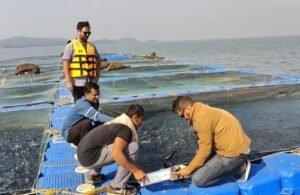
Fish farmers benefit because they can plan harvesting schedules more effectively. Rather than harvesting all ponds at the same time, producers can stagger production to match expected demand. This reduces market oversupply and helps maintain stable prices.
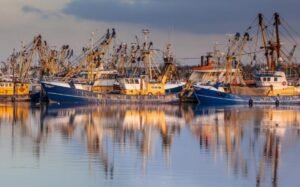
Marine fishermen can also use demand forecasts before heading to sea. Fisheries cooperatives and government departments can share digital market intelligence through mobile applications, allowing fishing communities to understand which species are expected to command higher prices in different markets.
Seafood processing companies gain another important advantage. Processing plants often struggle to balance raw material availability with customer orders. Artificial intelligence predicts future procurement requirements, enabling processors to schedule labour, packaging materials and transportation more efficiently.
Cold storage facilities also become more effective when demand forecasts are available. Operators can estimate storage requirements several weeks in advance and allocate capacity accordingly. Fish that are expected to experience strong future demand can be preserved strategically rather than being sold immediately at lower prices.
Exporters benefit from better planning as well. International seafood demand changes according to holidays, weather patterns and economic conditions in importing countries. Artificial intelligence analyses global trade information and predicts future export opportunities, allowing exporters to negotiate contracts and organize shipments more effectively.
Retailers receive valuable insights into customer preferences. Supermarkets and seafood markets can adjust inventory based on expected demand for different species, reducing spoilage while improving product availability.
Government fisheries departments can establish centralized demand forecasting platforms serving the entire sector. By combining production data, market arrivals, export information and consumption trends, authorities can provide regular forecasts to fishermen, cooperatives and seafood businesses.
Artificial intelligence also supports price stabilization. While it cannot eliminate market fluctuations, better forecasting reduces sudden oversupply and shortages. More balanced markets contribute to stable incomes for producers and fair prices for consumers.
Machine learning models continuously improve as they receive additional information. Every fishing season provides new data that helps refine future predictions. Regional forecasting models can also be developed for different coastal states because consumer preferences and production patterns vary across India.
Integration with Internet of Things technologies further strengthens forecasting accuracy. Smart fish farms continuously report production volumes, while GPS enabled fishing vessels transmit landing information in real time. These live production updates allow forecasting models to respond quickly to changing supply conditions.
Banks and financial institutions may also benefit. Reliable demand forecasts improve confidence when financing fisheries businesses because production planning becomes more predictable. Insurance companies can similarly evaluate business risks using verified market intelligence.
Climate change presents growing uncertainty for fisheries production. Artificial intelligence incorporates weather forecasts and environmental data into demand models, helping businesses prepare for disruptions caused by storms, marine heatwaves or changing fish migration patterns.
Training is essential for successful implementation. Fishermen, processors and cooperatives need practical guidance on interpreting forecasts and integrating predictive information into daily decision making. User friendly mobile applications available in regional languages will improve adoption among fishing communities.
Data sharing across the fisheries ecosystem is equally important. Government agencies, research institutions, exporters, wholesale markets and cooperatives should contribute information to create comprehensive forecasting systems while maintaining appropriate data security and privacy standards.
India’s fisheries industry is increasingly becoming a data driven economy where timely information can significantly improve profitability. Artificial intelligence powered demand forecasting enables producers and businesses to move from reactive decision making to strategic planning.
By combining machine learning, cloud computing, market analytics and real time production data, India can build a fisheries supply chain that is more efficient, resilient and responsive to market needs. Better forecasting will reduce waste, improve incomes, strengthen exports and help create a more sustainable future for one of the country’s most important blue economy sectors.