India’s paper industry begins long before paper reaches a manufacturing plant. The supply chain starts with eucalyptus plantations, bamboo cultivation, agro-residues, farm forestry, and recycled fibre before moving through pulp production, paper manufacturing, logistics, warehousing, packaging, and exports. These stages are often managed independently, resulting in limited visibility, raw material shortages, transportation delays, and inconsistent production planning. A Smart Forest-to-Paper Digital Infrastructure can digitally connect every stage of the industry into one integrated national platform.
The platform would link plantation owners, farmers, forest departments, pulp manufacturers, paper mills, transport companies, warehouses, exporters, financial institutions, and government agencies through a secure cloud-based ecosystem. Instead of relying on isolated databases and manual reporting, every participant would contribute to a shared digital infrastructure.
Each plantation would receive a digital identity containing information such as tree species, planting dates, expected harvest periods, soil conditions, irrigation status, and estimated wood yield. Bamboo plantations, eucalyptus farms, poplar plantations, and agro-forestry projects would all become part of the same digital network.
Satellite imagery, drones, and Internet of Things sensors would continuously monitor plantation health. Artificial intelligence would analyse tree growth, rainfall, soil moisture, pest infestations, disease outbreaks, and weather conditions to estimate future pulpwood availability with high accuracy.
Paper mills would use these forecasts to plan raw material procurement months or even years in advance. Instead of reacting to unexpected shortages, manufacturers could align production schedules with predicted harvesting cycles.
Artificial intelligence would also optimise transportation. Once timber or bamboo is harvested, AI would recommend the fastest and most economical transport routes to pulp mills based on road conditions, railway capacity, fuel prices, weather forecasts, and vehicle availability.
Pulp manufacturers would receive real-time information regarding incoming raw material quality and delivery schedules. Smart inventory systems would automatically balance stock levels, reducing storage costs while ensuring uninterrupted production.
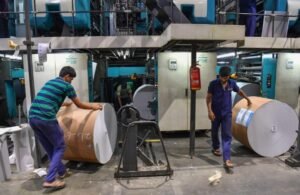
IoT sensors installed throughout pulp mills and paper factories would monitor machine performance, energy consumption, water usage, chemical processing, and production efficiency. AI would identify operational bottlenecks, predict equipment failures, and recommend maintenance before breakdowns occur.
Water management would become another important feature. Since paper manufacturing requires significant water resources, smart monitoring systems would track consumption, wastewater treatment performance, recycling efficiency, and environmental compliance in real time.
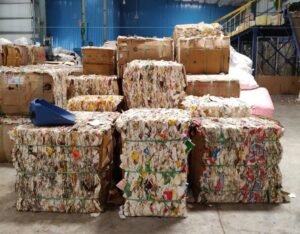
The platform would integrate recycling information alongside virgin fibre production. Paper mills could compare the availability of recycled fibre with plantation resources, allowing AI to recommend the most efficient blend of raw materials based on quality, cost, and sustainability goals.
Exporters would gain access to verified sustainability information demonstrating responsible sourcing, plantation management, recycled content, and environmental compliance. These digital certifications would strengthen India’s competitiveness in international paper markets.
Banks could use verified plantation and production information to finance farm forestry, plantation development, pulp manufacturing, and paper production with greater confidence. Better data reduces lending risks while encouraging long-term investment.
Insurance companies would benefit from satellite monitoring, weather analytics, and plantation intelligence. Crop insurance for farm forestry, industrial asset insurance, and logistics coverage could be priced more accurately using real-time environmental data.
Government agencies responsible for forestry, agriculture, industry, trade, and environmental protection would receive aggregated national dashboards showing plantation growth, timber availability, recycling performance, industrial demand, and future production capacity. These insights would support better policymaking and resource planning.
Cloud computing would provide nationwide scalability, allowing millions of data points from plantations, factories, logistics networks, and warehouses to be processed continuously. Businesses of every size could participate using secure digital dashboards tailored to their operations.
Cybersecurity would protect commercially sensitive information including plantation records, production plans, logistics schedules, and export contracts. Secure cloud architecture, encrypted communications, digital identities, and continuous monitoring would safeguard the integrity of the platform.
Technology companies would have opportunities to develop AI forecasting systems, satellite analytics, drone monitoring software, IoT devices, forestry management platforms, cloud infrastructure, and industrial automation tools specifically designed for the paper sector. Universities could contribute advanced forestry models, biomass analytics, climate prediction systems, and sustainable manufacturing research.
As India seeks to increase domestic paper production while promoting sustainable forestry and reducing import dependence, digitally integrating the entire value chain will become increasingly important.
A Smart Forest-to-Paper Digital Infrastructure represents a strategic Industry 4.0 investment for India. By combining artificial intelligence, satellite technology, IoT, cloud computing, digital logistics, and predictive analytics, India can create a resilient paper ecosystem that improves raw material security, increases manufacturing efficiency, strengthens exports, supports sustainable forestry, and drives long-term industrial growth.