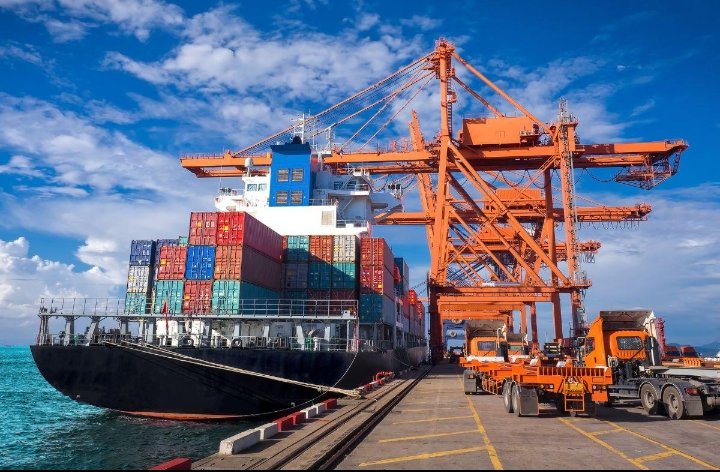
India’s mining industry exports billions of dollars worth of minerals every year to customers across Asia, Europe, Africa, the Middle East, and North America. Iron ore, granite, alumina, bauxite, limestone, manganese ore, and several industrial minerals contribute significantly to the country’s export earnings. While mining technology and logistics have advanced rapidly, financing international trade remains a complex and time consuming process. Industry 4.0 is now introducing digital trade finance platforms that can simplify export transactions, reduce financial risks, and improve access to working capital for mining companies.
Trade finance refers to the financial services that support international commerce. Exporters often need funding to purchase equipment, pay workers, arrange transportation, insure cargo, and manage production before receiving payment from overseas buyers. Banks, insurance companies, export credit agencies, and financial institutions provide these services through instruments such as letters of credit, invoice financing, export loans, payment guarantees, and foreign exchange facilities.
Traditionally, obtaining trade finance involves large amounts of paperwork, manual verification, physical signatures, and repeated communication between multiple organizations. Processing can take several days or even weeks, delaying shipments and increasing administrative costs. Digital trade finance platforms replace these manual processes with secure online systems that automate documentation and accelerate approvals.
A mining company preparing an export shipment uploads invoices, purchase orders, quality certificates, transport documents, customs declarations, and buyer contracts onto the digital platform. Artificial intelligence verifies document consistency, identifies missing information, and checks compliance with banking and regulatory requirements. Instead of reviewing every document manually, financial institutions receive prevalidated information that speeds up decision making.
Machine learning also improves risk assessment. Rather than relying only on traditional financial statements, AI evaluates buyer payment history, international trade patterns, shipping performance, commodity price movements, geopolitical developments, and market conditions. This enables lenders to make faster and more accurate lending decisions while reducing financial risk.
Small and medium sized mining companies stand to benefit significantly. Many smaller exporters struggle to obtain affordable financing because banks have limited information about their business performance. Digital platforms create verified transaction histories that demonstrate export reliability over time. As companies establish successful records, access to financing becomes easier and potentially less expensive.
International buyers also benefit from greater transparency. Secure digital platforms allow buyers to track financing milestones, shipment status, payment schedules, and document approvals in real time. Improved visibility strengthens trust and reduces uncertainty during international transactions.
Blockchain technology can further enhance trade finance by creating tamper resistant digital records. Contracts, payment commitments, shipping confirmations, and quality certifications become permanently recorded, reducing the likelihood of fraud or documentation disputes. Smart contracts can automatically trigger payments once predefined shipping or delivery conditions have been satisfied.
Foreign exchange management represents another valuable feature. Mineral exports often involve multiple currencies, exposing exporters to exchange rate fluctuations. Artificial intelligence continuously monitors currency markets and recommends appropriate hedging strategies or optimal payment timings that help companies reduce financial exposure.
Insurance services can also be integrated into the platform. Exporters receive instant quotations for cargo insurance, marine insurance, political risk coverage, and trade credit protection. AI evaluates shipment characteristics, destination risks, weather conditions, and transportation routes to recommend suitable insurance products.
Government export promotion agencies may integrate with these digital platforms to provide incentives, subsidies, and compliance services. Exporters can submit applications electronically, reducing paperwork while improving administrative efficiency. Customs authorities, tax agencies, and regulatory departments gain access to verified digital records that simplify inspections and compliance monitoring.
The integration of logistics information creates additional advantages. GPS tracking, shipping schedules, warehouse management systems, and port operations feed data into the finance platform. Lenders gain confidence by monitoring cargo movements in real time, while exporters can demonstrate shipment progress without repeatedly submitting manual updates.
Cybersecurity remains essential because trade finance platforms handle highly confidential commercial information. Strong encryption, multi factor authentication, secure cloud infrastructure, and continuous monitoring protect financial transactions against cyber threats while maintaining customer confidence.
India’s growing exports of critical minerals for batteries, renewable energy systems, electric vehicles, and semiconductor manufacturing require increasingly sophisticated financial services. Global buyers expect rapid transaction processing, transparent documentation, and reliable payment systems. Digital trade finance platforms help Indian exporters meet these expectations while strengthening their competitiveness in international markets.
Technology companies also benefit from this transformation. Financial technology firms, software developers, cybersecurity specialists, cloud service providers, artificial intelligence companies, and digital identity providers all contribute to building the ecosystem required for intelligent trade finance. This creates new employment opportunities while supporting innovation across multiple industries.
Training and digital literacy remain important priorities. Export managers, finance professionals, bankers, customs officials, and logistics providers must understand digital workflows, electronic documentation, cybersecurity practices, and AI assisted financial decision making. Educational institutions can help prepare professionals for these evolving requirements.
The future of mineral exports will depend not only on mining productivity but also on financial efficiency. Faster access to capital enables exporters to respond quickly to market opportunities, expand production, and serve international customers more effectively. Reduced administrative costs improve profitability while encouraging greater participation in global trade.
Digital trade finance platforms represent an important application of Industry 4.0 within the mining sector. By combining artificial intelligence, blockchain, cloud computing, secure digital documentation, and real time logistics integration, India can modernize the financial infrastructure that supports its mineral exports. As global commerce becomes increasingly digital, intelligent trade finance will play a vital role in helping Indian mining companies compete successfully in international markets while building stronger and more transparent commercial relationships.