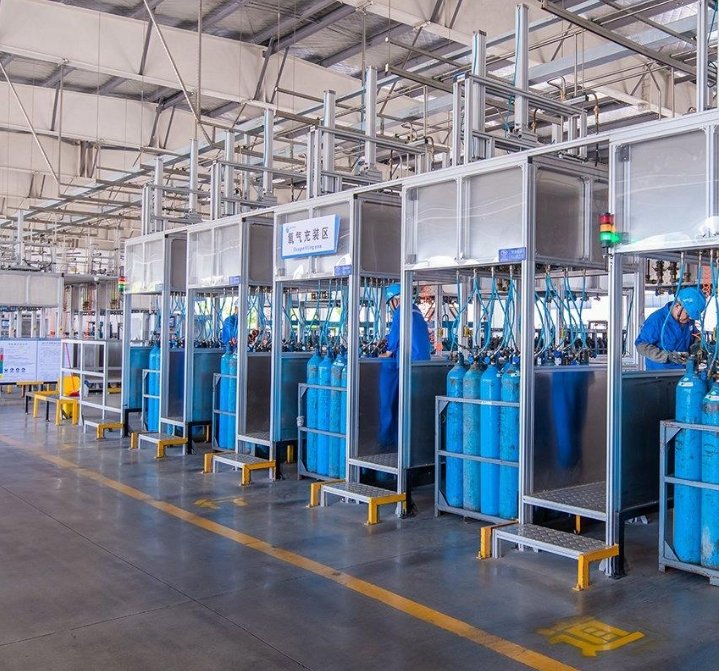
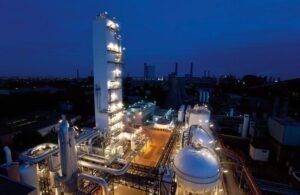
Industrial gas cylinders quietly support some of India’s most critical sectors. Hospitals depend on medical oxygen, factories use nitrogen and argon, laboratories require specialty gases, and manufacturers rely on compressed gases for welding, fabrication, pharmaceuticals, electronics, and food processing. Millions of cylinders move across India every year, yet governance of these assets is often fragmented across manufacturers, distributors, transport operators, and end users. A national digital governance framework can significantly improve safety, efficiency, and accountability.
A digital governance platform would connect gas manufacturers, filling stations, transport companies, distributors, hospitals, factories, laboratories, inspection agencies, and regulators through a unified digital ecosystem. Every authorized participant would access verified information regarding cylinder status, ownership, certification, and movement.
Each gas cylinder could receive a permanent digital identity through a secure QR code or RFID tag. The digital record would contain manufacturing details, ownership history, inspection dates, pressure testing records, repair history, filling information, and current operational status. Throughout its lifespan, every cylinder would maintain a complete digital history.
One of the biggest governance challenges is periodic safety inspection. Gas cylinders require regular testing to ensure structural integrity. A digital platform can automatically notify owners and regulators when inspections or pressure tests are due. Cylinders with expired certifications can be flagged before they reenter the supply chain, improving public safety.
Artificial intelligence can strengthen governance by analyzing movement patterns, inspection records, filling cycles, accident reports, and operational data. AI can identify cylinders that are repeatedly delayed for inspections, frequently damaged, or operating outside expected usage patterns, allowing regulators to focus inspections where they are most needed.
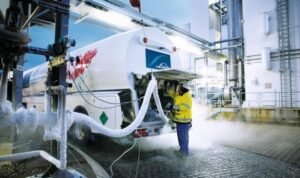
Real time logistics monitoring also improves accountability. GPS enabled transport vehicles and digitally tracked cylinders provide continuous visibility from production facilities to hospitals, industries, and distributors. During emergencies, authorities can quickly identify available inventories and coordinate rapid deliveries.
Hospitals benefit significantly from such governance. Medical oxygen cylinders can be monitored continuously for availability, certification status, and expected delivery schedules. Health authorities gain better visibility into regional oxygen reserves, improving preparedness during emergencies.
Financial governance also becomes more transparent. Manufacturers and distributors can monitor cylinder assets, reduce losses, improve inventory management, and optimize asset utilization through real time operational dashboards. Better information reduces unnecessary capital investment while improving operational efficiency.
Regulators can monitor the national cylinder ecosystem through integrated dashboards displaying inspection compliance, accident trends, production capacity, distribution activity, and regional inventory levels. Evidence based regulation becomes more effective than relying solely on periodic reporting.
Citizen safety also improves. Businesses receiving industrial gas cylinders can verify inspection certificates and regulatory compliance by scanning the cylinder’s digital identity before use. This improves confidence while reducing the risk of unsafe equipment entering workplaces.
Cybersecurity remains essential because the governance platform supports critical industries including healthcare, manufacturing, energy, and research. Secure authentication, encrypted communications, and resilient infrastructure protect operational information while ensuring uninterrupted access.
Data generated by the platform also supports long term planning. Governments can analyze industrial demand, regional supply patterns, emergency preparedness, infrastructure needs, and investment priorities for one of the country’s most essential industrial support sectors.
India’s industrial gas network continues to expand as manufacturing, healthcare, electronics, and advanced industries grow. Modern governance requires continuous visibility rather than isolated inspections and manual documentation.
A digital governance framework for industrial gas cylinders is not simply a record keeping system. It creates a national safety and operational platform that strengthens accountability, improves emergency response, and supports critical industries across the country. By integrating digital identities, artificial intelligence, connected logistics, predictive oversight, and secure public administration, India can modernize the governance of an industry that silently powers much of its economy.