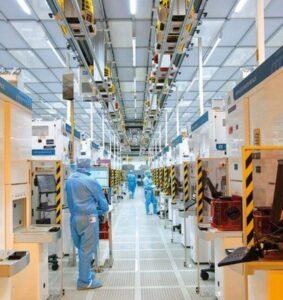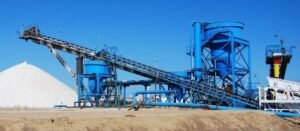
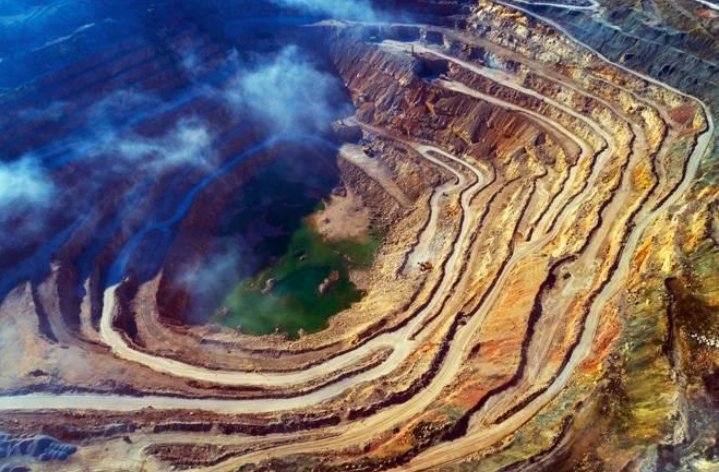
India’s transition toward becoming a developed economy depends not only on digital technology but also on the minerals that power modern industries. Electric vehicles, renewable energy systems, semiconductors, telecommunications equipment, defence manufacturing and advanced electronics all require a steady supply of critical minerals. As global competition for these resources intensifies, India must modernize its mining sector through a unified digital infrastructure.
Mining has traditionally been viewed as a heavy industrial activity driven by excavation, transportation and processing. Today, however, it is increasingly becoming a data-intensive industry. Every stage of mining generates valuable information, from geological surveys and exploration to drilling, production, logistics, environmental monitoring and mine rehabilitation. The challenge is to connect these activities into a secure digital ecosystem that improves productivity, transparency and sustainability.
India possesses significant reserves of coal, iron ore, limestone, bauxite and several strategic minerals. At the same time, the country is actively seeking greater access to critical minerals such as lithium, cobalt, graphite, nickel and rare earth elements. Managing these resources efficiently requires much more than physical infrastructure. It requires digital systems capable of collecting, processing and analysing enormous volumes of information in real time.
A unified digital infrastructure would begin with comprehensive geological mapping. Satellite imagery, drone surveys, geographic information systems, artificial intelligence and remote sensing technologies can produce highly detailed digital maps of mineral resources. These tools reduce exploration risks, shorten project timelines and improve investment decisions by providing more accurate geological data.
Digital platforms can also streamline the licensing process. Mining projects often involve multiple approvals from different government agencies. A single digital portal integrating exploration licences, environmental clearances, land records, royalty payments and compliance reporting could significantly reduce delays while improving transparency. Investors would benefit from predictable approval processes, while regulators would gain better oversight.
Internet of Things sensors are transforming mining operations around the world. Equipment fitted with sensors continuously reports fuel consumption, engine health, production volumes, vibration levels and maintenance requirements. Predictive maintenance systems use artificial intelligence to identify potential failures before they occur, reducing downtime and extending equipment life. These improvements can significantly lower operating costs while increasing productivity.
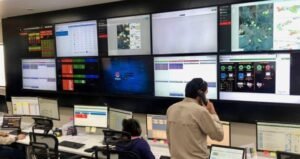
Worker safety remains one of the most important priorities in mining. Digital infrastructure can improve safety by using wearable devices, environmental sensors and real time monitoring systems. These technologies can detect hazardous gases, unstable ground conditions, excessive temperatures or equipment malfunctions and alert workers immediately. Emergency response teams can receive precise location data, improving rescue operations during accidents.
Environmental sustainability is another area where digital technologies can make a significant impact. Mining companies face increasing expectations to minimise environmental damage while maintaining production. Digital monitoring systems can continuously track air quality, water quality, dust emissions, waste disposal and land rehabilitation activities. Regulators can access this information in real time, improving environmental compliance and public confidence.
Transportation is a critical component of the mining value chain. Minerals often travel hundreds of kilometres between mines, processing plants, ports and manufacturing facilities. Digital logistics platforms integrating railways, highways, ports and warehouses can optimise transportation routes, reduce delays and improve supply chain efficiency. Real time tracking also reduces losses and improves inventory management.
Critical minerals present additional strategic considerations. Many advanced economies are attempting to reduce dependence on limited international suppliers for minerals essential to batteries, electronics and defence technologies. India has an opportunity to build secure and transparent supply chains supported by digital traceability. Every shipment of critical minerals can be digitally tracked from extraction to processing and final manufacturing, strengthening confidence among domestic and international buyers.
Artificial intelligence can also improve resource management. Machine learning algorithms analyse geological information, production trends and market demand to optimise extraction strategies. Rather than focusing solely on production volume, companies can maximise long term resource utilisation while reducing operational costs. Digital twins of mining operations allow managers to simulate different scenarios before implementing major operational changes.
Cybersecurity should be an integral part of any mining digitalisation strategy. Mining companies increasingly depend on connected equipment, automated control systems and cloud based platforms. These digital assets require strong protection against cyber threats that could disrupt production or compromise sensitive geological information. Secure industrial networks and continuous monitoring should become standard across the sector.
India’s mining industry also includes many small and medium enterprises that may struggle to adopt advanced technologies independently. Shared cloud platforms, government supported digital services and industry wide technology standards can reduce adoption costs while ensuring that digital transformation reaches the entire sector rather than only the largest companies.
Academic institutions and research organisations have an important role to play. Universities can develop expertise in mining informatics, industrial artificial intelligence, geospatial analytics and autonomous mining technologies. Collaboration between industry and academia will accelerate innovation while preparing the next generation of mining professionals.
The development of a national mining data platform could transform policymaking. Reliable information on mineral reserves, production capacity, environmental performance, exports and infrastructure availability would enable governments to make faster and better informed decisions. Investors would also gain greater confidence from transparent and accessible industry data.
As India expands manufacturing under initiatives such as advanced electronics, renewable energy, electric mobility and semiconductor production, the importance of reliable mineral supply chains will continue to grow. Mining can no longer be viewed as an isolated extractive activity. It must become an integrated component of India’s digital and industrial strategy.
Building a unified digital infrastructure for mining is therefore not simply a technology project. It is a strategic investment in national competitiveness. By combining advanced digital systems with responsible resource management, India can strengthen its mining sector, secure access to critical minerals, attract global investment and build resilient supply chains that support long term economic growth.