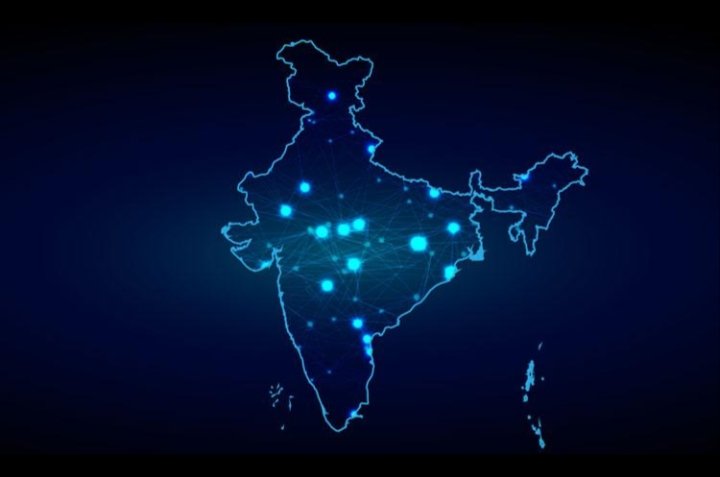
India’s digital transformation cannot succeed if it develops unevenly. While several states have made significant progress in digital governance, broadband connectivity, startup ecosystems, and public services, others continue to face challenges in infrastructure, digital literacy, and technology adoption. A truly digital India requires a coordinated national strategy that empowers every state to participate in the country’s digital future.
Digital infrastructure should be viewed as a national development network rather than a collection of isolated state initiatives. High-speed broadband, 5G and future communication technologies, cloud infrastructure, data centres, cybersecurity capabilities, artificial intelligence computing resources, digital public services, and skilled human capital must be developed through a common vision while allowing states the flexibility to address local priorities.
Each state has unique strengths that can contribute to India’s digital economy. Karnataka leads in software and innovation, Telangana has developed a strong technology ecosystem, Tamil Nadu excels in electronics and manufacturing, Gujarat has built industrial capabilities, Kerala has invested in digital literacy, and Maharashtra remains a major financial and technology hub. A holistic strategy should encourage collaboration between states so that successful models can be adapted rather than reinvented.
Balanced digital development also reduces regional inequality. Citizens in smaller towns and rural districts should have access to the same quality of digital education, telemedicine, e-governance, online banking, and digital commerce as those living in major metropolitan areas. Equal access creates new economic opportunities, strengthens social inclusion, and encourages businesses to expand beyond traditional urban centres.
A unified strategy is essential for cybersecurity. Critical infrastructure such as electricity, transportation, healthcare, financial systems, and public administration increasingly depends on interconnected digital networks. Cyber threats rarely respect state boundaries. Shared standards, coordinated monitoring, joint incident response, and regular information sharing can strengthen the resilience of the entire nation.
Artificial intelligence presents another opportunity for national coordination. States generate enormous amounts of public data in agriculture, healthcare, education, transport, and urban planning. When managed responsibly with strong privacy protections, these datasets can support AI applications that improve governance, disaster management, public health, and economic planning. Shared AI infrastructure can also reduce costs for states with limited resources.
Digital infrastructure should be integrated with physical infrastructure. New highways, industrial corridors, ports, airports, railway projects, and smart cities should include broadband networks, intelligent transport systems, digital monitoring, and secure communications from the planning stage. This integrated approach improves efficiency and reduces future costs.
Human capital is equally important. Every state should strengthen digital education, technical training, cybersecurity skills, and AI literacy through universities, engineering colleges, vocational institutions, and industry partnerships. A coordinated national talent strategy can help address future workforce demands while creating employment opportunities across the country.
A holistic strategy also encourages healthy competition between states. Common benchmarks for digital governance, broadband penetration, cybersecurity readiness, startup growth, AI adoption, and digital public services can motivate continuous improvement while allowing states to learn from one another.
India’s digital future depends not only on technological innovation but also on national coordination. A shared vision that respects regional diversity while pursuing common goals can help every state contribute to the country’s growth. When all states move forward together, digital infrastructure becomes more than a technological asset. It becomes a foundation for economic prosperity, stronger governance, improved public services, and a more connected and resilient India.