
A government or institution does not necessarily fail because it lacks ideas. Sometimes it fails because it has too many of them.
One of the most damaging habits of inexperienced administration is the constant changing of priorities. Every few weeks there is a new announcement, a new programme, a new target or a new area of focus. The previous initiative has barely entered implementation when attention moves somewhere else.
The result is an organisation that is permanently starting but rarely finishing.
This problem is often mistaken for dynamism. Administrators may believe that introducing new initiatives demonstrates energy and leadership. There is a temptation to announce something visible, attach a deadline to it and move resources towards it.
But administration is not primarily an announcement business. It is an execution business.
A good institution needs continuity.
If a department has identified ten important problems, it cannot realistically solve all ten simultaneously. Resources are limited. Staff time is limited. Budgets are limited. Political attention is limited. Management capacity is limited.
The administrator’s job is therefore not simply to identify priorities. It is to decide which priorities matter most and protect them from unnecessary disruption.
An amateur administrator often does the opposite.
A new issue becomes prominent in the media, and suddenly it becomes the number one priority. A political instruction arrives, and an existing programme is pushed aside. A new officer takes charge and wants to establish a personal signature. A new technology becomes fashionable and an existing system is abandoned.
The organisation begins moving sideways.
This creates what can be called administrative churn.
Staff spend time adapting to new instructions rather than improving the system. Budgets are reallocated. Procurement plans change. Contractors receive revised directions. Reports have to be rewritten. Training programmes are redesigned. Existing projects lose momentum.
Eventually employees learn an unfortunate lesson.
Do not take today’s priority too seriously because tomorrow’s priority will probably replace it.
Once that mentality spreads through an organisation, execution becomes extremely difficult.
Employees stop investing deeply in long-term projects. They wait for instructions. Managers become cautious. Nobody wants to build a system that may be abandoned after the next leadership change.
The damage can be particularly severe in infrastructure.
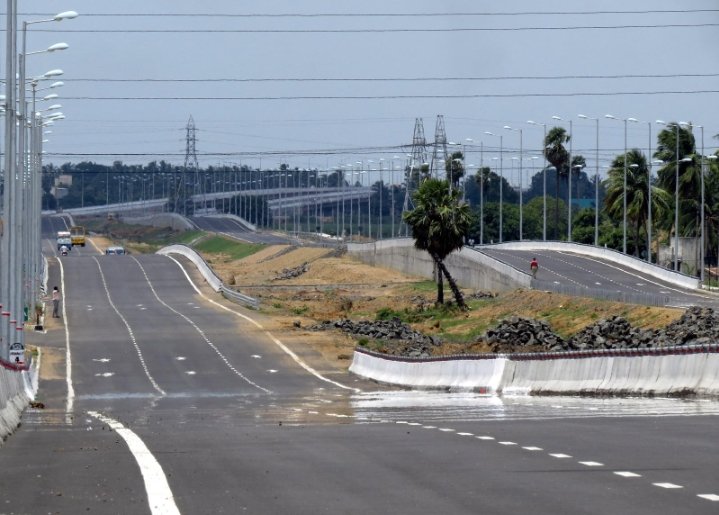
A road, drainage system, public building, digital platform or water project may require years of planning, procurement, construction and maintenance. Constant changes in priorities can produce incomplete projects, fragmented investments and infrastructure that does not work as an integrated system.
The same problem exists in digital governance.
An administration may introduce one portal, then replace it with another. A department may launch a new database without integrating the previous one. A new dashboard may be created while the underlying data remains fragmented.
The result is not digital transformation.
It is digital accumulation.
More systems exist, but the organisation becomes harder to manage.
Changing priorities also creates hidden financial costs.
Every abandoned or interrupted programme contains money already spent on planning, procurement, training, software, consultants, equipment and institutional learning.
These costs are rarely visible when the new priority is announced.
The administrator sees the future opportunity.
The institution quietly carries the cost of the unfinished past.
There is nothing inherently wrong with changing priorities. Circumstances change. Emergencies occur. New information becomes available. Economic conditions shift. Technologies evolve.
A rigid administration can be just as dangerous as an unstable one.
The difference is whether priorities are changed deliberately or impulsively.
A mature administration should have a mechanism for reviewing priorities.
If a project is no longer valuable, it should be possible to stop it. But stopping it should require an explicit assessment of the money already spent, the remaining cost, the expected benefit and the consequences of abandoning it.
Similarly, a new project should have to compete for resources against existing commitments.
Without such discipline, every new idea receives attention while existing obligations continue accumulating underneath.
One useful principle is simple: new priorities should not automatically receive new resources.
Before launching something new, administrators should ask what will be delayed, reduced or cancelled to make room for it.
That question forces trade-offs into the open.
If nothing is being displaced, the organisation may simply be adding another responsibility to an already overloaded system.
This is where experienced administration differs from amateur administration.
Experience is not simply knowing how to start projects. It is knowing how many projects an organisation can realistically carry at once.
It is knowing when to say no.
It is understanding that a boring project that is 90 percent complete may deserve more attention than an exciting project that has just been announced.
It is recognising that institutional credibility comes from finishing things.
Citizens rarely experience government through policy announcements. They experience it through whether the road is usable, whether the application is processed, whether the water arrives, whether the hospital functions and whether a public service works when they actually need it.
Completion matters.
A government that finishes five important projects can create more value than one that announces fifty.
The discipline of prioritisation is therefore one of the foundations of serious governance.
Administrators need a small number of clearly defined strategic priorities, stable ownership, measurable milestones and sufficient time for implementation.
There should also be room for emergency response without allowing every temporary issue to destroy the long-term agenda.
The ultimate test is not how many initiatives an administrator can announce during a tenure.
It is how many meaningful improvements remain functioning after the administrator has moved on.
That is the difference between administration as visibility and administration as institution building.