
India’s financial system has grown rapidly over the past decade. Digital payments, online banking, fintech platforms, capital markets, insurance services, and non banking financial companies now handle billions of transactions every day. While this growth has expanded financial inclusion and economic activity, it has also increased the complexity of managing financial stability. A small disruption in one part of the financial system can quickly spread to banks, businesses, investors, and consumers. Industry 4.0 technologies offer a solution through an AI Based Financial Stability Early Warning System.
The platform would function as a nationwide digital infrastructure that continuously monitors the health of India’s financial ecosystem. Instead of waiting until problems become visible through quarterly reports or regulatory inspections, artificial intelligence would analyze real time financial information and identify emerging risks before they develop into major crises.
The system would securely collect information from banks, payment networks, stock exchanges, insurance companies, mutual funds, NBFCs, fintech platforms, credit rating agencies, and government financial databases. Each institution would contribute selected operational data through standardized digital interfaces while maintaining customer privacy and regulatory compliance.
Artificial intelligence would process millions of financial records every day. Machine learning algorithms would examine liquidity levels, loan repayment trends, market volatility, payment settlement activity, credit growth, sectoral lending, corporate financial performance, foreign capital movements, and macroeconomic indicators. Rather than evaluating these factors independently, AI would identify relationships that humans may overlook.
For example, if repayment delays begin increasing across several industries while liquidity simultaneously declines in a particular region, the platform may identify an early indication of financial stress. If multiple NBFCs experience similar funding pressures, regulators receive alerts before broader instability develops.
The system would also monitor digital payment infrastructure. India’s growing UPI ecosystem processes enormous transaction volumes every day. AI would continuously analyze payment success rates, settlement delays, transaction anomalies, and infrastructure performance. Technical disruptions or unusual transaction patterns could be detected within minutes, allowing faster corrective action.
Stock markets provide another valuable source of information. Artificial intelligence would monitor trading volumes, sector specific volatility, corporate bond spreads, investor sentiment, and capital flows. Significant changes across multiple indicators may reveal emerging financial pressures affecting specific industries or the broader economy.
NBFCs have become an important source of financing for housing, vehicles, infrastructure, agriculture, and small businesses. AI would continuously monitor funding conditions, repayment performance, asset quality, and liquidity positions across the sector. Early identification of financial stress would help regulators coordinate preventive measures before problems spread.
The insurance industry would also contribute operational intelligence. Claims activity, catastrophe exposure, premium collections, investment performance, and capital adequacy data would provide additional signals regarding financial resilience. Artificial intelligence could identify unusual trends requiring regulatory attention.
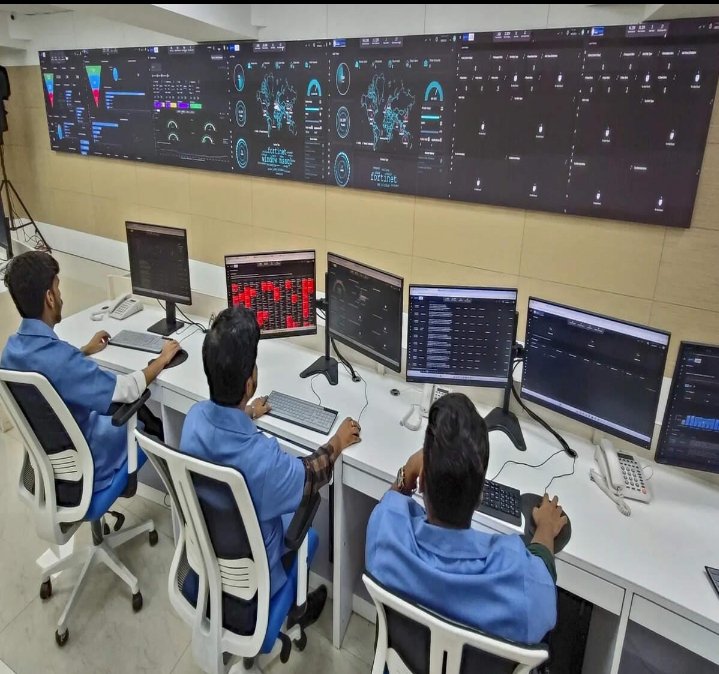
Cloud computing forms the technological foundation of the platform. Secure data centers process vast quantities of financial information while providing high availability and rapid scalability. Authorized regulators access real time dashboards showing national financial conditions through intuitive visual interfaces.
Predictive analytics distinguishes the platform from conventional reporting systems. Instead of describing what has already happened, AI estimates the probability of future financial stress under different economic scenarios. Decision makers receive forecasts that support proactive policy responses rather than reactive interventions.
Cybersecurity remains one of the most important design requirements. Financial infrastructure represents critical national infrastructure and requires advanced protection against cyber threats. End to end encryption, multi factor authentication, continuous monitoring, zero trust architecture, and AI driven threat detection safeguard sensitive information while ensuring uninterrupted operations.
Privacy protection is equally important. Customer level information would remain protected through strong governance frameworks, anonymization techniques, and secure regulatory access controls. The objective is systemic financial monitoring rather than surveillance of individual customers.
The platform also supports monetary policy and financial planning. Aggregated information regarding lending activity, savings behavior, investment trends, and economic sectors provides policymakers with a more comprehensive understanding of financial conditions across the country.
Universities and research institutions could contribute advanced forecasting models using artificial intelligence, econometrics, and network analysis. Collaboration between economists, computer scientists, statisticians, and financial experts would continuously improve prediction accuracy as the financial system evolves.
Technology companies also benefit from developing specialized software, cloud infrastructure, cybersecurity solutions, AI analytics platforms, and financial data integration services. These capabilities strengthen India’s digital economy while creating export opportunities in financial technology.
As India continues expanding digital banking, fintech innovation, capital markets, and financial inclusion, maintaining systemic stability becomes increasingly important. Traditional monitoring methods alone may not be sufficient to manage a highly interconnected financial ecosystem operating in real time.
An AI Based Financial Stability Early Warning System represents a strategic Industry 4.0 investment in national financial infrastructure. By integrating artificial intelligence, cloud computing, predictive analytics, secure digital networks, and real time financial intelligence, India can identify emerging risks earlier, strengthen regulatory decision making, improve crisis preparedness, and build a more resilient financial system capable of supporting long term economic growth in the digital age.