One of the clearest signs of weak administration is an organisation that appears to be constantly working but is strangely incapable of getting things done.
There are meetings every week. Committees are formed. Minutes are recorded. Presentations are prepared. Instructions are circulated. Progress reports are requested. Another review meeting is scheduled to discuss the previous review meeting.
From the outside, this can look like serious governance.
Inside the organisation, however, very little may actually be changing.
Meetings are an essential part of administration. Complex organisations cannot function without coordination. Departments need to communicate with each other, officials need to resolve conflicts and senior administrators need information from people working on the ground.
The problem begins when meetings become the primary evidence that administration is taking place.
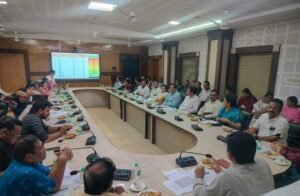
An amateur administrator often feels comfortable inside meetings because meetings create a visible sense of control. People are sitting around a table. Files are available. Presentations are displayed. Senior officials can ask questions and issue instructions.
But issuing an instruction is not the same as achieving an outcome.
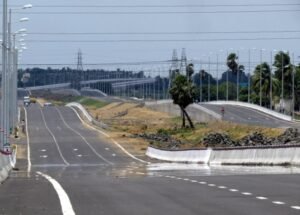
A road does not become better because it was discussed in a meeting. A hospital does not become efficient because its superintendent attended three review sessions. A government scheme does not reach more citizens because another committee examined its progress.
The real test begins after everyone leaves the room.
Who is responsible?
What exactly has to be done?
By when?
What resources are required?
How will success be measured?
What happens if the deadline is missed?
These questions separate governance from administrative theatre.
One of the most common weaknesses is collective responsibility without individual accountability. A committee may be asked to “look into” a problem. Several departments may be directed to “coordinate.” Officials may be told to “take necessary action.”
Such language sounds official but can be remarkably weak.
When everyone is responsible, nobody may be responsible.
A stronger system assigns ownership. One person or one clearly identified office becomes responsible for moving the matter forward. Other departments may support the process, but there is a clear point at which responsibility can be traced.
This becomes especially important in large government systems where problems cross departmental boundaries.
Consider a drainage problem in a growing town. The municipality may be responsible for drains. The public works department may control a road. The water authority may control another network. The electricity department may have underground infrastructure. Private construction may have altered natural drainage.
A meeting can bring everyone into the same room.
But unless someone owns the problem, the meeting may simply produce another meeting.
This is where experienced administrators behave differently. They use meetings as decision-making instruments rather than as substitutes for decisions.
A useful meeting should ideally produce a limited number of concrete decisions. Each decision should have an owner, a deadline and a method of verification.
The quality of the next meeting then depends on what happened between the two meetings.
This creates a powerful administrative rhythm.
The first meeting identifies the problem.
The responsible official acts.
The administration measures the result.
The next meeting examines the evidence.
The strategy is adjusted.
The process continues.
A weak system instead produces a circular rhythm.
Problem identified.
Meeting held.
Instruction issued.
Report requested.
Report discussed.
Another meeting held.
New instruction issued.
Nothing fundamental changes.
This can continue for years.
The danger is that organisations gradually become skilled at reporting rather than solving.
Officials learn what senior administrators want to hear. Reports become polished. Problems are described using bureaucratic language. Delays are attributed to external circumstances. Targets are redefined. New committees are proposed.
Eventually the organisation develops an impressive administrative vocabulary while its underlying problems remain intact.
This is particularly dangerous when senior leadership mistakes documentation for progress.
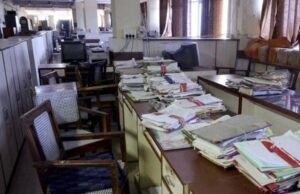
A thick file does not necessarily indicate serious work. A 50-page report may conceal the fact that nobody has actually solved the central problem.
The same applies to presentations.
PowerPoint can make almost any situation look organised.
A dashboard can show green indicators while citizens continue to experience poor services. A project can be described as 80 percent complete while the remaining 20 percent contains the most difficult and expensive work.
Therefore, administrators should periodically leave the meeting room and examine reality.
Visit the site.
Speak to frontline employees.
Talk to citizens.
Look at the physical infrastructure.
Examine the actual waiting time.
Check whether the service works outside the headquarters.
This is particularly important because information becomes increasingly polished as it moves upward through an organisation.
The frontline worker sees the operational problem.
The middle manager sees a departmental problem.
The senior officer sees a performance report.
The political leadership sees a summary.
At every level, some detail disappears.
The meeting room therefore needs to be connected to the ground.
Another weakness occurs when meetings become too large.
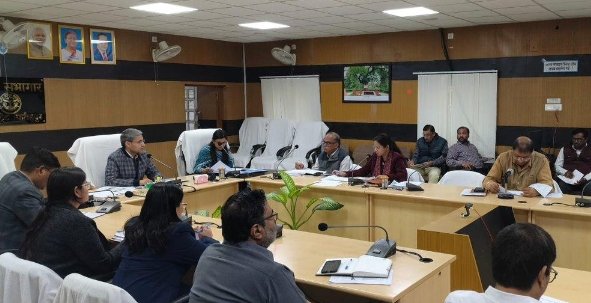
Large meetings often feel democratic and comprehensive, but they can make decision-making slower. People become reluctant to speak honestly. Responsibility becomes diluted. Discussions move towards general statements rather than difficult operational decisions.
Not every problem requires twenty people around a table.
Sometimes three competent people with access to the right information can accomplish more than a committee of thirty.
The purpose of governance is not to maximise participation in every decision. It is to create an effective system in which the right people participate at the right stage.
There is also a psychological dimension to excessive meetings.
Administrators who are uncertain about their own judgement may call more meetings because collective discussion provides psychological protection.
If a decision later fails, responsibility can be distributed.
“I consulted everyone.”
“The committee recommended it.”
“All departments agreed.”
This may protect the administrator personally, but it weakens institutional accountability.
Leadership ultimately requires making decisions.
Consultation is valuable. Delegation is valuable. Expert advice is valuable.
But somebody must eventually decide.
And somebody must eventually deliver.
The strongest administrative culture is therefore not one with the most meetings. It is one where meetings are connected to execution.
A meeting should create movement.
A decision should create responsibility.
Responsibility should create action.
Action should create measurable results.
And results should determine the next decision.
When this chain breaks, administration becomes a performance rather than a functioning system.
The amateur administrator often asks, “Have we discussed this?”
The experienced administrator asks, “What changed because we discussed it?”
That single difference can determine whether an institution merely appears busy or actually governs.