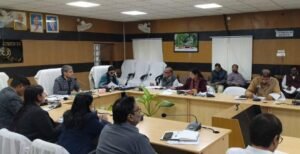
India’s economic and social transformation has often been discussed in terms of national policies and state level initiatives. While these are essential, the real engine of development lies much closer to the people. India’s more than 750 districts represent the administrative units where policies meet reality, where citizens interact with the government, and where development is ultimately measured. If India wants to accelerate inclusive growth, district governments must evolve from administrative offices into dynamic centers of planning, innovation, and execution.
Every district in India has its own economic identity. Some are agricultural powerhouses while others are industrial centers. Many depend on tourism, fisheries, mining, textiles, education, healthcare, or logistics. Despite these unique strengths, planning often follows standardized models that do not fully reflect local opportunities. A stronger district focused approach would allow each region to build on its comparative advantages while contributing to national development.
The district administration already plays a crucial role in implementing government schemes. District Collectors coordinate multiple departments, oversee disaster management, supervise elections, manage law and order in coordination with the police, and monitor public welfare programs. However, their role can be expanded beyond administration into long term economic strategy.
District governments should become centers of local economic intelligence. Every district should maintain continuously updated information on employment, industries, infrastructure, agriculture, education, healthcare, tourism, investment opportunities, environmental resources, and demographic trends. Such information would allow better decision making and enable governments to identify emerging challenges before they become major problems.
Technology makes this transformation possible. Modern digital platforms can integrate information from multiple departments into a single dashboard. District officials could monitor road projects, school attendance, hospital occupancy, water supply, crop conditions, and public grievances in near real time. Instead of reacting after problems occur, administrators could intervene early based on reliable data.
Employment generation should become one of the primary responsibilities of district development planning. Rather than waiting for large investments from outside, districts should actively identify sectors where local entrepreneurs can grow. Small manufacturing clusters, food processing industries, handicrafts, logistics, renewable energy, information technology services, and tourism can all create sustainable employment when supported by proper planning.
Agriculture remains the backbone of many districts. Local administrations should work closely with agricultural universities, research institutions, cooperatives, and farmer organizations to improve productivity and market access. Digital platforms can provide farmers with weather forecasts, crop advisory services, pest alerts, and market prices. District level planning can also encourage crop diversification based on local soil, climate, and demand.
Infrastructure planning should become more integrated. Roads, electricity, water supply, internet connectivity, public transport, and logistics facilities should not be developed independently. Every investment should contribute to a larger district development vision. Better connectivity between villages, towns, industrial parks, educational institutions, and healthcare facilities creates economic opportunities that benefit the entire region.
Education is another area where district governments can drive meaningful change. District education authorities should use performance data to identify schools requiring additional support. Teacher training, digital learning resources, vocational education, and partnerships with local industries can better prepare students for employment while reducing regional skill gaps.
Healthcare planning can also become more data driven. District administrations should monitor disease patterns, maternal health, vaccination coverage, nutrition, and hospital capacity using integrated digital systems. This approach would enable faster responses during disease outbreaks while improving preventive healthcare programs.
Tourism offers enormous opportunities for many districts across India. Heritage sites, religious centers, forests, beaches, mountains, rivers, wildlife sanctuaries, festivals, and traditional crafts can generate employment while preserving local culture. District governments should prepare long term tourism strategies that improve visitor facilities without compromising environmental sustainability.
Environmental management should become a core responsibility of district planning. Water conservation, waste management, forest protection, air quality monitoring, and climate resilience require local solutions. Since environmental challenges differ from one district to another, local planning often produces better outcomes than uniform national approaches.
District governments should also become attractive destinations for investment. Investors frequently seek clear information about land availability, infrastructure, workforce, regulations, and local opportunities. Dedicated district investment facilitation centers can simplify procedures and provide a single point of contact for businesses considering new projects.
Artificial intelligence and advanced analytics can strengthen district administration significantly. AI systems can forecast infrastructure maintenance needs, identify fraudulent transactions, monitor project progress, analyze citizen feedback, and optimize public spending. These technologies should assist administrators rather than replace human judgment.
Financial planning deserves greater attention as well. District administrations should prepare multi year development plans aligned with measurable outcomes. Every major project should be evaluated based on economic impact, employment generation, environmental sustainability, and improvements in quality of life. Better financial management would increase public confidence and ensure efficient use of limited resources.
Citizen participation should become central to district governance. Digital platforms can enable residents to report civic issues, suggest development priorities, participate in consultations, and track the progress of public projects. Greater transparency strengthens accountability while improving trust between citizens and government institutions.
Districts should also collaborate with universities, research institutions, startups, and industry associations. Academic institutions can provide research support while startups develop innovative solutions for local challenges. Industry participation helps align skill development with market requirements, creating stronger local economies.
The central and state governments should encourage healthy competition among districts. Performance indicators covering education, healthcare, infrastructure, environmental protection, ease of doing business, employment, innovation, and citizen satisfaction can motivate continuous improvement. High performing districts should be recognized and their successful practices shared across the country.
Capacity building remains essential. District officials need regular training in project management, digital governance, artificial intelligence, financial planning, public communication, and leadership. Strong institutions depend not only on technology but also on skilled people capable of using it effectively.
India’s diversity is one of its greatest strengths. Every district possesses unique cultural traditions, natural resources, economic capabilities, and human talent. Empowering district governments allows development strategies to reflect these local realities rather than relying entirely on centralized planning.
The future of India’s development will depend not only on national policies but also on the strength of its local institutions. District governments are close enough to understand people’s needs and large enough to coordinate meaningful development initiatives. By transforming districts into engines of innovation, investment, and efficient public service delivery, India can create a more balanced, inclusive, and resilient economy.
A stronger India will be built one district at a time. When every district becomes capable of planning effectively, attracting investment, embracing technology, and delivering quality public services, the nation as a whole will move forward with greater speed and greater confidence.