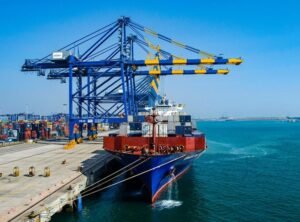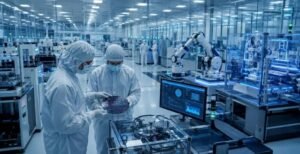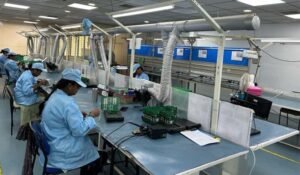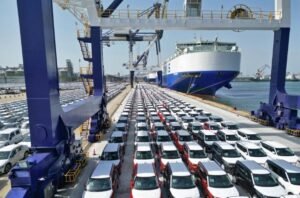
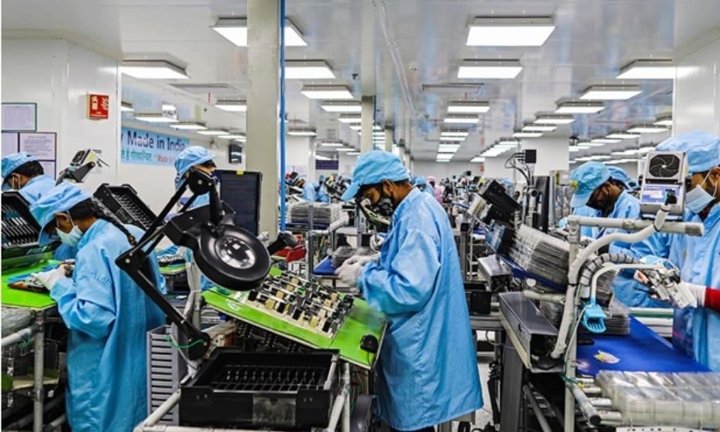
Manufacturing should become one of the strongest pillars of India’s economic strategy over the coming decades. While services have contributed significantly to the country’s growth, a strong manufacturing sector is essential for creating large-scale employment, expanding exports, strengthening supply chains, and building long-term economic resilience.
Manufacturing creates value across the economy. Every new factory generates demand for raw materials, logistics, warehousing, engineering services, finance, maintenance, packaging, software, and transportation. As industrial production grows, thousands of supporting businesses also expand, creating a multiplier effect that benefits entire regions.
Employment is one of the strongest reasons to prioritize manufacturing. India has one of the world’s youngest populations, and millions of people enter the workforce each year. Modern factories can provide opportunities for engineers, technicians, machine operators, designers, quality specialists, supply chain professionals, and research scientists. A vibrant manufacturing ecosystem creates jobs across different skill levels while supporting stable economic growth.
Manufacturing is also critical for increasing exports. Countries that produce high-quality industrial goods strengthen their position in global markets and reduce dependence on imports. India has the potential to become a major manufacturing hub for electronics, automobiles, defence equipment, pharmaceuticals, renewable energy technologies, machinery, textiles, medical devices, and precision engineering.
Technological advancement is closely linked to manufacturing strength. Advanced industries encourage investment in artificial intelligence, robotics, industrial automation, semiconductor technologies, advanced materials, and research and development. These investments improve productivity while helping domestic companies compete internationally.
A stronger manufacturing base also improves national resilience. Global disruptions have shown the risks of depending heavily on imported products and critical technologies. Expanding domestic manufacturing helps secure supply chains for healthcare, defence, electronics, energy, telecommunications, and essential industrial equipment.
State governments have an important role to play. Each state should identify sectors where it has natural advantages and develop industrial clusters supported by reliable infrastructure, skilled workers, efficient logistics, and research partnerships. Healthy competition between states can accelerate industrial growth while creating balanced regional development.
Small and medium enterprises should be integrated into this vision. They form an essential part of India’s manufacturing supply chains and often drive innovation in specialized products and components. Better access to finance, technology, digital tools, and export markets can help these businesses scale and become globally competitive.
Manufacturing should also embrace sustainability. Energy-efficient factories, cleaner production methods, circular economy practices, and responsible resource management will improve competitiveness while supporting environmental goals. Sustainable manufacturing is increasingly becoming a requirement for access to international markets.
Education and skill development must evolve alongside industrial growth. Universities, engineering colleges, and vocational institutions should work closely with industry to prepare graduates for advanced manufacturing, automation, industrial design, quality management, and digital production technologies.
India has the market, the workforce, the entrepreneurial talent, and the strategic position to become one of the world’s leading manufacturing economies. Achieving this vision requires long-term policy consistency, investment in technology, modern infrastructure, skilled human capital, and strong collaboration between government and industry.
Manufacturing is more than an economic sector. It is a foundation for innovation, employment, exports, national resilience, and technological leadership. By placing manufacturing at the centre of its development strategy, India can build a stronger economy that creates opportunities for millions while strengthening its position in the global industrial landscape.