Industrial gases rarely attract public attention, yet they are essential to the global economy. Oxygen, nitrogen, argon, hydrogen, helium, carbon dioxide, and specialty gases support semiconductor manufacturing, pharmaceuticals, healthcare, food processing, steel production, chemicals, aerospace, and advanced manufacturing. India is steadily expanding its industrial gas production capacity, but future export growth will depend on more than additional factories. The country needs smart export corridors that combine automation, artificial intelligence, and digital infrastructure to compete in global markets.
A smart export corridor is a digitally connected supply chain that links production plants, cylinder filling stations, cryogenic storage terminals, transport companies, ports, customs authorities, shipping operators, certification agencies, and overseas buyers through one integrated platform. Every participant receives verified information in real time, reducing delays and increasing operational efficiency.
The foundation of the corridor would be digital product identities. Every cylinder, cryogenic tanker, and bulk gas shipment would carry a secure digital record containing production details, purity levels, laboratory certifications, inspection history, filling dates, transport conditions, and destination information. International buyers could verify product quality before shipments even arrive at their facilities.
Artificial intelligence would optimize production and exports by analyzing global industrial activity, healthcare demand, semiconductor investments, commodity markets, shipping schedules, and regional consumption trends. Instead of producing according to fixed schedules, manufacturers could adjust production dynamically based on international demand forecasts, reducing storage costs while improving export responsiveness.
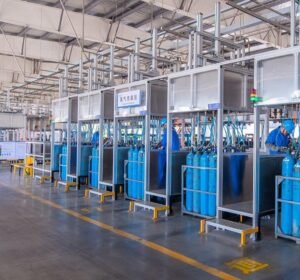
Automation would transform cylinder management. Millions of industrial gas cylinders circulate continuously between filling stations, customers, distributors, and maintenance facilities. RFID tags and IoT sensors would automatically record cylinder movements, filling cycles, pressure levels, inspection status, and maintenance requirements. Manual inventory tracking would largely disappear, reducing operational errors.
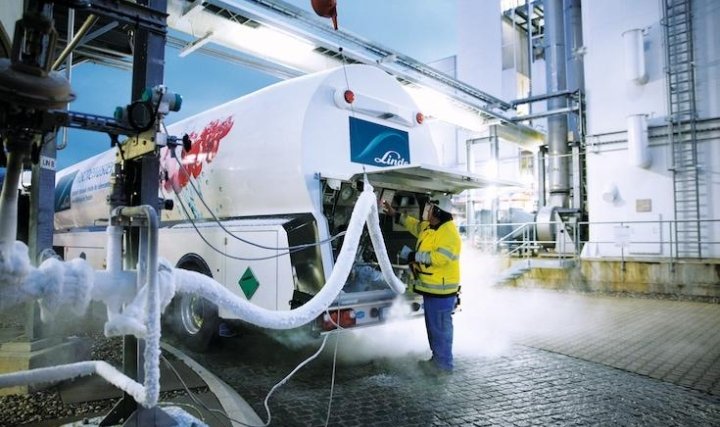
Cryogenic logistics would also become more intelligent. GPS enabled tankers carrying liquefied gases would continuously report location, temperature, pressure, and estimated delivery times. AI powered logistics systems could optimize transport routes, avoid congestion, and recommend alternative delivery schedules during disruptions. This improves reliability for customers who depend on uninterrupted gas supplies.
Digital customs integration represents another important opportunity. Export documentation, laboratory certificates, hazardous goods declarations, insurance records, and shipping manifests could be exchanged electronically through secure systems. Automated verification reduces paperwork while accelerating customs clearance for time sensitive shipments.
International buyers increasingly expect continuous visibility into supply chains. Smart export corridors provide customers with live shipment tracking, quality verification, estimated arrival times, and digital documentation through secure online platforms. Greater transparency strengthens confidence in Indian suppliers while supporting long term commercial relationships.
Predictive maintenance also becomes part of the export ecosystem. Compressors, liquefaction units, pumps, storage tanks, refrigeration systems, and cylinder filling equipment continuously transmit operational information. Artificial intelligence predicts equipment failures before production is interrupted, improving delivery reliability for international customers.
Environmental sustainability has become an increasingly important consideration in global industrial trade. Smart monitoring systems continuously measure energy consumption, emissions, equipment efficiency, and transportation performance. Verified sustainability data can accompany export shipments, helping Indian manufacturers compete in markets where environmental performance influences purchasing decisions.
Financial institutions also benefit from digital integration. Banks can verify export documentation electronically while providing faster access to working capital, export finance, insurance, and foreign exchange services. Improved financial efficiency strengthens liquidity across the industry while supporting export expansion.
The export corridor should also integrate with ports, shipping lines, industrial parks, free trade zones, and international logistics providers. Such coordination reduces bottlenecks while improving the overall competitiveness of India’s industrial gas exports.
Cybersecurity is essential because industrial gas exports support critical industries around the world. Secure authentication, encrypted communication, resilient cloud infrastructure, and continuous monitoring protect commercial information while ensuring uninterrupted trade operations.
India’s industrial gas industry is positioned to benefit from global growth in clean energy, advanced manufacturing, biotechnology, semiconductor production, and healthcare. Capturing these opportunities requires more than expanding production capacity. It requires building intelligent trade systems that move products as efficiently as information.
Smart export corridors represent the next evolution of industrial trade. By combining artificial intelligence, IoT enabled logistics, predictive maintenance, automated documentation, digital product identities, and connected supply chains, India can transform its industrial gas industry into a globally competitive export ecosystem while strengthening one of the country’s most strategically important industrial sectors.