
India has made remarkable progress in electronics manufacturing over the past decade. Mobile phone assembly, semiconductor investments, electronics production-linked incentives and expanding export capacity have all helped position the country as an emerging manufacturing hub. Yet an equally significant opportunity remains largely overlooked. India can become the world’s leading destination for electronics repair, refurbishment and remanufacturing.
Every year, millions of smartphones, laptops, networking devices, industrial electronics, medical equipment and consumer appliances are replaced long before the end of their technical life. Many of these products require only minor repairs, component replacement or software restoration before they can be used again. Today, much of this work is concentrated in China, Eastern Europe and parts of Southeast Asia. India has the workforce, engineering talent and growing logistics infrastructure to compete in this market.
Rather than viewing repair as an informal sector activity, policymakers should recognize it as a strategic export industry. A repaired laptop shipped from India to Africa or Europe creates value through technical expertise rather than raw materials alone. The country earns foreign exchange while extending the life of existing products and reducing electronic waste.
A dedicated National Electronics Repair Mission could formalize this opportunity. Such a mission would establish specialized repair parks near major ports and airports, where companies could import defective electronics under simplified customs procedures, repair them, certify quality and re-export them. Customs regulations would need to distinguish repair imports from conventional imports, reducing unnecessary duties on products that are not entering the domestic market.
Certification would become an important pillar of the ecosystem. International buyers require confidence that refurbished products meet consistent quality standards. India could establish accredited repair certification laboratories that evaluate repaired products for electrical safety, software integrity, battery performance and long-term reliability. These certifications would strengthen India’s reputation as a trusted repair destination.
The electronics repair economy extends far beyond smartphones. Enterprise servers, telecom infrastructure, industrial automation equipment, medical imaging systems, renewable energy electronics, aviation electronics and automotive control units all require specialized repair capabilities. These sectors generate significantly higher value than consumer electronics and create demand for highly skilled engineers.
The government could also encourage component recovery industries. Many discarded electronics contain reusable processors, sensors, displays, power supplies and memory chips. Instead of treating discarded equipment as waste, India could establish facilities that recover high-value components for reuse in manufacturing and maintenance operations. This approach reduces import dependence while supporting a circular economy.
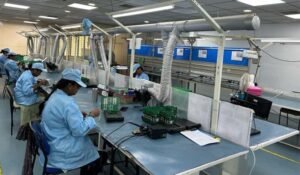
Skill development will play a central role. Existing technical education often emphasizes manufacturing or software development, while advanced repair engineering receives limited attention. New vocational programmes should train technicians in microsoldering, chip-level diagnostics, embedded systems, firmware restoration, battery management, robotics maintenance and industrial electronics servicing. These skills command higher wages and are increasingly in demand worldwide.
Digital infrastructure can further strengthen the industry. A national repair registry could record the service history of exported products, allowing buyers to verify repair quality and maintenance records. Digital product passports could accompany refurbished equipment, documenting replaced components, testing procedures and warranty status. Such transparency would improve buyer confidence and support international trade.
Trade policy should actively support repair exports. Export incentives could reward certified refurbishment activities rather than only new manufacturing. Trade agreements should include provisions that facilitate cross-border movement of repairable electronics while maintaining environmental safeguards. Faster customs clearance for repair shipments would reduce turnaround times and improve India’s competitiveness.
Environmental benefits are equally significant. Manufacturing new electronics consumes substantial quantities of energy, water and critical minerals. Extending product life through professional repair reduces demand for new raw materials while lowering carbon emissions. As countries adopt stricter sustainability standards, India’s repair industry could become an important contributor to global climate goals.
Small and medium enterprises would also benefit. Unlike semiconductor fabrication, repair businesses require relatively modest capital investment while creating skilled employment across multiple regions. Local entrepreneurs could specialize in industrial equipment, consumer electronics, telecom hardware or medical devices, creating a broad network of export-oriented businesses.
States can compete to attract repair investment by developing electronics service clusters with testing laboratories, logistics hubs, training institutes and efficient customs facilities. Cities with existing electronics ecosystems such as Chennai, Bengaluru, Hyderabad, Noida and Pune could become major repair centres, while emerging industrial regions could develop specialized capabilities in different product categories.
Research institutions should collaborate with industry to develop advanced diagnostic tools, automated testing systems and predictive maintenance technologies. Artificial intelligence can help identify faults, recommend repairs and improve quality control. Such innovation would allow Indian companies to move beyond labour-intensive services toward technology-enabled repair solutions.
Global demand for affordable, reliable refurbished electronics continues to expand. Schools, hospitals, small businesses and government agencies across developing countries increasingly seek cost-effective technology solutions. By supplying professionally refurbished equipment backed by internationally recognized quality standards, India can serve these growing markets while building a new export sector.
India’s industrial strategy has rightly emphasized manufacturing, but manufacturing alone should not define the country’s ambitions. Repair, refurbishment and remanufacturing represent knowledge-intensive industries that create employment, generate exports and support environmental sustainability. By treating electronics repair as a strategic national capability rather than an informal activity, India can build a globally competitive industry that complements its manufacturing success and strengthens its position in international trade for decades to come.