India has one of the world’s largest and most diverse industrial economies. Manufacturing plants, pharmaceutical companies, chemical industries, mines, ports, logistics providers, power utilities, and financial institutions together generate enormous amounts of information every day. Yet much of this information remains scattered across different ministries, regulators, states, and private organisations. As a result, policymakers often make decisions using incomplete or delayed information.
India should consider creating a National Industrial Intelligence Platform that brings together real time industrial data into a unified governance system. Such a platform would not replace existing ministries or regulatory agencies. Instead, it would provide decision makers with a comprehensive digital view of the country’s industrial ecosystem, enabling faster, smarter, and more coordinated governance.
Today, industrial information is spread across multiple departments. One ministry may collect production statistics, another monitors exports, another tracks environmental compliance, while separate agencies oversee labour, transport, taxation, mining, and energy. These systems often operate independently, making it difficult to identify emerging risks or opportunities across sectors.
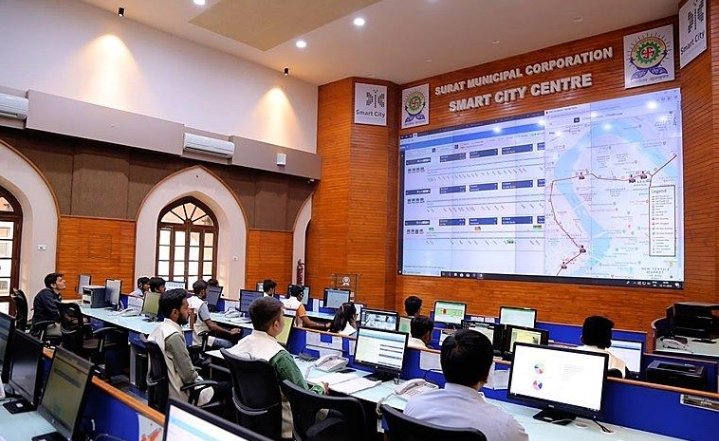
A unified intelligence platform would integrate data from manufacturing, mining, pharmaceuticals, chemicals, banking, logistics, energy, ports, customs, exports, and industrial infrastructure. Instead of waiting weeks or months for reports, policymakers could access live dashboards showing production trends, supply chain disruptions, investment patterns, employment changes, and infrastructure utilisation.
This approach would improve economic planning. If industrial production begins slowing in a particular region, governments could identify the underlying causes more quickly. The problem may involve electricity shortages, transport delays, financing constraints, labour availability, or raw material supply. With integrated information, responses become faster and more targeted.
The pharmaceutical sector offers an excellent example. A national platform could monitor medicine production, raw material availability, export performance, regulatory compliance, and distribution networks simultaneously. During health emergencies, policymakers could identify shortages early and coordinate responses before disruptions affect patients.
Mining is another area where integrated intelligence would be valuable. Digital monitoring of production volumes, transportation networks, environmental performance, royalty collection, and mineral inventories would provide governments with better visibility into one of the country’s most strategic industries. Illegal mining activities could also become easier to detect through data analytics.
The manufacturing sector would benefit from improved policy coordination. Real time information about factory operations, investment trends, equipment utilisation, and export performance would allow governments to evaluate the effectiveness of industrial policies more accurately. Rather than relying primarily on historical surveys, policymakers could observe economic developments as they occur.
Artificial intelligence could significantly enhance the platform’s capabilities. AI systems could analyse enormous datasets to identify emerging risks, forecast industrial demand, predict infrastructure bottlenecks, and recommend policy interventions. Machine learning models may also detect unusual economic patterns that deserve further investigation.
Logistics represents another important application. India’s road networks, railways, ports, airports, warehouses, and inland waterways all contribute to industrial competitiveness. A unified platform could monitor freight movement across these networks, helping governments reduce congestion, improve connectivity, and optimise infrastructure investments.
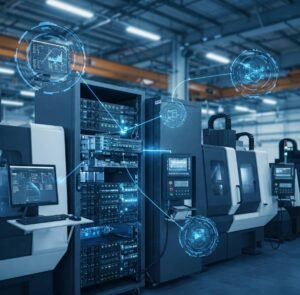
Environmental governance would also become more effective. Industries increasingly use digital monitoring systems to measure emissions, water consumption, waste generation, and energy efficiency. Integrating this information into a national platform would improve regulatory oversight while encouraging responsible industrial development.
The banking sector could contribute valuable economic insights without compromising customer confidentiality. Aggregated lending trends across manufacturing, exports, infrastructure, and industrial investment could help governments better understand economic activity and anticipate future investment needs.
Cybersecurity must remain central to any national intelligence platform. Sensitive industrial information requires strong encryption, strict access controls, continuous monitoring, and clearly defined governance frameworks. Different users should receive access only to information relevant to their responsibilities while maintaining commercial confidentiality.
The platform should also encourage cooperation between the Union Government and state governments. India’s industrial growth increasingly depends on state level initiatives, making shared information essential for coordinated policymaking. States could benchmark their performance, identify successful practices, and collaborate on common challenges.
Academic institutions and research organisations could benefit from carefully managed access to anonymised industrial data. Researchers would gain valuable insights into economic trends while contributing evidence based policy recommendations. This collaboration would strengthen both governance and innovation.
The National Industrial Intelligence Platform should not become another reporting system that increases bureaucracy. Instead, it should simplify governance by reducing duplication, improving coordination, and enabling proactive decision making. Digital automation should minimise manual reporting while improving data quality and reliability.
Countries competing in advanced manufacturing increasingly rely on real time industrial intelligence. Governments that understand their economies in greater detail can respond more effectively to global market changes, technological disruptions, and supply chain challenges. India has already demonstrated leadership in digital public infrastructure. Applying similar principles to industrial governance could strengthen economic resilience and improve national competitiveness.
As India aims to become one of the world’s leading manufacturing and export economies, governance must evolve alongside industry. Decisions based on fragmented information are no longer sufficient in a rapidly changing global economy. A National Industrial Intelligence Platform would provide policymakers with the visibility, speed, and analytical capability needed to support sustainable industrial growth for decades to come.