
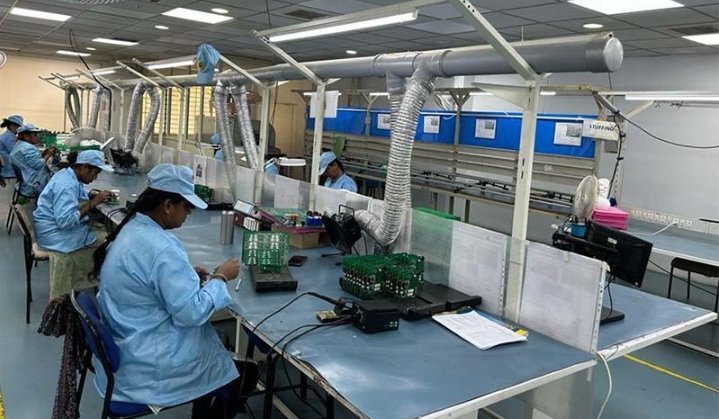
The global electronics industry is one of the largest and fastest growing sectors in the world. Smartphones, computers, communication equipment, consumer electronics, industrial control systems, automotive electronics and smart devices have become essential to modern life. As demand continues to expand, countries are competing to establish themselves as leading centres for electronics manufacturing and exports. India has a historic opportunity to emerge as one of the world’s major electronics export powers by combining its engineering talent, manufacturing ambitions and rapidly improving industrial infrastructure.
Electronics have become the foundation of the digital economy. Every industry now depends on electronic systems, from healthcare and education to transportation, defence and manufacturing. As artificial intelligence, the Internet of Things and fifth generation communication networks continue to expand, global demand for electronic products and components is expected to increase significantly over the coming decades.
India has already demonstrated remarkable progress in electronics manufacturing. The country has attracted major investments in smartphone production, component assembly and consumer electronics. These achievements have shown that India possesses the workforce, market size and industrial capability required to compete internationally. The next challenge is moving beyond assembly operations to become a leading exporter of high value electronic products and components.
Manufacturing competitiveness begins with strong industrial infrastructure. Electronics manufacturers require reliable electricity, high speed digital connectivity, efficient transportation systems and modern logistics facilities. Industrial parks dedicated to electronics production should provide world class infrastructure while encouraging collaboration among manufacturers, suppliers and research institutions.
Component manufacturing deserves special attention. Printed circuit boards, connectors, sensors, displays, batteries, semiconductors, power management systems and precision mechanical parts represent a significant portion of the value within electronic products. Expanding domestic component production strengthens supply chains while reducing dependence on imported materials.
Semiconductor manufacturing forms the backbone of the electronics industry. Every electronic device relies on advanced chips that control processing, communication and power management. Developing domestic semiconductor fabrication, testing and packaging capabilities will support long term growth across the entire electronics sector while strengthening technological independence.
Research and innovation should become central to India’s electronics strategy. Universities, engineering institutions and private companies should work together to develop new products, improve manufacturing technologies and strengthen design capabilities. Innovation enables manufacturers to compete through quality and technology rather than cost alone.
Electronics design represents another important opportunity. Indian engineers already contribute to the design of products used by global technology companies. Strengthening domestic design capabilities allows Indian firms to create original products that command greater value in international markets while encouraging intellectual property development.
The smartphone industry illustrates India’s potential. Mobile phones are among the world’s most traded electronic products, and India has become an important manufacturing destination for several leading companies. Building stronger domestic supply chains for displays, cameras, batteries and integrated circuits can significantly increase the local value added within every device exported from India.
Consumer electronics also offer considerable opportunities. Televisions, home appliances, audio systems, wearable devices and smart home technologies continue to experience strong international demand. High quality manufacturing combined with competitive pricing can position India as a preferred supplier to global markets.
Industrial electronics represent another rapidly expanding sector. Factories, power plants, transportation systems and healthcare facilities increasingly depend on sensors, controllers, automation equipment and communication technologies. Producing these products domestically strengthens both manufacturing and export competitiveness.
The electric vehicle revolution will further accelerate demand for electronic components. Battery management systems, charging infrastructure, motor controllers, sensors and power electronics are essential to modern electric mobility. Developing expertise in these technologies creates opportunities across both domestic and international markets.
Medical electronics also deserve attention. Diagnostic equipment, patient monitoring systems, imaging devices and wearable health technologies combine electronics with healthcare innovation. India can leverage its strengths in both engineering and medicine to develop globally competitive medical technology products.
Skilled human resources remain one of India’s greatest advantages. Thousands of engineers graduate every year with expertise in electronics, computer science, electrical engineering and embedded systems. Industry should work closely with educational institutions to ensure that training programmes reflect evolving manufacturing technologies and international quality standards.
Automation and artificial intelligence are transforming electronics manufacturing. Smart factories use robotics, machine vision and predictive maintenance to improve productivity while maintaining consistent quality. Indian manufacturers adopting these technologies early will strengthen their competitiveness in global supply chains.
Small and medium enterprises should become integral parts of the electronics ecosystem. Many specialised components, connectors, cables, enclosures and testing services can be supplied by MSMEs. Financial support, technology transfer and quality improvement programmes can help these businesses integrate into international manufacturing networks.
Export logistics also play a critical role. Electronics products often require rapid transportation, secure handling and efficient customs procedures. Modern airports, seaports and multimodal logistics hubs reduce delivery times while improving reliability for international customers.
Trade agreements and economic partnerships can further strengthen electronics exports. Improved market access, reduced tariffs and harmonised technical standards create new opportunities for Indian manufacturers to reach customers across multiple regions. Strong trade relationships also encourage multinational companies to expand production within India.
Environmental sustainability is becoming increasingly important in electronics manufacturing. Energy efficient factories, responsible waste management, recycling programmes and environmentally friendly materials improve competitiveness while meeting evolving international expectations. Green manufacturing practices also reduce long term operating costs.
Government policy should continue supporting long term industrial development through stable regulations, research incentives, infrastructure investment and workforce development. Predictable policies encourage businesses to make the significant investments required for advanced electronics manufacturing.
The electronics industry extends beyond economic growth. It strengthens technological capability, encourages innovation, creates skilled employment and supports national security by reducing dependence on imported technologies. Countries with strong electronics industries are better positioned to lead future advances in artificial intelligence, telecommunications and advanced manufacturing.
India possesses the talent, market scale and industrial ambition needed to become a leading global electronics exporter. By expanding component manufacturing, strengthening semiconductor capabilities, investing in research and improving logistics, the country can build a complete electronics ecosystem that competes with the world’s best.
The coming decade will shape the future of global electronics manufacturing. Nations that combine innovation, quality, skilled talent and efficient infrastructure will lead the next wave of technological progress. India has the opportunity to be one of those nations, transforming itself from a growing manufacturing destination into a trusted global leader in electronics exports.