India stands at a defining moment in its economic journey. Over the past three decades, the country has earned global recognition for its information technology services, pharmaceutical industry and entrepreneurial talent. Yet, if India aims to become a developed nation with sustained economic strength, advanced manufacturing must occupy the centre of its national development strategy. Manufacturing is not merely another economic sector. It is the engine that creates jobs, drives innovation, strengthens exports and builds technological independence.
Every major industrial power has built its economy on a strong manufacturing foundation. The United States became an economic giant through industrial production before transitioning into advanced technology. Germany remains one of the world’s leading exporters because of its engineering and manufacturing excellence. Japan rebuilt itself after the Second World War through precision manufacturing, while South Korea transformed from a developing nation into a technological powerhouse by investing heavily in industries such as electronics, automobiles and shipbuilding.
India has several natural advantages that position it well for manufacturing leadership. It has one of the world’s youngest workforces, a large domestic market, improving infrastructure, democratic institutions and a growing innovation ecosystem. However, these advantages must be converted into industrial capacity through long term planning and strategic investment.
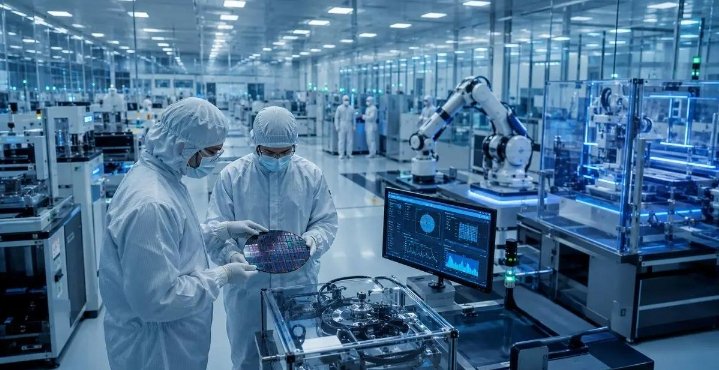
Advanced manufacturing goes far beyond traditional factory production. It integrates robotics, artificial intelligence, automation, digital twins, industrial Internet of Things, advanced materials, additive manufacturing and data analytics to create highly efficient production systems. These technologies improve quality, reduce waste, increase productivity and allow manufacturers to compete successfully in global markets.
The manufacturing sector also has a unique ability to generate employment across multiple skill levels. Engineers, technicians, machine operators, logistics professionals, software developers, quality specialists and maintenance experts all contribute to a healthy industrial ecosystem. Every manufacturing job also supports employment in transportation, construction, education, retail, finance and professional services.
India’s ambition to become a global manufacturing hub requires continuous investment in industrial infrastructure. Industrial corridors, logistics parks, multimodal transport systems, ports, airports and reliable electricity supply form the backbone of competitive manufacturing. Businesses seek locations where products can move efficiently from factories to domestic and international markets with minimal delays.
Semiconductor manufacturing deserves special attention. Chips power smartphones, automobiles, medical devices, defence systems, industrial equipment and artificial intelligence applications. The global semiconductor shortage demonstrated how vulnerable countries become when they rely heavily on external suppliers. Developing domestic semiconductor capabilities will strengthen India’s technological sovereignty while attracting investments across the electronics industry.
The electric vehicle revolution also presents significant opportunities. India can become a major producer of batteries, electric motors, charging equipment, power electronics and vehicle components. This transition supports both industrial growth and environmental sustainability while reducing dependence on imported fossil fuels.
Defence manufacturing is another strategic priority. Producing advanced defence equipment within India strengthens national security while encouraging technological innovation. Many civilian technologies have historically emerged from defence research, creating broader economic benefits across multiple industries.
Micro, small and medium enterprises remain essential partners in India’s manufacturing ecosystem. Large factories depend on thousands of smaller suppliers that produce components, packaging materials, tools and specialised services. Policies should therefore support the digital transformation of MSMEs through affordable automation, financial assistance, technology transfer and workforce training.
Research and development must become a central pillar of industrial policy. Successful manufacturing nations continuously invest in innovation rather than relying solely on cost advantages. Universities, research institutions and private companies should collaborate closely to develop new materials, manufacturing techniques and industrial technologies suited to Indian conditions.
Skill development will determine whether India fully benefits from advanced manufacturing. Future factories require workers capable of operating intelligent machines, analysing production data and maintaining sophisticated equipment. Technical education should therefore combine theoretical knowledge with practical industrial experience. Apprenticeships, industry partnerships and lifelong learning programmes will become increasingly valuable.
Sustainability should also guide India’s manufacturing strategy. Energy efficient factories, renewable power, water conservation, waste recycling and circular economy principles reduce environmental impact while improving long term competitiveness. International customers increasingly prefer products manufactured through environmentally responsible processes.
Digital technologies are transforming manufacturing into intelligent production systems. Smart factories use sensors to monitor equipment, predict maintenance requirements and optimise production schedules automatically. Artificial intelligence improves quality control by identifying defects with greater accuracy than manual inspection. These capabilities reduce downtime while increasing efficiency and profitability.
India should also strengthen its position within global supply chains. Companies around the world are diversifying production locations to improve resilience and reduce risk. India has an opportunity to attract investments by offering stable policies, efficient logistics, skilled talent and predictable regulatory environments. Becoming a trusted manufacturing partner requires consistency over many years.
Export competitiveness depends not only on production costs but also on quality, reliability and innovation. Indian manufacturers should focus on producing high value products rather than competing solely on low labour costs. Precision engineering, medical devices, aerospace components, electronics, renewable energy equipment and advanced machinery represent sectors with significant long term potential.
Government procurement policies can also accelerate industrial growth. Purchasing domestically manufactured technologies where appropriate creates stable demand that encourages companies to invest in local production capabilities. Transparent procurement combined with high quality standards benefits both industry and taxpayers.
Artificial intelligence will become deeply integrated into manufacturing over the coming decade. Production planning, inventory management, predictive maintenance, energy optimisation and quality assurance will increasingly depend on intelligent systems. Indian manufacturers that adopt these technologies early will gain significant competitive advantages in international markets.
Manufacturing also contributes to national resilience. Countries capable of producing essential goods domestically are better prepared to respond to global disruptions, pandemics or geopolitical tensions. Building industrial self reliance does not mean isolating from global trade. Instead, it means possessing the capability to produce strategically important goods while remaining an active participant in international markets.
India has entered a period where demographic strength, technological progress and geopolitical opportunity are converging. Advanced manufacturing offers the country a pathway toward higher incomes, stronger exports, better employment and greater technological independence. If supported through consistent policy, modern infrastructure, research investment and workforce development, manufacturing can become the foundation upon which India’s next era of economic growth is built.