A modern government should know what is happening on the ground. Yet many everyday problems experienced by citizens remain disconnected from the administrative systems that are supposed to address them. A broken streetlight, overflowing drain, damaged road, garbage accumulation, water leakage, unsafe footpath or malfunctioning public facility may be obvious to hundreds of people while remaining invisible to the machinery of government. A Citizen Problem Registry offers a way to change this by creating a permanent institutional system through which public problems can be reported, recorded, assigned, tracked and resolved.
The central idea is simple. Every legitimate public problem should receive a record. That record should contain enough information to identify the problem, establish its location, determine the responsible authority and track what happens afterwards. Instead of citizens repeatedly approaching different offices, the government would maintain a common registry through which problems could move across departments until they reach the institution capable of resolving them.
India already has examples of digital civic grievance systems. The Swachhata-MoHUA platform, for example, allows citizens to photograph civic sanitation problems and submit them to the relevant municipal authority, where they can be assigned for action. The innovation proposed here goes further by treating the registry not merely as a complaint channel, but as a permanent operating layer for governance.
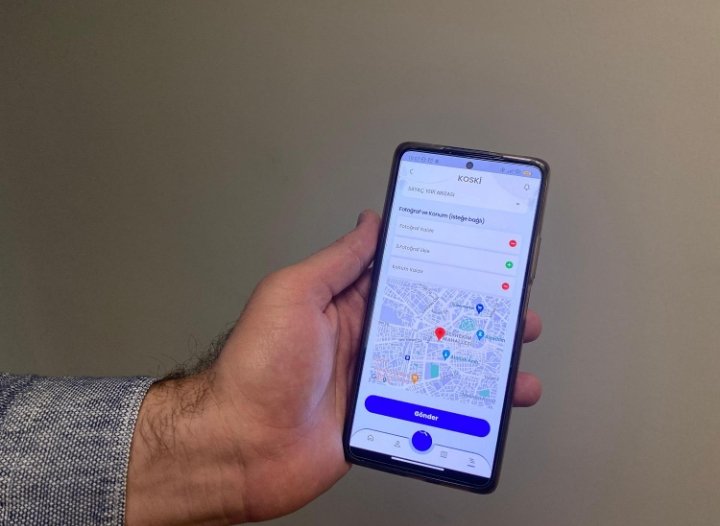
A citizen could report a problem through a mobile application, website, telephone call, local government office, service centre or assisted digital kiosk. The system could capture a photograph, description and geographical location. A unique reference number would then be generated. The citizen could use that number to follow the case throughout its administrative life.
The importance of this approach becomes clear when considering how government responsibilities are divided. A citizen may see a flooded road but may not know whether the responsibility belongs to the municipality, public works department, water authority or another agency. A complaint system designed around departments can therefore place an unreasonable burden on citizens. The citizen has to understand government architecture before being able to ask government to solve a problem.
A problem registry reverses this relationship. The citizen describes the problem. The government determines responsibility.
Once registered, the system could automatically classify the problem according to its nature and location. A road defect could be routed to the appropriate engineering unit. A streetlight failure could move to the electricity or maintenance team. A waste complaint could be directed to the sanitation department. A drainage problem could be connected to the appropriate municipal or infrastructure authority.
The system could also establish expected response periods. Not every problem requires the same urgency. A dangerous electrical fault may require immediate intervention, while a major road reconstruction project may require technical assessment, budgeting and procurement. Categorizing cases according to urgency would allow government to distinguish between emergency intervention, routine maintenance and long-term infrastructure requirements.
This creates another important benefit: administrative visibility. Senior officials frequently receive information through reports prepared by departments. A Citizen Problem Registry would provide an additional source of information generated continuously from the ground. Administrators could see which areas are producing large numbers of complaints, which categories are increasing, which departments have growing backlogs and which problems are repeatedly returning.
Over time, the registry could become a geographic map of government performance. A municipality could identify concentrations of road damage, sanitation problems, drainage failures or streetlight complaints. A cluster of complaints around the same infrastructure asset could indicate that the government should stop treating individual symptoms and investigate the underlying cause.
This changes the economics of public administration. Instead of spending resources repeatedly responding to the same failure, governments can identify recurring patterns and invest in permanent solutions. Five complaints about the same drainage location may be treated as five separate maintenance jobs. Five years of complaints at the same location may instead provide evidence for redesigning the drainage system.
The registry could also become an important budgeting instrument. Government budgets are ultimately decisions about where limited public resources should be allocated. A database containing millions of geographically and temporally organized problems would provide valuable evidence about where maintenance requirements are concentrated. Officials could combine this information with engineering assessments, demographic data, infrastructure age, environmental conditions and existing budgets.
Another major feature would be transparent status tracking. Citizens should be able to see whether a problem has been received, verified, assigned, inspected, approved, under execution or resolved. This does not require every internal government discussion to become public. It simply creates a visible chain of responsibility between reporting and resolution.
Closure would also need to be treated carefully. A complaint should not disappear merely because an official changes its status. For appropriate categories, field workers could upload photographs or inspection records demonstrating that work was undertaken. Citizens could then receive a notification and provide feedback about whether the problem has actually been addressed. India’s Swachhata platform already incorporates citizen feedback after resolution, illustrating how the reporting process can extend beyond the initial complaint.
The registry could eventually become a form of institutional memory. Governments regularly experience transfers of officials, changes in elected leadership, changes in contractors and changes in administrative priorities. When information exists only in individual files, emails or personal knowledge, institutional memory can be lost. A permanent registry would preserve the history of public problems and government responses.
This historical record could become particularly valuable for infrastructure planning. A road that repeatedly generates complaints has a different governance story from a road that has remained trouble-free for years. A public building that repeatedly requires emergency repairs may require capital investment rather than another temporary repair. A neighbourhood repeatedly affected by flooding may require a drainage study rather than another round of post-flood cleaning.
Technology can make such a system considerably more powerful. Artificial intelligence could assist with categorizing photographs, detecting duplicate complaints, identifying recurring locations and highlighting unusual increases in particular types of problems. Geographic information systems could connect complaints to wards, roads, public buildings and infrastructure assets. Dashboards could provide administrators with real-time operational information.
However, technology should not become the centre of the system. The essential innovation is institutional. A sophisticated application without clear responsibility can simply digitize administrative confusion. The registry must therefore establish who owns each problem, what action is expected, when escalation occurs and what evidence is required for closure.
Accessibility is equally important. A digital-only system could exclude citizens who lack smartphones, reliable internet connections or digital skills. Telephone reporting, physical service centres and assisted reporting should remain available. The objective is not to force citizens into a particular technology but to create one underlying government registry capable of receiving information through multiple channels.
Privacy must also be protected. Public accountability does not require publishing citizens’ personal information. Public dashboards can show aggregated information about problems, locations, response times and resolution rates while restricting sensitive personal data to authorized officials.
The long-term vision is therefore much larger than a complaint application. The Citizen Problem Registry can become a basic operating system for responsive local government. It connects the observation of a problem to administrative responsibility, field operations, budgeting, infrastructure planning and institutional learning.
The most important question for a government would gradually change from “Did someone complain?” to “What happened to the problem after it was reported?” That shift represents a deeper transformation in governance. A government that can remember every legitimate problem, identify its owner, track its progress, learn from repeated failures and demonstrate how problems are being addressed becomes more capable of managing the physical and administrative complexity of a modern society.
The ultimate objective is not to create more complaints. It is to create a government in which legitimate public problems have nowhere to disappear.