India stands at a defining moment in its industrial journey. The country has emerged as one of the world’s fastest-growing major economies, yet the next stage of growth will depend on how successfully it transforms its manufacturing sector. Industry 4.0 offers India the opportunity to build a globally competitive industrial ecosystem driven by technology, innovation, and productivity.
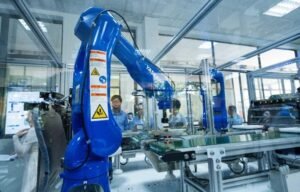
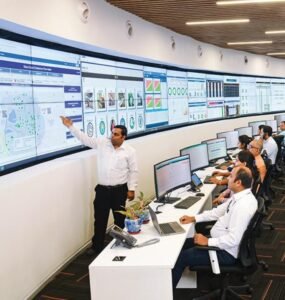
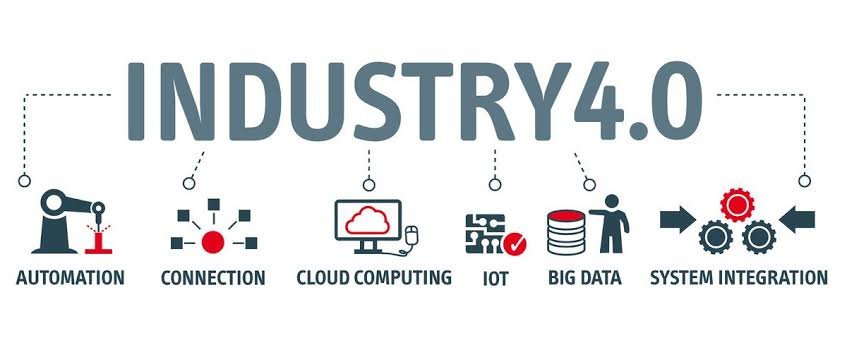
Industry 4.0 represents the integration of artificial intelligence, robotics, industrial Internet of Things, cloud computing, digital twins, advanced sensors, data analytics, and automation into manufacturing and industrial operations. These technologies enable factories to become intelligent systems that continuously learn, optimize production, reduce waste, and improve quality.
For India, Industry 4.0 should not be viewed as a technology programme alone. It should be treated as a national economic strategy. Manufacturing contributes significantly to employment, exports, infrastructure development, and regional growth. Modernizing this sector can generate benefits across the entire economy.
India’s demographic advantage creates a unique opportunity. Every year, millions of young people enter the workforce. By investing in advanced manufacturing skills, industrial automation, robotics, AI engineering, and digital production technologies, India can prepare its workforce for high-value industrial jobs rather than limiting growth to low-cost manufacturing.
The country should identify strategic sectors where Industry 4.0 can deliver the greatest impact. Electronics, automobiles, aerospace, defence, pharmaceuticals, renewable energy equipment, food processing, textiles, chemicals, logistics, and precision engineering all have strong potential to benefit from digital manufacturing technologies.
Artificial intelligence will play a transformative role in Indian industry. AI can predict machine failures before they occur, optimize supply chains, improve production scheduling, automate quality inspection, reduce energy consumption, and support better business decisions. These capabilities improve productivity while making Indian manufacturers more competitive in global markets.
Industrial innovation clusters should become a national priority. Universities, research institutions, startups, manufacturing companies, and technology providers can collaborate within dedicated industrial zones to accelerate technology transfer and commercial innovation. These ecosystems encourage entrepreneurship while strengthening India’s industrial capabilities.
Micro, small, and medium enterprises require special attention. They form a large part of India’s manufacturing base but often face financial and technical barriers to modernization. Affordable digital technologies, shared innovation centres, financial incentives, and technical advisory programmes can help smaller manufacturers participate in the Industry 4.0 revolution.
Cybersecurity must be embedded into every smart factory. As machines, production lines, and supply chains become digitally connected, protecting industrial systems from cyber threats becomes essential. Secure industrial networks, regular security assessments, and workforce awareness should become standard practice across manufacturing sectors.
Industry 4.0 also supports India’s sustainability goals. Intelligent manufacturing reduces material waste, improves energy efficiency, minimizes emissions, and optimizes resource utilization. Sustainable manufacturing not only protects the environment but also improves long-term competitiveness as global markets increasingly value environmentally responsible production.
India should also strengthen domestic capabilities in industrial software, robotics, sensors, semiconductor technologies, industrial automation equipment, and AI platforms. Building indigenous technology reduces dependence on imports while creating new opportunities for innovation and exports.
Success will require coordinated action between the Union Government, state governments, industry associations, academic institutions, financial institutions, and technology companies. A shared national roadmap with measurable targets can accelerate adoption while ensuring that benefits reach industries across every region of the country.
Industry 4.0 is more than the next phase of manufacturing. It is an opportunity to reshape India’s economic future. By embracing intelligent manufacturing today, India can become a global leader in industrial innovation, create millions of skilled jobs, strengthen exports, improve productivity, and build an economy that is resilient, competitive, and prepared for the industries of tomorrow.