
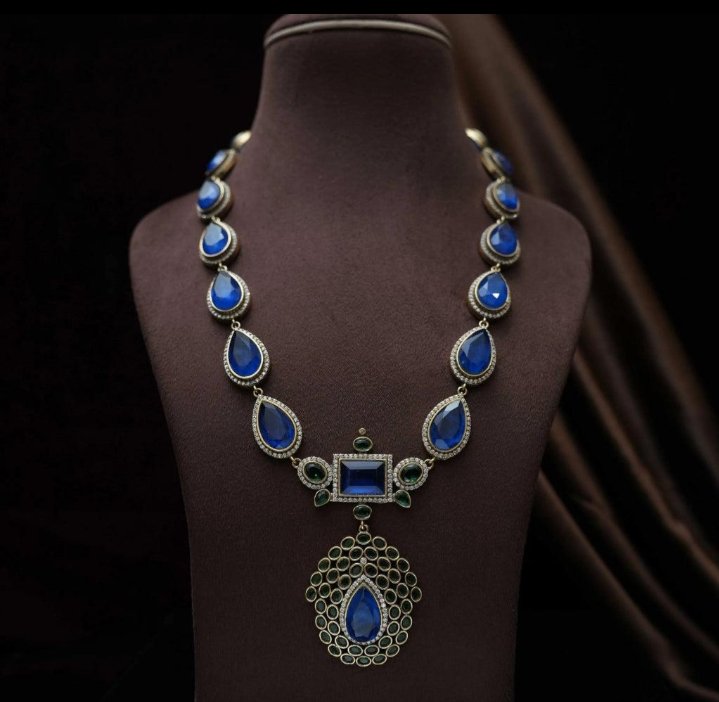
India is one of the world’s largest centres for gemstone cutting, jewellery manufacturing, and exports. Semi-precious gemstones such as amethyst, garnet, citrine, topaz, turquoise, lapis lazuli, agate, onyx, quartz, moonstone, and peridot are widely used in fashion jewellery, designer collections, handcrafted ornaments, and luxury accessories. As global demand grows, buyers increasingly expect proof of authenticity, ethical sourcing, and consistent quality. An AI-Powered Gemstone Authentication Platform can modernise India’s semi-precious jewellery industry through Industry 4.0 technologies.
The platform would digitally connect gemstone miners, importers, gemstone cutters, polishing units, jewellery manufacturers, laboratories, exporters, retailers, designers, and certification agencies through a secure cloud-based ecosystem.
Every gemstone entering the supply chain would receive a unique digital identity. Information including mine of origin, supplier, weight, dimensions, colour grade, clarity, cutting style, treatment history, and laboratory certification would be permanently linked to the stone throughout its lifecycle.
Artificial intelligence would analyse high-resolution images captured from multiple angles. Computer vision algorithms would identify inclusions, colour zoning, surface characteristics, optical properties, and cutting precision to determine whether a gemstone matches its declared identity.
Machine learning models trained on millions of gemstone images would distinguish between natural stones, treated stones, synthetic gemstones, glass imitations, and composite materials. This significantly reduces dependence on manual inspections while improving consistency across the industry.
Manufacturers would benefit from automated quality grading. AI could classify gemstones into different commercial grades based on internationally recognised quality standards, helping jewellers maintain uniform product quality while reducing inspection time.
Blockchain technology would strengthen trust throughout the supply chain. Every ownership transfer, laboratory examination, gemstone treatment, polishing process, and export transaction would be securely recorded on a tamper-resistant digital ledger. International buyers could verify the complete history of every gemstone before making a purchase.
Exporters would gain a competitive advantage through digital authenticity certificates. Overseas retailers and wholesalers increasingly demand traceable gemstones with verified origin and quality documentation. Digital certificates would simplify international trade while reducing disputes.
Jewellery retailers could allow customers to scan a QR code attached to each ornament. Buyers would instantly access information regarding gemstone authenticity, quality grading, manufacturing history, and certification through secure cloud services.
Banks financing gemstone inventories would benefit from verified digital records that reduce uncertainty regarding collateral value. Insurance companies could also improve underwriting using authenticated gemstone information and digital ownership histories.
Government agencies responsible for exports, customs, taxation, and consumer protection would gain access to aggregated industry intelligence while reducing counterfeit trade and improving regulatory compliance.
Cloud computing would enable real-time processing of gemstone images and certification records from jewellery clusters across Jaipur, Surat, Mumbai, Hyderabad, and other manufacturing centres.
Cybersecurity would protect commercially valuable gemstone records, certification data, customer information, and international trade documentation through encrypted communications, digital identities, secure cloud architecture, and continuous monitoring.
Technology companies would have opportunities to develop AI vision systems, gemstone imaging equipment, blockchain traceability platforms, cloud infrastructure, digital certification software, and mobile authentication applications tailored specifically for the jewellery sector.
Research institutions could contribute advanced optical analysis techniques, hyperspectral imaging, machine learning models, and automated gemstone grading technologies that further improve authentication accuracy.
As international consumers increasingly seek transparency, authenticity, and ethical sourcing, digital verification will become an essential requirement rather than a premium service.
An AI-Powered Gemstone Authentication Platform represents a significant Industry 4.0 opportunity for India’s semi-precious jewellery industry. By combining artificial intelligence, computer vision, blockchain, cloud computing, and digital certification, India can strengthen buyer confidence, reduce counterfeit products, improve export competitiveness, and establish itself as a global leader in trusted semi-precious gemstone jewellery.